
- News
- Writing on NaMo: Deification or demonization
This story is from November 30, 2015
Writing on NaMo: Deification or demonization
Tempers and voices flared at a discussion titled: Writing on NaMo: Deification or demonization, at the Times LitFest on Monday. Academic Madhu Kishwar and TV journalist Rajdeep Sardesai took opposing positions in a debate that centred largely on the Modi’s post-Godhra politics.
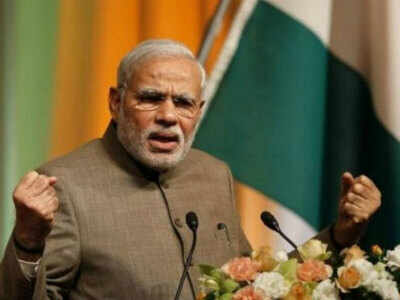
Tempers and voices flared at a discussion titled: Writing on NaMo: Deification or demonization, at the Times LitFest on Monday. Academic Madhu Kishwar and TV journalist Rajdeep Sardesai took opposing positions in a debate that centred largely on the Modi’s post-Godhra politics.
Kishwar claimed Modi was far more vilified than deserved even after the SIT report had exonerated him.
“I’ve studied his speeches; there wasn’t one divisive word in them,” she said. Sardesai refuted, recalling Modi’s Muslim-targeting jibe ‘Hum Paanch, Humare Pachees’.
Sardesai, who’s known Modi from his mid-20s as a journalist covering the Rath Yatra, observed: “Readers like to see politicians in black and white. But Modi, like all complex characters, is shaded in grey, his private and public lives are diametrically different, he believes the problem with public opinion lies in the public’s inability to see him as a divided figure. Modi — a hero/villain is polarization we should avoid.” Analyse him without ideological lenses.
“He’s (Modi) deeply insecure, prone to petty vendettas and will use anyone to suit his purpose,” claimed Sardesai, who in 1998 kept a monthly lunch date with Modi at Andhra Bhavan (where Sardesai footed the bill).
Unable to speak English, Modi had declined to appear on Sardesai’s The Big Fight, but promised him he’d one day speak the language better than the journalist. “He wants to be socially accepted by the English-speaking media,” Sardesai added.
Kishwar, who doesn’t know the PM personally, said the dubious ancestry of the Modi hate-brigade compelled her to revisit the post-riot Muslim settlements of Gujarat to investigate if the charges levelled against him held water.
In those riots, 262 Hindus and 863 Muslims were killed. During the Sikh riots 3,000 Sikhs were killed in Delhi alone, and not a single Hindu casualty, she pointed out, questioning allegations of abetted genocide against the former Gujarat CM. “What I saw was so different from the narrative I’d heard,” she said.
Kingshuk Nag, author of NaMo Story didn’t think Modi was demonized. “He’s cast himself in the anti-establishment mode, being anti-Nehruvian, anti-Western press. If he’s demonized, it’s because he wants it,” he said illustrating Modi’s public/private dichotomy with examples on how the politician would abuse the media in public, and privately apologise to them.
End of Article
FOLLOW US ON SOCIAL MEDIA
Photostories

Hot Picks
TOP TRENDING
Popular Categories
Hot on the Web
Top Trends
Trending Topics
Bigg Boss Tamil 8 Contestants ListNavratri Colours 2024Navratri Day 2 ColourTMKOC New SonuBigg Boss 18 House PhotoDevara CollectionGOAT OTT ReleaseRajinikanthDeepika PadukoneGovindaDevaraGovinda NewsDevara Movie ReviewHealthy RaitasSwatantrya Veer SavarkarColdplay India tour 2025Maa Durga 108 NamesNavratri JewellerySony Bravia 55 inch 4k Ultra HD TVWordle Answer
Living and entertainment
Latest News
India’s F&O addiction: Falling, hurting, bleeding but chasing that elusive pot of goldVirgo, Weekly Horoscope, October 06 to October 12, 2024: Financial setbacks may arise mid-week but will improve by the weekendDRDO tests of man-portable air defence shield successfulWorld Meningitis Day 2024: What is meningitis, the deadly brain infection? Know signs and symptomsBlaze damages goods worth Rs 3L at Bambolim flat“With Davante Adams on the Verge of Departure, Raiders' Robert Spillane Promises Big Plays Ahead”Maryland Governor Makes Bold Pitch for Raiders' $140M All-Pro: Could Davante Adams Join the Ravens?Aries, Weekly Horoscope, October 06 to October 12, 2024: Face health and emotional challenges at the start of the weekKareena Kapoor, Soha Ali Khan, Kunal Kemmu and others have a blast at Neha Dhupia's son Guriq's birthday bash - See INSIDE photosAmid China's muscle-flexing, Malabar drill to start on October 86,000 Dasara dolls bring underwater city of Dwarka to life in BasavanagudiWWE Bad Blood 2024 Betting Odds: Dominik Mysterio favored to escape shark cage, Punk and McIntyre favored to bleed, and moreTripura court serves notice to a police officer on cash looting chargeRecord 41 companies files for IPOs in SeptemberBone health in the elderly: Why seniors should get a bone density testBengal villagers attack police after child's body found in ditchHarnaaz Sandhu's breathtaking golden gown appearance after incredible weight loss!West Bengal govt misses 'deadline', junior docs begin fast
Copyright © 2024 Bennett, Coleman & Co. Ltd. All rights reserved. For reprint rights: Times Syndication Service