
- News
- lifestyle
- travel
- things-to-do
- From the rare golden tiger to the black panther: National parks in India to spot rare big cats
From the rare golden tiger to the black panther: National parks in India to spot rare big cats
From the rare golden tiger to the black panther: National parks in India to spot rare big cats
In India’s forests, you hear of tigers and their numbers, of conservation successes and expanding reserves. But beyond these statistics lies a far more mysterious tale, one defined by genetic quirks and serendipitous meetings. Now and then, a photograph or a camera trap captures something unexpected, something that challenges the norm—a creature unlike any other, its fur unlike any other due to a quirk of genetics. It is not a different species but a variant of the same species, and their presence has quietly made certain areas fascinating.
Here are some of the national parks and wildlife sanctuaries where these rare big cats can be spotted.
Kaziranga National Park in Assam
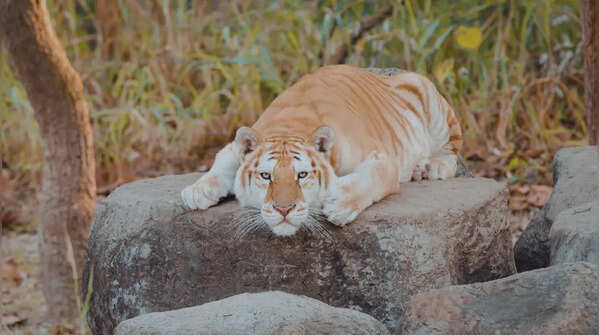
Kaziranga National Park has long been synonymous with its famed one-horned rhinoceroses and vast, shifting floodplains. In recent years, however, it has found itself part of a different narrative altogether. The appearance of a golden tiger, an exceptionally rare genetic variant, has introduced a surprising new dimension to its already intricate ecosystem. Unlike the deep orange coat typical of a Bengal tiger, this individual carried a muted golden shade, lined with soft reddish-brown stripes. Encountering such an animal isn’t merely a matter of expertise or persistence—it ultimately depends on timing, and more often than not, sheer luck.
Similipal National Park in Odisha
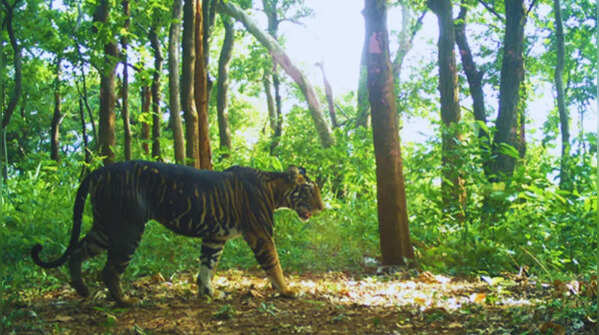
Photo courtesy: Simlipal Tiger Reserve - Govt of Odisha
Similipal doesn’t give itself away easily. With its dense forests, undulating hills, and relatively low tourist footfall, it remains one of India’s more enigmatic tiger reserves. Yet, it is also the landscape where one of the most unusual variants of the species is consistently sighted—the pseudo-melanistic tiger, often called the black tiger. At first glance, the animal appears almost entirely black. But a closer look reveals what’s really happening: its stripes are so unusually thick and closely packed that they merge together, compressing the orange coat into narrow slivers between them.
Kabini Wildlife Sanctuary in Karnataka
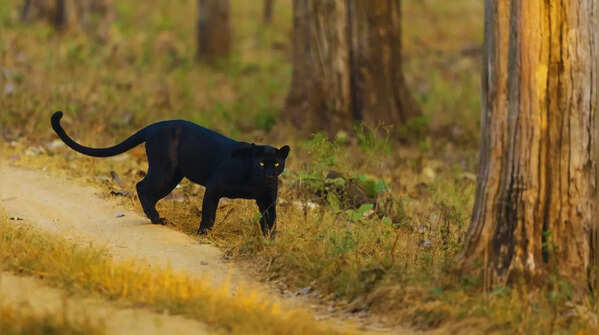
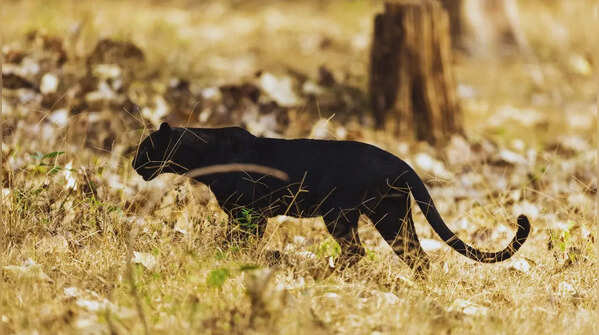
In most parts of the world, the melanistic variant of the leopard, also known as the black panther, is a rare sighting, mostly heard of but not seen. Kabini, part of the larger Nagarhole National Park landscape, has become synonymous with India’s most photographed black panther, a melanistic leopard popularly known as Saya. Melanism in leopards is rare but not unheard of; however, Kabini stands out because of the relative frequency of sightings compared to other regions.
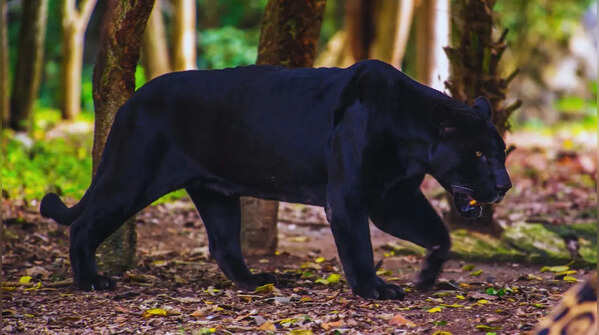
Dandeli Wildlife Sanctuary in Karnataka
In further north Karnataka, Dandeli is a very different environment, with its dense forest, lack of light, and rugged terrain. Melanistic leopards have been reported, but unlike at Kabini, sightings are extremely rare and not well recorded. The terrain is difficult to traverse, and one cannot see very far into the forest, but it is precisely because of this environment that it is included within the overall ecosystem where melanistic leopards exist.
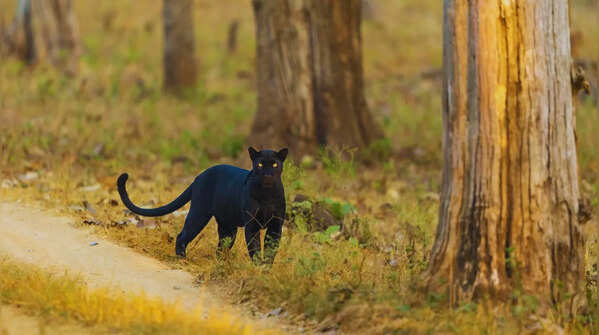
Pench National Park in Madhya Pradesh-Maharashtra
Pench has also featured in the discussion of melanistic leopards, but not anywhere near the frequency of the forests of southern India. There are some reports and some photographic evidence of the existence of melanistic leopards here. What is interesting about Pench is its geography. Unlike the Western Ghats, where the density of the forest means that there is little light, the geography of Pench is more open, with teak forests and clear sightlines. In such a forest, a melanistic leopard would not be expected, and that is what makes it interesting from a biological perspective.
Featured In lifestyle

