
- News
- lifestyle
- travel
- destinations
- 6 Ancient cliffside settlements that still attract travelers today
6 Ancient cliffside settlements that still attract travelers today
6 Ancient Cliffside Settlements That Still Attract Travelers Today
To build a town at the foot of mountains is not a huge task. But it’s entirely different thing to carve your home straight into a sheer cliff face. Long before cranes and heavy machinery existed, ancient communities looked at towering peaks and impossibly steep canyon walls and saw the perfect spot to settle down. They engineered entire fortresses, spiritual retreats, and sprawling neighborhoods in places that seem completely uninhabitable.
These cliffside and mountaintop spots still draw massive crowds today, combining raw natural beauty with a fascinating look at how far humans will go to find a safe haven. Here are six incredible spots where people literally built their lives into the stone.
Image Credit: Canva
Civita di Bagnoregio, Italy
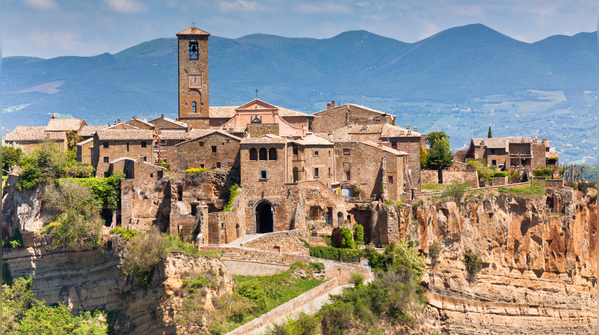
They call it the "dying city," and once you see it, you'll understand why. Floating on a crumbling pillar of volcanic rock high above a sweeping Italian valley, Civita di Bagnoregio was built by the Etruscans over two and a half millennia ago.
The issue? The edges of the plateau have been falling away for centuries. The original roads are long gone, meaning the only way to actually reach the town is by walking across a long, suspended footbridge. Once you cross over, it's like stepping straight into the Middle Ages. Think ivy-covered stone houses, quiet little piazzas, and ancient doorways.
The town itself is small, but it's a fascinating, and slightly melancholic. It's only about two hours from Rome. While you can easily knock it out as a day trip, spending the night is the real secret.
Image Credit: Canva
Mesa Verde, USA
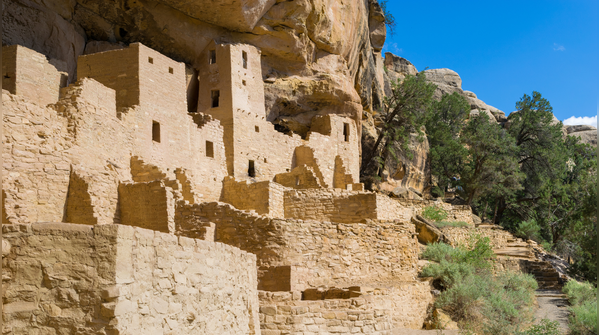
Tucked away in the plunging canyons of southwestern Colorado, Mesa Verde stands out as one of the most stunning archaeological wonders in North America. Between the 1100s and 1200s, the Ancestral Puebloans carved out massive communities right under the enormous sandstone overhangs.
The undisputed star here is Cliff Palace. It's the largest cliff on the continent, and wandering through the site gives you a surreal look at the living quarters, and storage pits.
Nowadays, the area is heavily protected as a UNESCO World Heritage Site and a national park. You'll likely want to drive in from nearby Durango or Cortez. To really get up close to the ruins, you have to book a ranger-led tour, though there are plenty of trails if you prefer to just hike and take in the dizzying views. Aim for a trip between late spring and early fall for the best weather.
Image Credit: Canva
Sigiriya, Sri Lanka
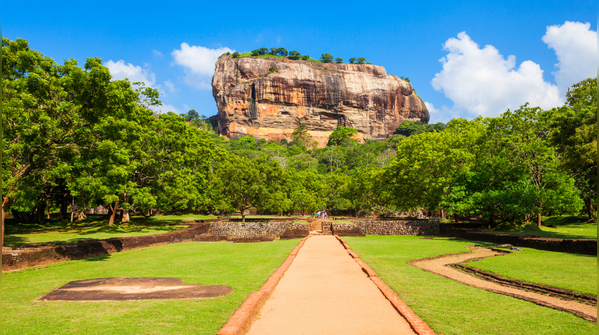
Shooting straight up from Sri Lanka's central plains, Sigiriya looks like a creation from a high-fantasy movie. Better known as Lion Rock, this nearly 200-meter-tall geological freak of nature was turned into a lavish royal fortress by King Kashyapa way back in the 5th century.
Getting to the top is a workout. You have to tackle roughly 1,200 stairs, winding past water gardens, ancient wall paintings, and a highly polished "Mirror Wall. It's about a four-hour drive from Colombo, making it a staple on most Sri Lankan itineraries. A lot of people pair it with the Minneriya National Park or the cave temples in Dambulla.
Image Credit: Canva
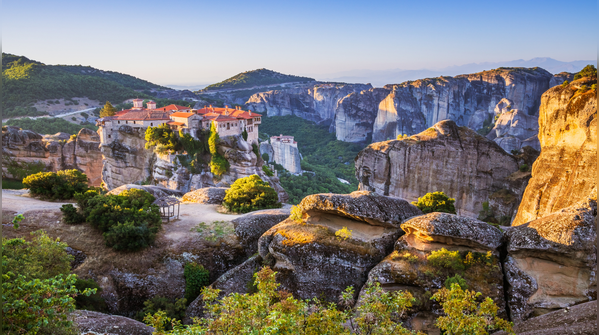
Meteora, Greece
Picture massive stone pillars jutting hundreds of meters into the sky, topped with monasteries. That’s Meteora. It's easily one of the most surreal landscapes in all of Europe.
While the sandstone towers, themselves are millions of years old, Orthodox monks arrived in the 14th century to turn them into the ultimate spiritual hideaways. To avoid persecution, they built their sanctuaries on the very peaks, hauling up every single brick and beam using rope-and-basket pulley systems.
Six of these monasteries are still up and running today, and you can actually go inside. Base yourself in the nearby town of Kalambaka, coming in from Athens or Thessaloniki. Spring and fall are easily the best times to go.
Image Credit: Canva
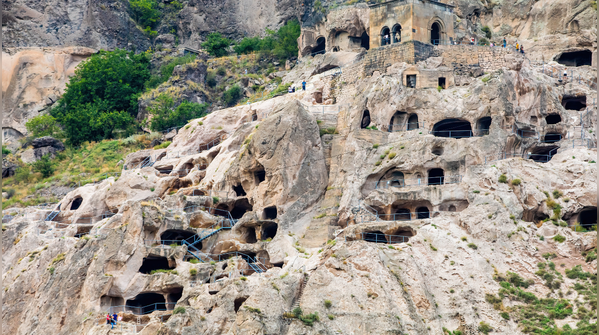
Vardzia, Georgia
Vardzia isn't a town sitting on a mountain; it’s a town hollowed out inside one. Tucked into the rugged cliffs of southern Georgia, this complex was kicked into high gear during the 12th century by Queen Tamar.
During its golden age, Vardzia boasted thousands of individual rooms built right into the rock above the Mtkvari River. We're talking hidden escape routes, subterranean wine cellars, and living quarters.
A massive earthquake ripped the mountain open in 1283, exposing a lot of the inner network to the outside world. Even in its ruined state, it's mind-blowing. You can still squeeze through narrow tunnels, check out the cave dwellings, and see centuries-old murals that somehow survived the disaster.
It takes a solid five-hour drive from Tbilisi to get here, so it definitely leans toward the adventurous side of travel. Stick to the shoulder seasons of spring and autumn to avoid extreme temperatures while you explore.
Image Credit: Canva
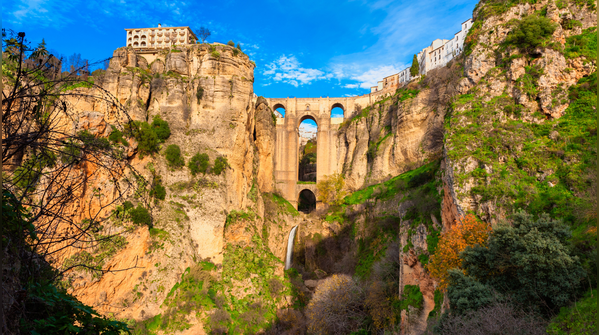
Ronda, Spain
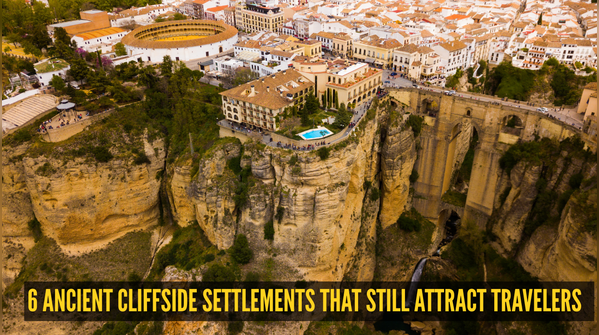
Clinging to the edge of a plunging gorge in Andalusia, Ronda is hands-down one of Spain’s most jaw-dropping sights. The town is physically sliced in half by El Tajo, a massive valley carved out by the Guadalevín River.
People have been living here for thousands of years, leaving behind a wild mix of Celtic, Roman, Moorish, and Christian history. The absolute highlight is the Puente Nuevo. It's a staggering 18th-century stone bridge that bridges the gap over the canyon, tying the old Moorish quarter to the newer parts of the city.
You can easily catch a bus or train up from Malaga. Plenty of people just visit for the afternoon, but staying the night is highly recommended. Catching the sunset over those mountains from the edge of the cliff is something you won't quickly forget.
Image Credit: Canva
Featured In lifestyle

