
Top US cities with the largest Indian population – ranked
Top US cities with the largest Indian population – ranked
New York’s iconic Fifth Avenue recently turned into a sea of desi celebration after an Indian couple shut down the busiest street for their wedding festivities. The extravagant baraat was more than a display of opulence. It was a reflection of a larger story – the flourishing Indian community in the United States.
Over the past decades, the Indian diaspora in the US has grown significantly. Indian immigrants rank as the second-largest immigrant group in the country after Mexicans. Approximately 3.2 million Indian immigrants reside in the US, according to the latest data from the Migration Policy Institute. This is 6% of the total foreign-born population of 50.2 million people. The New York, Dallas, San Francisco, Chicago, and San Jose metropolitan areas remain some of the top cities where Indians live. Here are the top cities where Indian Americans have built the most substantial populations.
New York City
NYC has the largest Indian community in the US. This vibrant city is home to over 711,000 Indian Americans, according to 2019 data from the Pew Research Center. You will surely bump into someone crooning Bollywood songs if you pass through the neighbourhood of Jackson Heights in Queens or Manhattan. You will also find authentic Indian restaurants, cultural institutions, and businesses in NYC.
Chicago
Second on the list is Chicago, with an Indian population of 238,000. The city has diverse neighbourhoods, and the chances of meeting someone with desi roots are high if you walk through the Devon Avenue neighbourhood. It is often referred to as ‘Little India’, thanks to the line of Asian restaurants, sweet shops, bakeries, textile shops, and temples. The Indian community in Chicago has established itself across various sectors, including healthcare, business, and academia.

San Francisco
There are approximately 234,000 Indians in San Francisco. The tech-driven economy is a major attraction for Indian professionals here. People focused on technology and entrepreneurship often live here.
Dallas metropolitan area
Dallas is fourth in line for the largest Indian population in the US. Approximately 208,000 Indian Americans live here. The booming economy and lower cost of living compared to other metropolitan areas have attracted Indian professionals to this city. Most of them work in sectors such as finance, healthcare, and energy.
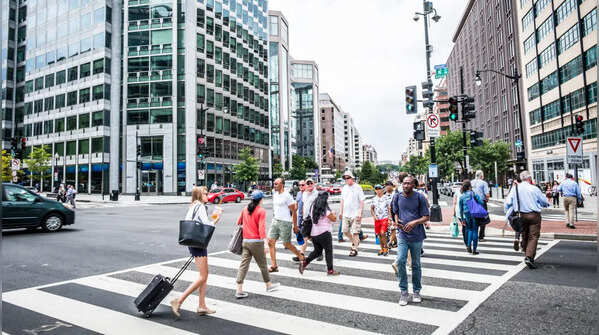
Washington, DC
The Washington, D.C. region is home to 192,000 Indian Americans. Most Indian professionals living here work in government, policy, law, and international organisations. The Indian American population here is highly educated and part of an influential community.
San Jose, California
Around 189,000 Indian Americans reside in San Jose. This city is a preferred destination for many Indian tech professionals. A hub for tech companies, start-ups, and venture capital, San Jose has become a dream destination for Indian Americans seeking careers in technology and entrepreneurship.
Los Angeles
Los Angeles has approximately 171,000 Indian Americans. The community largely resides in the Artesia and West Hollywood neighbourhoods. They thrive in the entertainment, technology, healthcare, and business sectors across LA.
Houston
Houston is home to 161,000 Indian Americans. The city’s economy, particularly in energy, petrochemicals, and healthcare, has attracted skilled Indian professionals. The community here mostly works at the NASA Space Center and in the energy and engineering sectors. Houston is also culturally diverse.
Disclaimer: The figures and rankings presented are based on the most recent publicly available data from sources such as the Migration Policy Institute and the Pew Research Center. Population estimates may vary depending on methodology, data collection periods, and definitions of metropolitan areas. These numbers are indicative and intended for general informational purposes only, not as precise or up-to-date counts.
Featured In lifestyle

