
- News
- lifestyle
- parenting
- parenting-stories
- Parenting lessons from Lord Shiva and Goddess Parvati
Parenting lessons from Lord Shiva and Goddess Parvati
The family of Lord Shiva and Goddess Parvati feels more like a mirror
Parenting advice today comes from everywhere, books, podcasts, Instagram reels, well-meaning relatives. And yet, sometimes the most grounded lessons sit quietly in stories we’ve grown up hearing. The family of Lord Shiva and Goddess Parvati isn’t just symbolic or spiritual. It’s deeply human. There’s love, conflict, independence, ego clashes, protection, and patience. If you look closely, their story feels less like mythology and more like a mirror. As Mahashivratri nears, let's see what their journey can gently teach us about raising children.
Different children, different paths
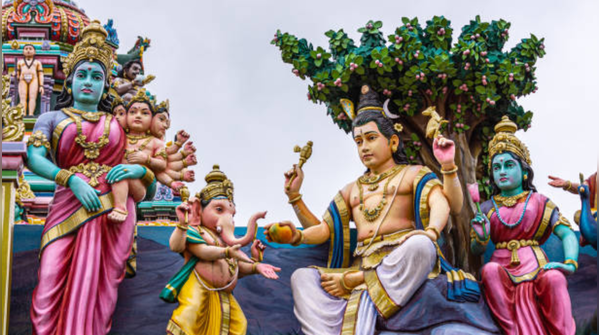
Look at Ganesha and Kartikeya. Same parents. Completely different personalities.
Ganesha is thoughtful, calm, and strategic. Kartikeya is brave, action-driven, and competitive. One wins a race by circling his parents, choosing wisdom over speed. The other sets off to conquer the world. And neither is “better.” They’re just different.
That’s parenting right there.
It’s easy to compare siblings. One studies quietly. The other questions everything. One is sensitive. The other is bold. But Shiva and Parvati never tried to make one child like the other. They allowed their sons to grow into who they were meant to be.
And maybe that’s the real lesson. Your job isn’t to produce identical outcomes. It’s to understand temperament. To support strengths. To accept that fairness doesn’t always mean sameness.

The power of a united front
There’s something steady about Shiva and Parvati as partners. They are opposites in many ways. Shiva is detached, meditative, often lost in stillness. Parvati is grounded, nurturing, deeply involved in family life. But they respect each other’s roles.
When Ganesha stood guard outside while Parvati bathed, he was following his mother’s instruction. Shiva, unaware, reacted in anger. The conflict was intense. But eventually, balance was restored. The family came back together.
Parenting is full of moments where parents don’t agree. One is strict. The other is softer. One reacts quickly. The other pauses. But children feel safest when they sense respect between their parents.
You don’t have to think the same way. But you do have to stand together.

Teaching through consequences, not fear
Shiva is known as calm, but also fierce when provoked. His reactions are powerful. Yet his lessons are never random. They carry meaning.
When Ganesha lost his head in that moment of anger, it wasn’t the end of the story. It was followed by restoration, growth, and a new identity. Ganesha didn’t come back diminished. He came back stronger, wiser, and deeply revered.
Mistakes happen in every home. Kids disobey. Parents overreact. Words are said. Tears fall. But what matters is what comes after. Repair. Apology. Understanding.
Children don’t need fear to learn. They need clarity. They need to see that actions have consequences — but also that love remains steady.

Balancing freedom and protection
Shiva is often shown as a wandering ascetic, detached from material life. Yet as a father, he protects fiercely. Parvati, too, is strong and protective, but she also allows her children to step into their own journeys.
Kartikeya leaves home to carve his own path. Ganesha takes on responsibilities early. Neither is kept sheltered forever.
That balance is hard in modern parenting. You want to shield your child from hurt. But you also know they need independence. So you step back a little. You let them try. You let them fail.
Protection doesn’t mean control. And freedom doesn’t mean absence.
Children don’t need perfect homes. They need accepting ones
That’s a powerful reminder in a world obsessed with comparison. Perfect grades. Perfect manners. Perfect social media moments.
Children need to feel that even if they’re different, even if they don’t fit some neat box, they are valued exactly as they are.
Parenting isn’t about control. It’s about guidance. It’s about patience when things don’t go as planned. It’s about stepping in when needed and stepping back when it’s time.
And maybe that’s why the story of Shiva and Parvati still resonates. Not because they are divine. But because their family feels real. Messy at times. Loving always.
And somewhere in those ancient stories, there’s a quiet reassurance. You don’t have to be a perfect parent. You just have to be present, steady, and willing to grow alongside your child.
Featured In lifestyle

