
- News
- lifestyle
- parenting
- parenting-stories
- How to tell if your child is autistic
How to tell if your child is autistic
Early signs of Autism
According to the World Health Organization, about 1 in 100 children has autism. Autism spectrum disorder (ASD) is a developmental disability that affects the brain, leading to differences in behaviour, communication, and learning. While some causes are known, others remain a mystery. Scientists believe that various factors may contribute to the development of ASD, and understanding these causes is an ongoing process. Understanding the early signs of autism is crucial for parents and caregivers to provide the necessary support and intervention.
What is Autism?
As the US Center for Disease Control and Prevention explains, ASD is characterised by differences in brain development. While some cases have identifiable causes, many remain unknown. Scientists believe that a combination of genetic and environmental factors contributes to the complexity of ASD. The spectrum encompasses a wide range of abilities, making each individual with autism unique. Some may excel in certain areas, while others may require substantial assistance in daily life.
Here are the early signs of autism seen in young children as per the UK National Health Service.
Signs to look out for
1. Not responding to their name
A child not reacting to their name being called might indicate challenges in social communication. This behaviour can be an early signal of autism.
2. Avoiding eye contact
Difficulty maintaining eye contact is a common feature of autism, reflecting challenges in social interaction and communication.
3. Limited smiling in response
Children with autism may find it challenging to reciprocate smiles, especially in response to social cues. A lack of shared smiles could be indicative of social difficulties.
Read also: 7 day South Indian diet plan for weight loss
Body language could also be a sign
Sensitivity to stimuli
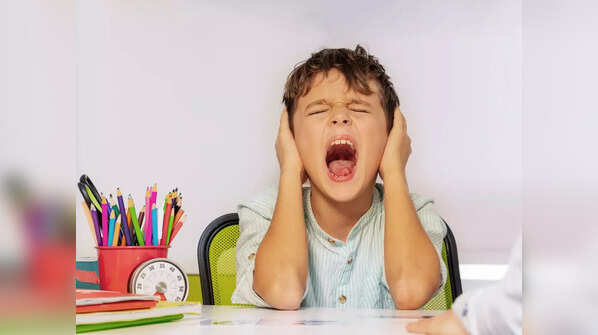
Intense reactions to specific tastes, smells, or sounds may point to sensory sensitivities, a characteristic trait in individuals with autism.
Repetitive movements
Watch for repetitive behaviours such as hand-flapping, finger-flicking, or body rocking. These repetitive actions often serve as self-soothing mechanisms.
Read also: How to increase magnesium intake in your body?
Additional signs
Parents should be aware of potential delays in speech development, limited engagement in pretend play, and the repetition of certain phrases. While these signs can be indicative of autism, it's important to also keep in mind that every child develops at their own pace. Early intervention is key, and a comprehensive evaluation by healthcare professionals is necessary for an accurate diagnosis.
Featured In lifestyle

