
Exclusive: President Droupadi Murmu hosted South Korean President with royal Rajasthani feast
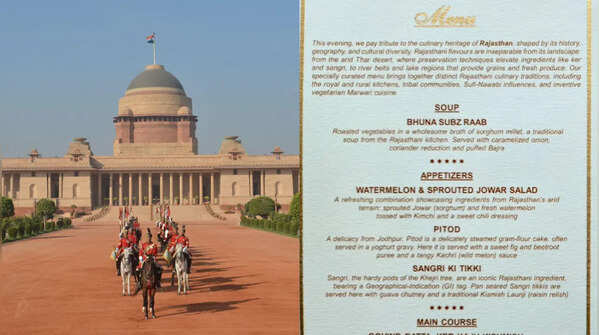
Flavours of Rajasthan served to South Korean President Lee Jae-myung
Rashtrapati Bhavan is known for promoting and positioning traditional culinary heritage on the global map. Recently, President Droupadi Murmu and her team showcased the rich cultural grandeur of Rajasthan at the state banquet hosted in honour of South Korean President Lee Jae-myung. The gala dinner saw the presence of Prime Minister Narendra Modi, along with several senior ministers. According to official data, the menu was created and presented in collaboration with Chef Dr Saurabh Sharma, a culinary academician and researcher based in Rajasthan, who has been working for the past 25 years to promote and preserve Rajasthan's culinary traditions. Chef Saurabh also champions Indian millets and GI-tagged ingredients on global platforms blending research with modern culinary pedagogy. According to the menu, the evening paid a tribute to the culinary heritage of Rajasthan shaped by its history, geography, and culinary diversity. Rajasthani flavours are inseparable from its landscape. The specially curated menu brings together distinct Rajasthani culinary traditions, including the royal and rural kitchens, tribal communities, Sufi-nawabi influences, and inventive vegetarian Marwari cusine.
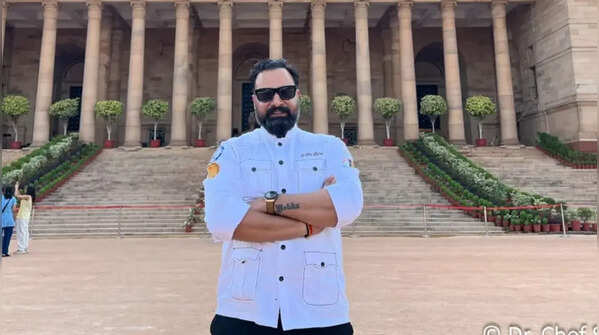
What does the chef say?
In an exclusive telephonic conversation with Etimes Lifestyle, Chef Saurabh said, "Two months back, I got a call from the President's house for this event, that they are going to host the President of South Korea and they would like to showcase the culinary heritage of different cities of Rajasthan. After many trials, we prepared this menu which includes all the major parts of Rajasthan-Udaipur, Jaipur, Jodhpur, Bikaner." Crediting his success to his mother, Dr Uma Sharma, and his wife, Dr Neha Sharma, Chef Saurabh shared that his family's support was the most crucial pillar behind this achievement. He also thanked Chef Ravindra Naruka, Chef Himmat Singh, Chef Ratiram Prajapat and Executive Chef Mukesh Kumar of Rashtrapati Bhavan for making the royal spread a huge success.
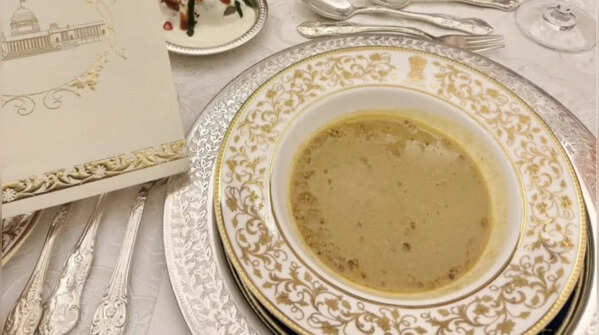
Soup
Bhuna Subz Raab: It refers to a soup made with roasted vegetables in a wholesome broth of sorghum millet, a traditional soup from the Rajasthani kitchen, and was served with caramelized onion, coriander reduction, and puffed bajra.
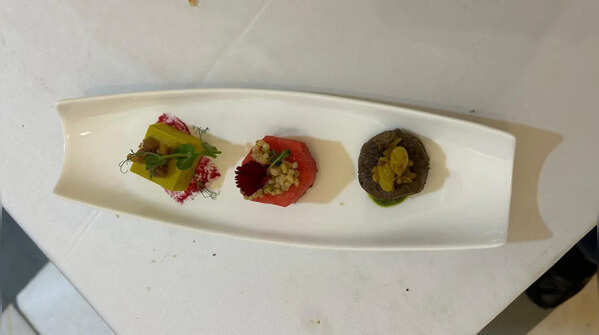
Appetizer
Watermelon and Sprouted Jowar Salad: It is a refreshing combination showcasing ingredients from Rajasthan's arid terrain and uses sprouted jowar and fresh watermelon tossed with kimchi and a sweet chili dressing.
Pitod: It is a delicacy from Jodhpur and refers to steamed gram-flour cake, often served in a yogurt gravy. It was served with sweet fig and beetroot puree and a tangy kachri sauce.
Sangri ki Tikki: Sagri refers to hardy pods of the Khejri tree which has gained GI tag. The dish included pan-seared sangri tikki served with guava chutney and traditional kismish launji.
Main Course
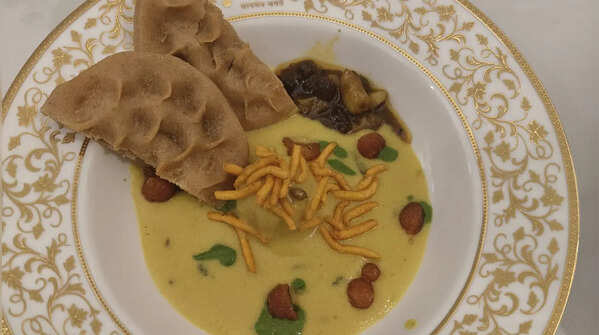
Govind Gatta, Ker Kaju Kishmish, Dhungari Palak Mangodi: A quintessentially Rajasthani plate featuring the famed Govind Gatta and GI tagged Bikaneri Bhujia. It was served with ker kaju kishmish relish and dhungari palak mangodi with crisp lentil nuggets and khobba roti.
Gulab Bati and Churma, Chandi Wali Dal and Shekhawat Jimikand: A celebration of the royal cuisine of Rajasthan, that served bati and churma with velvety chandi wali dal from Jaipur and jimikand along with Jaisalmeri pulao, aam ki launji, and chana dal papad.
Dessert
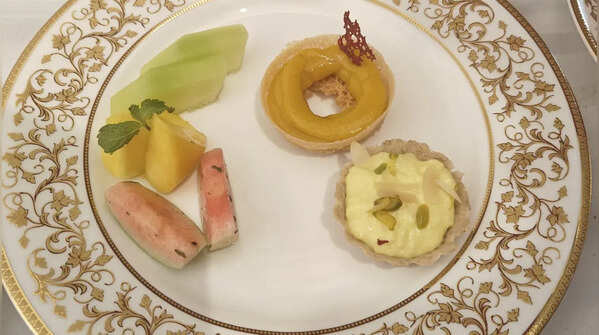
Khirandh Malpua: Delicate malpua, a delicacy of the temple town of Pushkar, infused with cardamom and nutmeg and paired with khirandh, a rich slow-cooked rice pudding from Udaipur.
Ghevar, Mango Saffron Relish: A staple of Teej festivities in Rajasthan, the traditional honeycomb-textured ghevar was presented with mango saffron topping and nuts.
What else was served
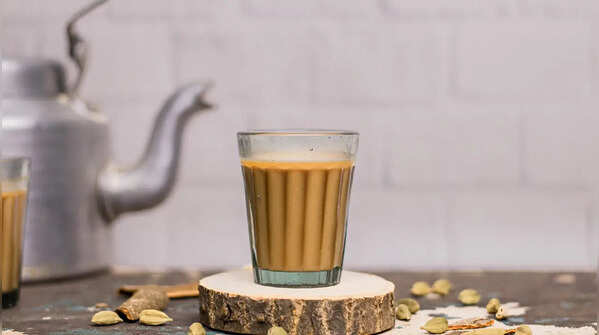
According to the official menu, the spread included fresh cut fruits-peach, guava, musk melon, and mulberry—plucked from gardens of Rashtrapati Bhavan. For drinks, there was masala chai, pudina chai, and coffee. Also, there was Mohan Thal, Chana Dal Kalmi Vada, and Shekhawati Dahi Gujiya. For condiments, there were Methi Kishmish ki Launji, Kachri Aur Lehsun ki Chutney, and Anardana Dhaniye ki Chutney.
Featured In Food

MORE FROM ETIMES
life & style