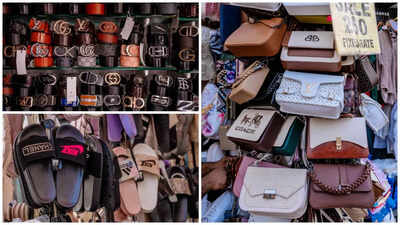
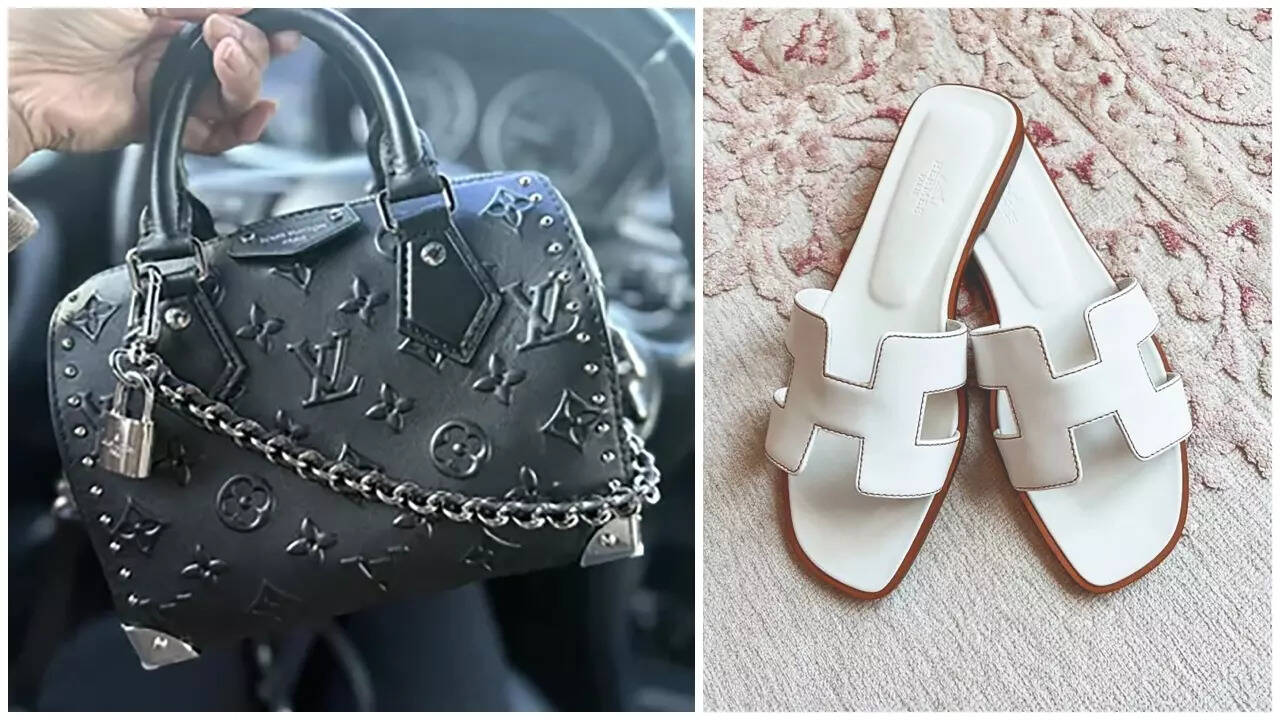
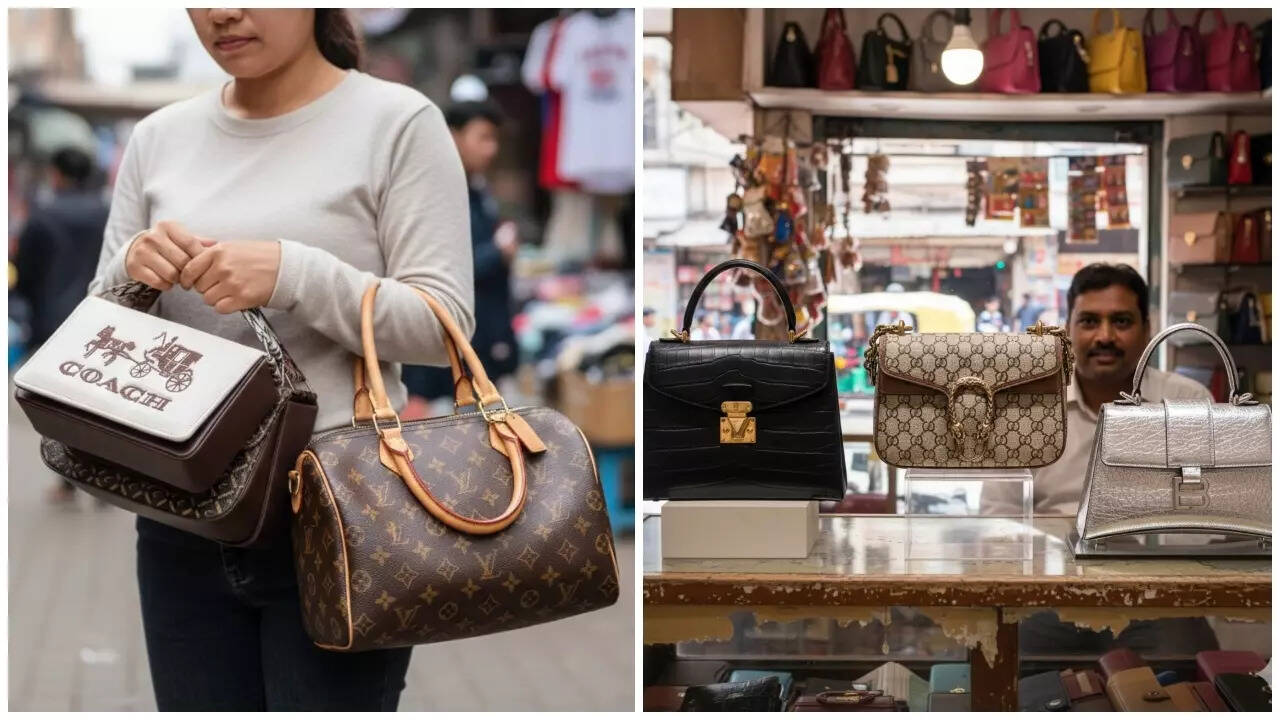
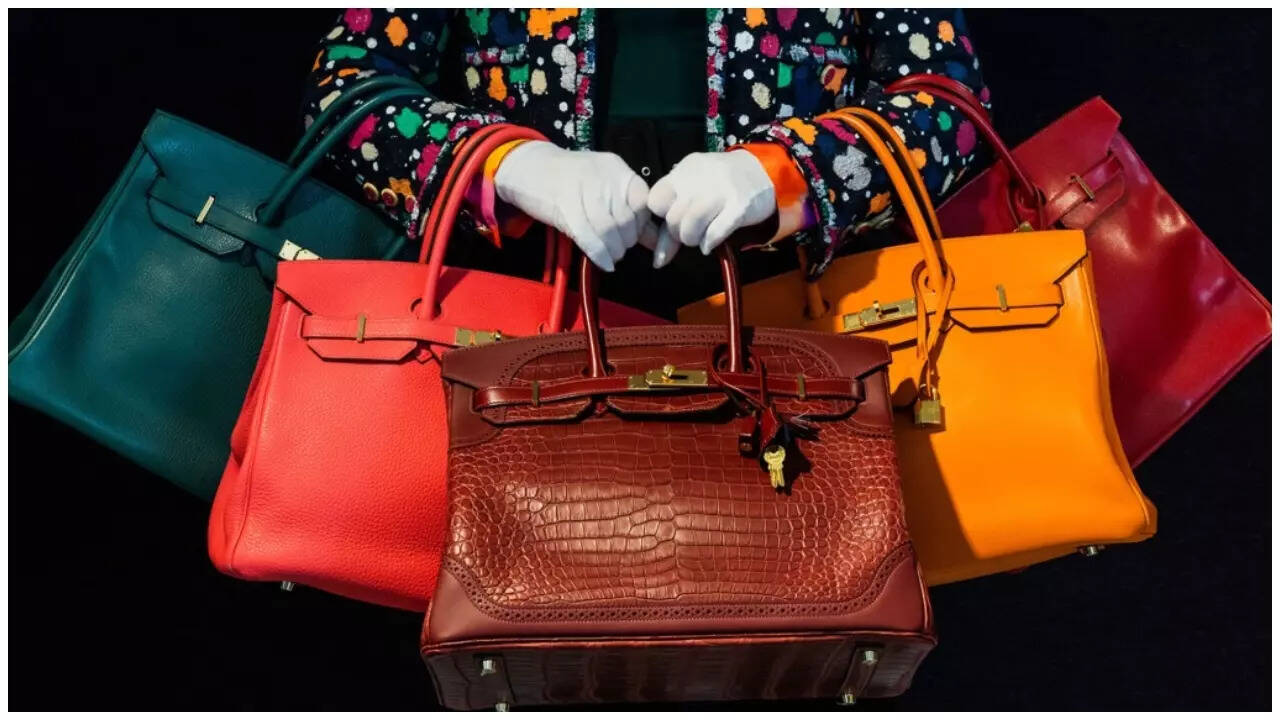
Gucci, Hermès, Coach, Louis Vuitton, Cartier, Dior, Burberry — the brand names are everywhere you look. From street markets and pop-up stalls to Instagram pages and WhatsApp groups, luxury logos are hard to miss. The products look exactly like the real thing — down to the stitching, the weight and the paperwork. This is the new face of India’s luxury replica economy — a fast-evolving underground industry where counterfeits are no longer crude imitations, but near-perfect replicas capable of fooling collectors, creators and even brand loyalists.
These ‘first copies’, or superfakes, often come with original-looking packaging, complete with branded boxes, dust covers and warranty cards. Handles are wrapped in foam, hardware is covered in protective film, and an identification number or QR code is printed on the product — which, unsurprisingly, leads nowhere.

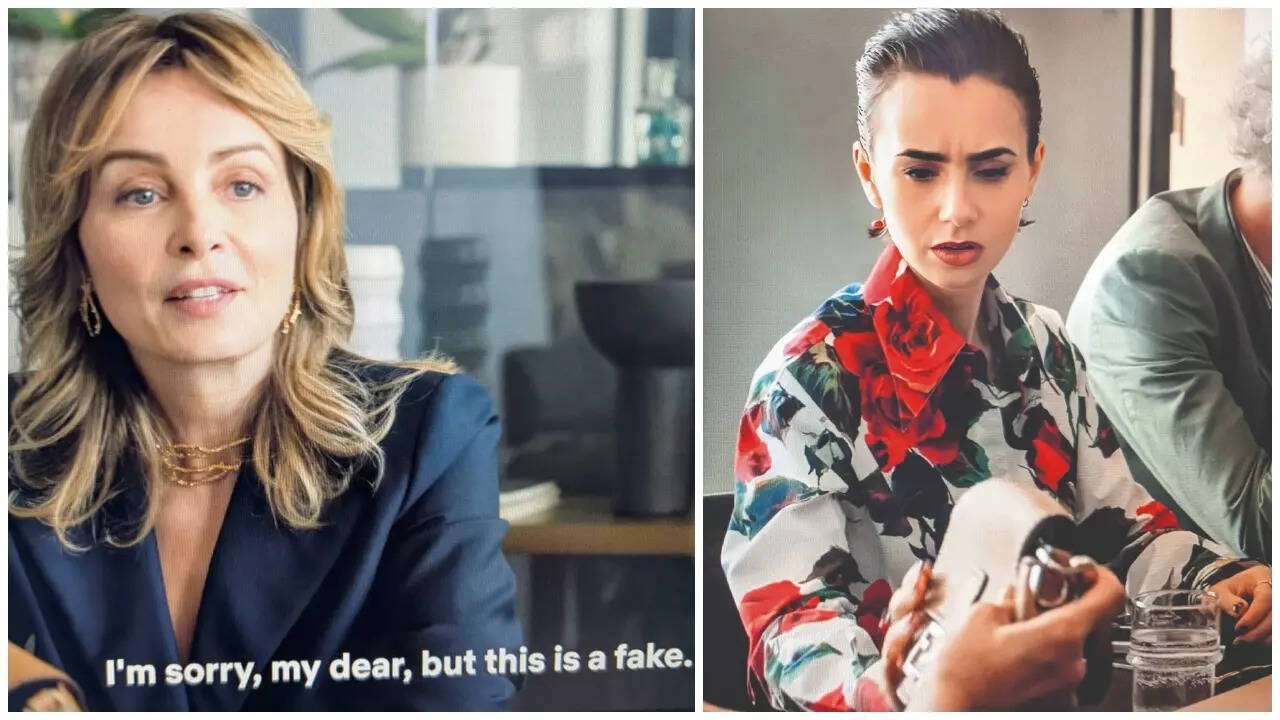
In Emily in Paris Season 5, Episode 2, a major plot point involves Emily being called out for carrying a fake Fendi Baguette
India has quietly become one of the world’s most lucrative markets for replicas, driven by a perfect storm — an aspirational luxury culture fuelled by social media, high import duties that inflate retail prices, and a long-standing acceptance of “first copy” fashion.
Rahul Verma, who has bought several first copies, says, “If you like to keep up with trends and have a budget constraint, first copies make sense. Some of them even last really long. Not everyone has the generational wealth to pick up ₹1 lakh bags.”
Luxury lifestyle content creator Akash Choudhary, a regular buyer of high-end fashion, believes the appeal goes deeper than price. “Most people buy fakes because they want to be included. They want to feel part of an inner circle of luxury, success, power and access. When someone buys a fake, they’re not buying a product — they’re buying a shortcut to belonging. A borrowed identity. A fantasy of arrival without the journey,” he says.
Arshi Shaikh, a Navi Mumbai–based online seller of what she calls premium clones, insists transparency is key to her business. According to Shaikh, many buyers see clones as a practical middle ground — access to a certain look or social signal without the financial strain of originals.
“Logos matter because luxury is tied to social signalling. But increasingly, customers ask about finish, weight, durability and overall craftsmanship. Quality has become the differentiator. Consumption today is tied to perception and validation,” she explains.
The Asian supply chain of fakesAccording to the 2025 Global Trade in Fakes report by the OECD and EUIPO, while counterfeit and pirated goods originate from almost every economy across continents, China (including Hong Kong) remains the primary source. Media reports attribute anywhere between 63 per cent and over 80 per cent of the global counterfeit market to China. Cities such as Guangzhou, Shenzhen, Shanghai and Beijing have long been associated with replica goods.
Other countries that feature prominently in the manufacturing of fake goods include Turkey, Thailand, India, Malaysia, Vietnam and Bangladesh. In India, Mumbai’s Heera Panna, Kolkata’s Kidderpore, and Delhi’s Palika Bazaar and Tank Road are listed among the notorious markets by the Office of the US Trade Representative, which tracks global hubs selling counterfeit products. An Al Jazeera report quotes shopkeepers claiming that sellers often travel to China to book consignments of counterfeit luxury items.
While physical markets remain widespread, most sales now happen online. “Online sales are the bread and butter for counterfeiters. That’s where you see a high percentage of fake products being sold,” Al Jazeera quoted Vikas Jain, founder and CEO of Acviss, a Bengaluru-based tech company that provides brand protection and anti-counterfeiting solutions.
Luxury brands are well aware of this parallel economy, but there is little they can effectively do to stop it. Louis Vuitton, Christian Louboutin, Gucci, Cartier, Rolex, Hermès, Yves Saint Laurent and Burberry have all pursued legal action against counterfeiters in India, but their victories have largely been short-lived.
“Brands don’t want the narrative to shift from their latest collection or philanthropic efforts to the less flattering focus of how they are fighting counterfeiters,” Paul Russell, a consumer behaviour psychologist at the UK-based Luxury Academy, told Al Jazeera.
How much the counterfeit industry is worthIndustry forecasts by Corsearch, a private brand-protection firm, suggest that the global trade in counterfeit goods could reach $1.79 trillion by 2030. This marks a 75 per cent increase from 2023, when the market was valued at $1.02 trillion, and represents growth that is 3.6 times higher than the predicted expansion of the global economy over the same period.
According to a 2025 report by the OECD and EUIPO, counterfeit and pirated goods accounted for an estimated $467 billion in global trade in 2021.Closer home, media reports citing ASSOCHAM estimates suggest that around 5 per cent of luxury apparel sold in India may be counterfeit.
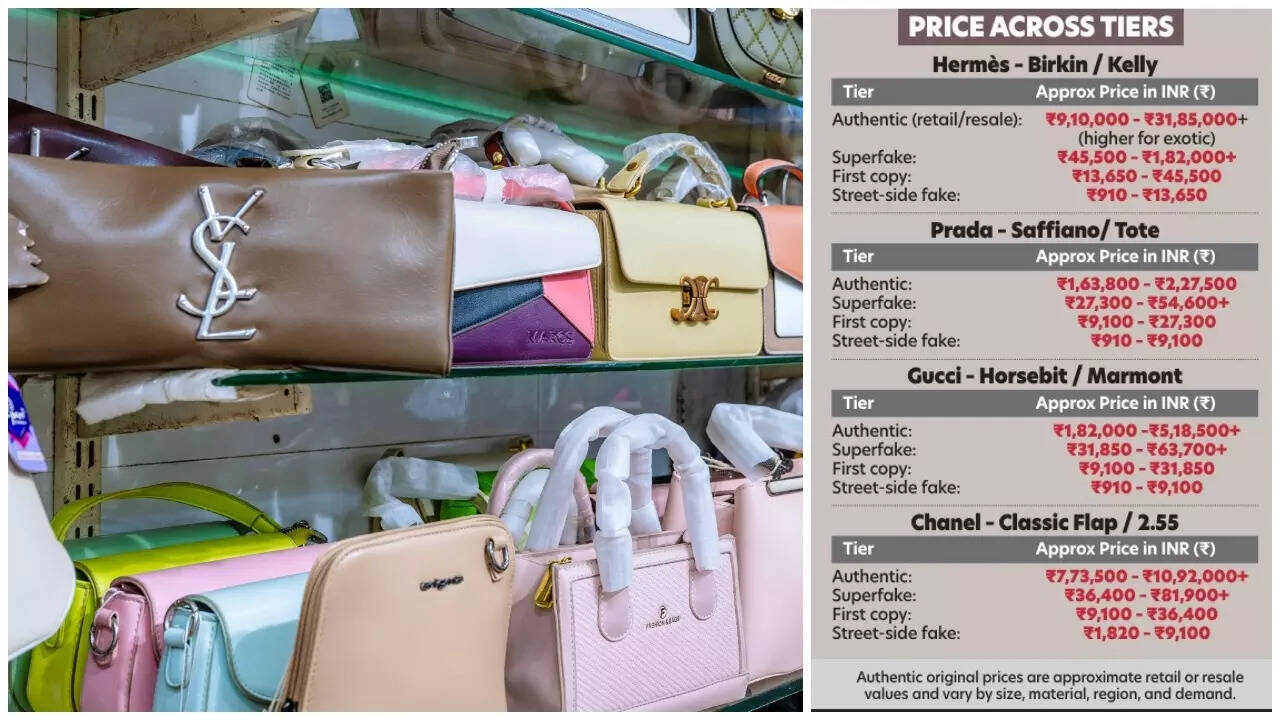
The replica hierarchySuperfakeThe highest tier of replicas, superfakes are engineered to pass authentication checks, sometimes even on resale platforms. They may use similar leather sources, custom hardware, advanced stitching techniques and accurate serialisation. Production runs are limited, prices are high, and detection often requires expert inspection.
Mirror copyDesigned to replicate the original as closely as possible, mirror copies pay close attention to materials, hardware, weight, stitching and detailing. Logos and serial codes are often near-identical, and packaging is carefully reproduced. These are popular with buyers who want a convincing look without paying superfake prices.
First copyA step up from street fakes, first copies focus on visual similarity at a glance. Logos, silhouettes and colours are recognisable, but materials, hardware and craftsmanship fall short. Serial numbers, packaging and authentication elements are usually missing or poorly replicated.
Street fakes (low-grade copies)The most basic replicas, these are produced for volume rather than accuracy. Materials are cheap, logos are often slightly off, finishing is rough, and they are sold widely in street markets and online.
‘Carrying a fake is a skill’Vidushi, a Mumbai-based content creator, believes that carrying a fake convincingly is a skill in itself — and not everyone has it. “I’m friends with people who have contacts in Mumbai and Dubai who source most bags. There are some Coach bags that retail for around ₹50,000–60,000 but are often sold as copies for ₹10,000–15,000. I own original ones, and when I compare them with my friends’ Dubai items, I really can’t tell the difference,” she says.
For Vidushi, it’s less about the item and more about the overall look. “If you’re wearing original Prada sunglasses, a Bulgari or Chanel perfume, and carrying an iPhone worth ₹1.5 lakh, who’s really going to doubt your bag?”
She also has advice for first-timers. “Don’t buy fake sunglasses or handbags from brands like Louis Vuitton or Gucci. Even the originals can look fake if you’re not screaming money. It’s not just about the bag — it’s your entire look. Clothes, bag, glasses, shoes, phone — everything has to align with the standard you want to project.”
Sharing another tip, she adds, “Don’t go to Colaba to buy fakes; anyone can spot those. There are dealers in Mumbai who sell first copies or restored bags. They tell customers what not to buy because the quality is bad. Some even have Instagram accounts, and their regular buyers keep track.”
‘Your style has to match the brand you’re carrying’Communications consultant Silky Chopra Mehrotra, COO, AMPERA, who has gone from carrying fake bags to now buying only originals, says it is often easy to spot a counterfeit — though context matters. “You can usually tell when someone is carrying a fake bag, but it also depends on where you are going. I spot a few at most parties, and it is usually Louis Vuitton. That is one brand you should buy very carefully because there are so many fakes around. When I was younger and obsessed with brands, I also carried fake bags. Now I carry only originals, so I understand why younger people want them,” she says.
She adds that fake fashion accessories — especially luxury bags and sunglasses — have become increasingly sophisticated. However, authentic brands still follow strict design, material and quality protocols that replicas often fail to match.
“Packaging tells a story. Authentic brands use premium, consistent packaging — thick dust bags, clean stitching, embossed logos and sturdy boxes. Misspelt brand names, flimsy boxes, inconsistent fonts or missing care booklets are clear red flags,” she explains.
“Another key point is logo and branding precision. Originals maintain absolute consistency; even a millimetre’s difference can signal a fake. Real bags have straight, symmetrical and tight stitching with no loose threads. If the stitching looks rushed or uneven, it’s almost certainly counterfeit.”
She concludes, “If you’re on a tight budget and just want the bag, buy it from anywhere. But if you don’t want to be called out, your style has to match the brand you’re carrying.”
India has quietly become one of the world’s most lucrative markets for replicas, driven by a perfect storm — an aspirational luxury culture fuelled by social media, high import duties that inflate retail prices, and a long-standing acceptance of “first copy” fashion.
• Authentic leather smells rich and organic; fakes often smell chemical or overly perfumed. Stitching is obsessively precise – especially on bags from
houses like Chanel and Hermès
• Typography is another giveaway. “Fonts are the biggest tell. Spacing, thickness, curves, microalignments – the differences are nano. And luxury lives in nano,” Choudhary shares
• Packaging, too, tells a story. Real dust bags feel thick and soft; boxes are rigid and perfectly finished. Serial cards and QR codes, however, mean little – most superfakes come with convincing paperwork
• The golden rule? “Buy the seller, not just the product. No genuine luxury seller discounts a new piece by 60 or 70 per cent. If the price feels unbelievable, it usually is,” Choudhary explains
• Use authentication services where available: Luxury and sneaker resale platforms may offer authentication – use it as a tool, not a guarantee
At the borders: Where fake luxury meets the lawTravelling to Europe or the US? Carrying a fake Louis Vuitton or Prada bag could land you with a hefty fine.
The European Anti-Fraud Office (OLAF) has been at the centre of some of the biggest recent crackdowns on counterfeit fashion in Europe. In a large-scale operation launched in 2024, OLAF coordinated with customs authorities across several countries to intercept more than 1.8 million fake designer items, with an estimated market value exceeding €180 million. The operation spanned Austria, Belgium, Germany, Italy and several non-EU countries, exposing how counterfeiters attempt to outsmart border controls.
The scale of the problem is growing. In 2023, authorities detained 152 million counterfeit items worth €3.4 billion — a 77 per cent year-on-year increase — according to an EUIPO–European Commission report published in November 2024.