
The surprising history of dupatta in Indian fashion and culture
From Tradition To Trend
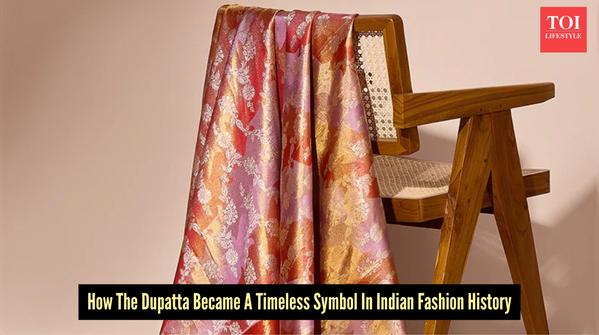
Have you seen the "Scandinavian Scarf" trend taking over social media lately? You take a long, wide scarf, drape it across your shoulders, and casually fling one end over your neck. Sound familiar? South Asians definitely thought so. The internet was quick to call out the fast-fashion trend, pointing out that this "groundbreaking" winter hack is exactly how we’ve draped our dupattas for centuries. But all this online drama actually brings up a great point. We wear dupattas so often—with a heavy festive lehenga or just a simple Tuesday office kurta—that we rarely stop to think about where they came from. The actual history? It's a wildly complex 3,000-year story involving ancient trade, royal courts, and some serious patriarchal baggage.
It wasn't always a "woman's" garment
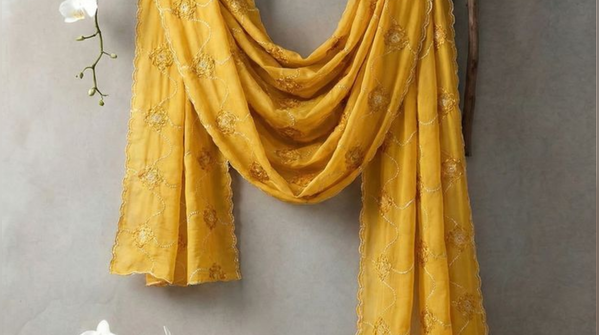
Let’s go way back. Over three millennia ago, to be exact. Visual proof of the earliest dupatta shows up in the Indus Valley Civilization. Take a look at the famous "Priest-King" sculpture, and you'll see a distinct chaddar-like cloth draped over his shoulder. The name itself is Sanskrit: Du (two) and Patta (strip of cloth). During the Vedic period, people called it an uttariya. Here is the curveball—it was a totally unisex, unstitched cloak. Both men and women wore it to fight off the weather and maintain modesty. Back then, society cared a lot more about how you folded and draped the fabric than what the fabric was actually made of.
(Image Credits: Pinterest)
The Mughal era changed the game
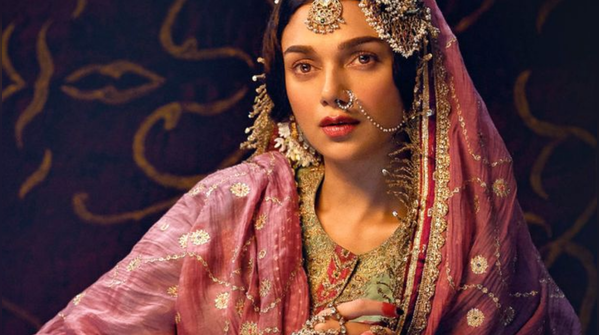
For a long time, the dupatta was just a highly practical piece of clothing. Then the Mughals arrived, and the humble cloth got a massive luxury upgrade. Thanks to Persian design influences, the royal courts introduced heavy, opulent fabrics. We’re talking rich silks, plush velvet, and brocade. Women of nobility—across both Hindu and Muslim faiths—used the dupatta to observe the purdah (modesty) system. But they completely refused to fade into the background. Instead, they turned the fabric into the loudest part of their outfit. They loaded it with pearls, precious stones, heavy embroidery, and intricate zari (gold and silver thread) work. It went from a basic cover-up to absolute wearable art.
(Image Credits: Pinterest)
The heavy burden of 'Izzat'
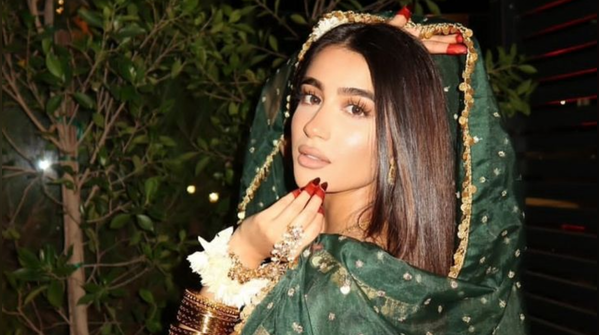
You can't really talk about the dupatta without unpacking its complicated relationship with gender norms. For generations, this simple piece of cloth was practically synonymous with a family’s izzat, or honor. Society used it to push a very specific "good woman" trope. Covering your head or chest wasn't just a style choice; it was demanded as proof of a woman's purity, dignity, and respect for her elders. Thankfully, modern urban fashion has flipped the script. Yes, we still drape it over our heads as a sign of respect when walking into a mandir, mosque, or gurdwara. But outside of those religious spaces, it has largely transitioned. It's no longer a mandatory modesty tool, but an optional way to express personal style.
(Image Credits: Pinterest)
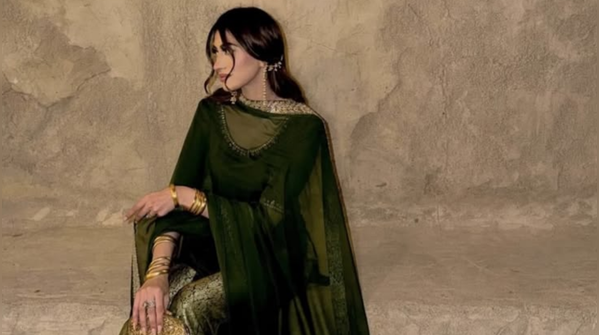
A wearable map of Indian weaves
As the garment spread across the subcontinent, local artisans made it their own. Today, looking at different dupatta styles is like reading a map of Indian craftsmanship. Want bold, geometric floral threads? That’s Punjab’s signature Phulkari. Looking for pure luxury? Varanasi brings the heavy gold and silver zari of the Banarasi weave. Then you have the incredibly precise dotted tie-dye of Bandhani from Gujarat and Rajasthan. Lucknow offers the elegant, textured white-on-white Chikankari embroidery, while Andhra Pradesh gives us Kalamkari—hand-painted or block-printed cottons covered in detailed mythological motifs.
(Image Credits: Pinterest)
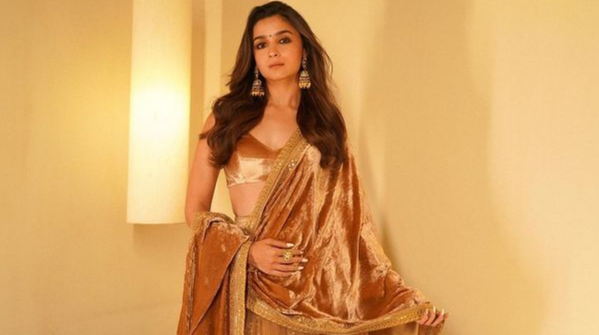
Enter Bollywood (and the wind machines)
By the late 20th century, Bollywood decided to rewrite the dupatta's cultural resume. If you grew up in the 90s, you know exactly what happened next. Directors practically weaponized sheer chiffon dupattas, using massive wind machines to make them billow dramatically on screen. It became the ultimate symbol of cinematic romance and a glamorous, must-have accessory. Which brings us full circle to the whole "Scandinavian Scarf" debate. It’s definitely frustrating when global fashion co-opts an ancient tradition without a nod to its origins. But maybe the controversy was a blessing in disguise. It reminded us that the dupatta hanging in our closet isn't just a matching accessory. It’s a 3,000-year-old survivor.
(Image Credits: Pinterest)
Featured In lifestyle

