Trending
This story is from January 22, 2015
Are taant saris only for grannies?
Don’t be horror-struck. That’s the feedback we got from sari shops, boutiques and Gen-Y’s trendy wardrobe
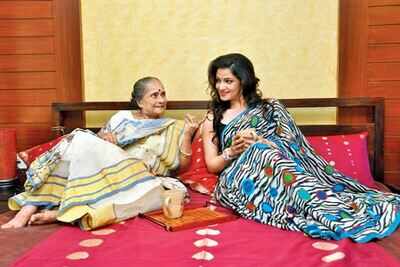
Don’t be horror-struck. That’s the feedback we got from sari shops, boutiques and Gen-Y’s trendy wardrobe
I’m very close to my didun, Dipali Chakraborty, who has this huge collection of beautiful saris! Though she doesn’t wear most of them now, she keeps adding to it just for us to wear in future. So, from the time I started wearing the six yards, it had to be hers. Moreover, her fashion sense has always been very modern and hence, even the taant saris she wears now ooze sophistication and style. So, obviously, the taant saris I wear are also stylish.
But then again, wearing taant saris is a cumbersome process and given my hectic schedule, I can hardly manage such time. These saris also don’t come in the kind of bright colours I love. I think that’s why most girls of my generation have lost interest in wearing these.
But now that I’m seeing my grandmother look so beautiful in a taant sari, I wish our handloom traditions would keep up with changing times and fashion to attract the younger generation. If that happens, Bengali women might just start wearing these beautiful saris again.
But what was cool in 17th century Delhi may not be so in 21st century Kolkata. Yes, taant saris are steeped in history and are as much an emblem of Bengal as the rosogolla, Rabindrasangeet and rawker adda. But our research shows that while the others thrive, taant textiles are surely on the decline. Ask yourself: when was the last time you saw a young, fashionable woman in taant?
There was a time when no wedding was complete without bags full of taant saris as gifts. But most young women today are ready to ditch the traditional weave for the more trendy chanderi, georgette, chiffon and others. So how, and when, did taant nosedive on the fash-o-meter? The list of complaints is long: they are heavy to wear, difficult to manage, come in predictable colours and designs and can’t match up to other handlooms. Weavers and retailers on the other hand point at failing infrastructure, government apathy, lack of investment and stiff competition from other sari varieties. It’s not a pretty picture.
What went wrong?
One of the first people we spoke to was Pradip Kumar Bhattacharya, the chief marketing officer of Tantuja (West Bengal State Handloom Weaver’s Co-operative Society Limited). You could call them the custodians of taant. But Bhattacharya admitted that these saris are indeed on their way out. “The young generation has almost stopped wearing taant and most of our customers are the elderly. It’s only the mothers, aunts or grandmothers who wear these saris now,” he sighs.
Designers unanimously feel that taant saris can be difficult to handle. “When you wear a taant, especially tangail, the look is traditional. The sari is generally stiff and as a result, unmanageable for those who don’t wear saris every day. Young Bengali girls have moved on to more manageable and soft handloom saris,” says designer Agnimitra Paul. “The lack of bright colours and interesting prints is the reason why young girls don’t wear taant.”
Not too far away, in Dhaniakhali, Hooghly district — one of the taant hubs of Bengal along with Phulia in Santipur — taant trader Sujoy Laha counters, “We too want to introduce new designs, but where is the support? We don’t know any fashion designers but every time I’ve approached the concerned department at the Chinsurah office, I’ve been stonewalled. No one’s interested in the survival of taant.” Sujoy has launched a website showcasing the saris from his establishment. “We had the option of e-buying earlier, but had to discontinue it since managing the courier delivery service on our own is quite difficult. Can’t the government do anything?”
The unflattering side of tradition
Some designers say that the decline of taant also has to do with the changing fashion consciousness of Bengali women. “As they become more conscious about what makes them look slim and trim, the taant sari with its bulky silhouette has lost out to the georgette or chiffon. So you’ll see a young woman wearing taant only on traditional occasions like the Ashtami anjali — but never to an evening party,” reasons designer Abhishek Dutta.
Even a few decades back, young women felt just the opposite, remembers 49-year-old homemaker Nelima Saha. “My family was very close to Ranbindrasangeet veteran Suchitra Mitra. She was a fashion icon for us and we loved the way she carried a taant sari. My sisters and I used to copy her style. Wearing a neatly pleated taant sari with a matching blouse and a small bindi along with a bouffant was our idea of dressing perfectly. I also liked Aparna Sen and the way she used to flaunt a taant sari. Today, my young daughter chooses a chiffon, or at the very best a dhakai, if she decides to wear a sari.”
Falling standards to blame
But there are many other factors at play. Designer Soumitra Mondal, who’s has been working on cotton weaves and interacting with weavers, said that the declining standard of saris have also added to the problem. “To keep them afloat, the taant weavers have chosen fast production over quality. The pricing is also a factor. Now you get fashionable, good-quality but low-priced saris from all over India. To be in the competition, a taant sari’s price has been brought down to such levels that the final product is more shabby than classy.” Soumitra, however, has seen high demand outside Bengal and says most of our best products go there.
Sujoy from Dhaniakhali agrees with Soumitra on the quality issue. “It takes a weaver around one and a half days to produce a good taant sari on the handloom, while a powerloom churns out two saris in an hour. The quality is bad, but who cares when this sari costs less?” he asks.
The economic factor
Though the alarm bells have started ringing, the sales have not been hit as yet. “People across the world identify taant with the heritage of Bengal, so there is a great demand in other places. But in Kolkata, the demand has definitely gone down.
Some experiments with the weave can still do wonders,” says designer Chandrani Singh Flora.
At the shopping hub of Gariahat, it’s business as usual though. Says Kinghuk Saha from Select Stores in Deshapriya Park, “In Kolkata, women over 40-45 years of age generally wear saris and unlike the younger generation, most of them still haven’t woken up to the various options in the market. So, young girls may have moved on to chiffon, georgette, velvet, brasso or soft cottons, taant still sells in bulk.” His opinion is echoed by Tarun Naskar of Adi Dhakeswari Bastralaya. “We have been selling taant from the day we opened. Yes, it’s sliding off the fashion charts but sales haven’t been affected yet.”
The way out
The beauty of the situation is, everyone knows what afflicts taant but no one believes there is a way out. Pradip Bhattacharya of Tantuja speaks strongly in favour of experimenting with motifs and colour combinations, apart from the need for a concerted marketing campaign to take the wonders of taant to young buyers. But taant trader Sujoy doesn’t see any effort from the government’s side to nurture the tradition of weaving. “We’re beset by labour problems and it’s very difficult to get a skilled weaver these days. Even those who are still working don’t want their children to join the profession. It is a dying art now,” he says.
Varieties of taant
Dhaniakhali
It’s the horizontal stripes that make Dhaniakhali saris unique. It also has a hundred by hundred thread count. The saris are made in Dhaniakhali thus the name.
Phulia
These handloom saris that have been worn by Bengali women for hundreds of years now are made in Phulia, Santipur. The traditional ones have temple-like design on the hem and simple woven designs inside.
Tangail
The most common type of taant sari that’s available in the market. It usually comes in bright colours on which large and intricate designs are woven in double jacquard.
Jamdani
Available both in Bangladesh (near Dhaka) and also in Santipur, Jamdani can be of two types: Dhakai Jamdani and Tangail Jamdani. Both are extremely stylish and never go out of fashion. A true Jamdani sari is woven without using a jacquard machine. The weaver uses fine needle-like spindles to conjure
beautiful weft work.
What do gen-y girls think?
TOI spoke to some girls who have just started draping the six yards and here’s what they said
“Yes, I believe that taant is out of fashion. I do not wear it. The fact that it is really cumbersome, heavy and difficult to carry, makes it less popular with girls of my age.”
— Sulagna Saha, 1st year, Media Studies, CU
“This pujo, for the first time, I bought two saris for myself. Though I like the taant saris I wear from mom’s collection, when I buy saris for myself, I choose those I can handle easily, like chiffons and soft cottons.”
— Brishti Sen Banerjee, 1st year, Sociology, St Xavier’s College
“I love bright colours and I don’t prefer zari. As you don’t get much colour options in taant saris, I don’t wear them much. But I really love dhakai saris, be it muslin or taant.”
— Sampriti Poddar, 1st year, IT, IEM
“I have always worn ma’s saris. Naturally I wore taant occasionally. However, when my elder brother got married early this year, taant was the last thing on my mind while shopping. I prefer to have georgette or silks for weddings and soft cotton for other occasions.”
— Swarnali Dawn, 1st Year (MA), Linguistics, CU
Taant saris give you such a beautiful and ethnic look! I just love wearing them. I’ve laid claim over all of ma’s taant saris and wear them whenever I can.
— Koel Mallick
I don’t buy taant saris myself, but I love wearing them. Usually I just borrow taant saris from ma’s wardrobe — she truly has an enviable collection!
— Raima
I love wearing all types of saris, be it taant or silk. I usually borrow taant saris from my ma, dida or thakuma’s wardrobe, as they have amazing collections!
— Srabanti
Any sari can make you look beautiful if you know how to carry it. Similarly, a very traditional and common taant sari can turn heads if worn, say, with a choli.
— Subhashree
I don’t buy taant saris on my own and wear ma’s white and red taant only on Ashtami. But somebody has to help me wear it, as I can’t manage it myself.
— Mimi Chakraborty
Rating the other traditional weaves
Mangalgiri
Very fashionable and comes in bright colours. Perfect for a morning event
Kanjeevaram
They have replaced Benarasis in any young girl’s wedding wardrobe. The more gorgeous the better
Chanderi
Whether cotton or silk, Chanderis are must-haves. It can be worn in any event depending on the colour and design
Baluchari
Baluchari saris have gone completely out of fashion. Young girls today don’t even recognize the weave
South cotton
They are affordable, stylish, easy-to-wear and so, a favourite for any daytime occasion
Benarasi
Benarasis are now confined to the wedding ceremony. For the reception, girls choose other weaves
I’m very close to my didun, Dipali Chakraborty, who has this huge collection of beautiful saris! Though she doesn’t wear most of them now, she keeps adding to it just for us to wear in future. So, from the time I started wearing the six yards, it had to be hers.
But then again, wearing taant saris is a cumbersome process and given my hectic schedule, I can hardly manage such time. These saris also don’t come in the kind of bright colours I love. I think that’s why most girls of my generation have lost interest in wearing these.
But now that I’m seeing my grandmother look so beautiful in a taant sari, I wish our handloom traditions would keep up with changing times and fashion to attract the younger generation. If that happens, Bengali women might just start wearing these beautiful saris again.
All the world’s jewels lay at their feet, but when it came to clothes, women of the Mughal court loved the handloom weaves of Bengal. The story goes that the fabrics were so fashionable — and so see-through — that the emperor once had to reprimand a begum over matters of propriety even though she had layers of the cloth wrapped around her!
But what was cool in 17th century Delhi may not be so in 21st century Kolkata. Yes, taant saris are steeped in history and are as much an emblem of Bengal as the rosogolla, Rabindrasangeet and rawker adda. But our research shows that while the others thrive, taant textiles are surely on the decline. Ask yourself: when was the last time you saw a young, fashionable woman in taant?
There was a time when no wedding was complete without bags full of taant saris as gifts. But most young women today are ready to ditch the traditional weave for the more trendy chanderi, georgette, chiffon and others. So how, and when, did taant nosedive on the fash-o-meter? The list of complaints is long: they are heavy to wear, difficult to manage, come in predictable colours and designs and can’t match up to other handlooms. Weavers and retailers on the other hand point at failing infrastructure, government apathy, lack of investment and stiff competition from other sari varieties. It’s not a pretty picture.
What went wrong?
One of the first people we spoke to was Pradip Kumar Bhattacharya, the chief marketing officer of Tantuja (West Bengal State Handloom Weaver’s Co-operative Society Limited). You could call them the custodians of taant. But Bhattacharya admitted that these saris are indeed on their way out. “The young generation has almost stopped wearing taant and most of our customers are the elderly. It’s only the mothers, aunts or grandmothers who wear these saris now,” he sighs.
Designers unanimously feel that taant saris can be difficult to handle. “When you wear a taant, especially tangail, the look is traditional. The sari is generally stiff and as a result, unmanageable for those who don’t wear saris every day. Young Bengali girls have moved on to more manageable and soft handloom saris,” says designer Agnimitra Paul. “The lack of bright colours and interesting prints is the reason why young girls don’t wear taant.”
Not too far away, in Dhaniakhali, Hooghly district — one of the taant hubs of Bengal along with Phulia in Santipur — taant trader Sujoy Laha counters, “We too want to introduce new designs, but where is the support? We don’t know any fashion designers but every time I’ve approached the concerned department at the Chinsurah office, I’ve been stonewalled. No one’s interested in the survival of taant.” Sujoy has launched a website showcasing the saris from his establishment. “We had the option of e-buying earlier, but had to discontinue it since managing the courier delivery service on our own is quite difficult. Can’t the government do anything?”
The unflattering side of tradition
Some designers say that the decline of taant also has to do with the changing fashion consciousness of Bengali women. “As they become more conscious about what makes them look slim and trim, the taant sari with its bulky silhouette has lost out to the georgette or chiffon. So you’ll see a young woman wearing taant only on traditional occasions like the Ashtami anjali — but never to an evening party,” reasons designer Abhishek Dutta.
Even a few decades back, young women felt just the opposite, remembers 49-year-old homemaker Nelima Saha. “My family was very close to Ranbindrasangeet veteran Suchitra Mitra. She was a fashion icon for us and we loved the way she carried a taant sari. My sisters and I used to copy her style. Wearing a neatly pleated taant sari with a matching blouse and a small bindi along with a bouffant was our idea of dressing perfectly. I also liked Aparna Sen and the way she used to flaunt a taant sari. Today, my young daughter chooses a chiffon, or at the very best a dhakai, if she decides to wear a sari.”
Falling standards to blame
But there are many other factors at play. Designer Soumitra Mondal, who’s has been working on cotton weaves and interacting with weavers, said that the declining standard of saris have also added to the problem. “To keep them afloat, the taant weavers have chosen fast production over quality. The pricing is also a factor. Now you get fashionable, good-quality but low-priced saris from all over India. To be in the competition, a taant sari’s price has been brought down to such levels that the final product is more shabby than classy.” Soumitra, however, has seen high demand outside Bengal and says most of our best products go there.
Sujoy from Dhaniakhali agrees with Soumitra on the quality issue. “It takes a weaver around one and a half days to produce a good taant sari on the handloom, while a powerloom churns out two saris in an hour. The quality is bad, but who cares when this sari costs less?” he asks.
The economic factor
Though the alarm bells have started ringing, the sales have not been hit as yet. “People across the world identify taant with the heritage of Bengal, so there is a great demand in other places. But in Kolkata, the demand has definitely gone down.
Some experiments with the weave can still do wonders,” says designer Chandrani Singh Flora.
At the shopping hub of Gariahat, it’s business as usual though. Says Kinghuk Saha from Select Stores in Deshapriya Park, “In Kolkata, women over 40-45 years of age generally wear saris and unlike the younger generation, most of them still haven’t woken up to the various options in the market. So, young girls may have moved on to chiffon, georgette, velvet, brasso or soft cottons, taant still sells in bulk.” His opinion is echoed by Tarun Naskar of Adi Dhakeswari Bastralaya. “We have been selling taant from the day we opened. Yes, it’s sliding off the fashion charts but sales haven’t been affected yet.”
The way out
The beauty of the situation is, everyone knows what afflicts taant but no one believes there is a way out. Pradip Bhattacharya of Tantuja speaks strongly in favour of experimenting with motifs and colour combinations, apart from the need for a concerted marketing campaign to take the wonders of taant to young buyers. But taant trader Sujoy doesn’t see any effort from the government’s side to nurture the tradition of weaving. “We’re beset by labour problems and it’s very difficult to get a skilled weaver these days. Even those who are still working don’t want their children to join the profession. It is a dying art now,” he says.
Varieties of taant
Dhaniakhali
It’s the horizontal stripes that make Dhaniakhali saris unique. It also has a hundred by hundred thread count. The saris are made in Dhaniakhali thus the name.
Phulia
These handloom saris that have been worn by Bengali women for hundreds of years now are made in Phulia, Santipur. The traditional ones have temple-like design on the hem and simple woven designs inside.
Tangail
The most common type of taant sari that’s available in the market. It usually comes in bright colours on which large and intricate designs are woven in double jacquard.
Jamdani
Available both in Bangladesh (near Dhaka) and also in Santipur, Jamdani can be of two types: Dhakai Jamdani and Tangail Jamdani. Both are extremely stylish and never go out of fashion. A true Jamdani sari is woven without using a jacquard machine. The weaver uses fine needle-like spindles to conjure
beautiful weft work.
What do gen-y girls think?
TOI spoke to some girls who have just started draping the six yards and here’s what they said
“Yes, I believe that taant is out of fashion. I do not wear it. The fact that it is really cumbersome, heavy and difficult to carry, makes it less popular with girls of my age.”
— Sulagna Saha, 1st year, Media Studies, CU
“This pujo, for the first time, I bought two saris for myself. Though I like the taant saris I wear from mom’s collection, when I buy saris for myself, I choose those I can handle easily, like chiffons and soft cottons.”
— Brishti Sen Banerjee, 1st year, Sociology, St Xavier’s College
“I love bright colours and I don’t prefer zari. As you don’t get much colour options in taant saris, I don’t wear them much. But I really love dhakai saris, be it muslin or taant.”
— Sampriti Poddar, 1st year, IT, IEM
“I have always worn ma’s saris. Naturally I wore taant occasionally. However, when my elder brother got married early this year, taant was the last thing on my mind while shopping. I prefer to have georgette or silks for weddings and soft cotton for other occasions.”
— Swarnali Dawn, 1st Year (MA), Linguistics, CU
Taant saris give you such a beautiful and ethnic look! I just love wearing them. I’ve laid claim over all of ma’s taant saris and wear them whenever I can.
— Koel Mallick
I don’t buy taant saris myself, but I love wearing them. Usually I just borrow taant saris from ma’s wardrobe — she truly has an enviable collection!
— Raima
I love wearing all types of saris, be it taant or silk. I usually borrow taant saris from my ma, dida or thakuma’s wardrobe, as they have amazing collections!
— Srabanti
Any sari can make you look beautiful if you know how to carry it. Similarly, a very traditional and common taant sari can turn heads if worn, say, with a choli.
— Subhashree
I don’t buy taant saris on my own and wear ma’s white and red taant only on Ashtami. But somebody has to help me wear it, as I can’t manage it myself.
— Mimi Chakraborty
Rating the other traditional weaves
Mangalgiri
Very fashionable and comes in bright colours. Perfect for a morning event
Kanjeevaram
They have replaced Benarasis in any young girl’s wedding wardrobe. The more gorgeous the better
Chanderi
Whether cotton or silk, Chanderis are must-haves. It can be worn in any event depending on the colour and design
Baluchari
Baluchari saris have gone completely out of fashion. Young girls today don’t even recognize the weave
South cotton
They are affordable, stylish, easy-to-wear and so, a favourite for any daytime occasion
Benarasi
Benarasis are now confined to the wedding ceremony. For the reception, girls choose other weaves
End of Article
FOLLOW US ON SOCIAL MEDIA





Featured In Lifestyle

Popular Categories
Entertainment NewsBollywood NewsTollywood NewsKollywood NewsMollywood NewsMovie ReviewsLatest Hindi MoviesLatest Tamil MoviesMX PlayerParenting TipsHome RemediesWeight LossBeauty TipsParenting TipsHindi VideosHindi Video SongsBhojpuri Music VideosLatest Telugu MoviesBhojpuri Music VideoHindi TV News
Trending in Entertainment
Latest MoviesBollywood MoviesHollywood MoviesTamil Movies 2024Telugu Movies 2024Malayalam Movies 2024Kannada Movies 2024Marathi Movies 2024Bengali Movies 2024Top Rated Movies 2024Best Hindi MoviesBest English MoviesBest Telugu MoviesBest Tamil MoviesBest Malayalam MoviesBest Kannada MoviesBest Bengali MoviesUpcoming Hindi MoviesBest Movies Of All TimeBest Hindi Movies of All Time
Trending in Etimes
Horoscope TodayNumerology Predictions TodayDinner With TrumpTim WalzIvanka TrumpJose LopezKristina JoksimovicJoe WilsonTrump Eating The Dogs SongGermany NewsKamala HarrisPrince HarryPatriot Day 2024Diabetes RiskHappy Mindfulness Day 2024Trump Vs HarrisJoe JonasPositive Thinking Day 2024Dave Bautista
Trending in TV
Trending in Lifestyle
Trending in Regional
Movie Reviews
Visfot ReviewThalapathy Is The G.O.A.T ReviewRebel Ridge ReviewDetective Conan vs. Kid the Phantom Thief ReviewBeetlejuice Beetlejuice ReviewPad Gaye Pange ReviewA Wedding Story ReviewThe Diary Of West Bengal ReviewTikdam ReviewKinds Of Kindness ReviewAfraid ReviewThe Deliverance ReviewBlue Lock: Episode Nagi ReviewDaddio Review
Upcoming Hindi Movies
Upcoming Regional Movies
Latest News
7. Hindi becomes officialJulie Chen to miss Big Brother live eviction for first time, taps Jerry O'Connell to hostTragic road accident on Mogili ghat road claims seven lives in Chittoor districtRaveena Tandon apologizes to fans for not photo snub in London: "It was not my intention to offend"Bonedi baris hope for a peaceful start to PujoPreschools turn nursing homes, retirement age raised: China's demographic crisis explodesTovino Thomas praises Prithviraj Sukumaran as director: "One of the brilliant directors I have ever worked with"Man shot near Delhi's Greater Kailash-I gym, gang war suspected8 animals that reproduce without mating'Cops stood as mute spectators': Protesting doctors write to President over RG Kar impasseFatal crash in Australia's Netherby claims life of ToddlerNASA to establish New Lunar Time Standard with Coordinated Lunar Time (LTC) initiativeDivya Bansal explores themes of human resilience, love and positive transformation in debut poetry bookWWE Superstar Cody Rhodes and his Wife Brandi Rhodes Share Special Messages on Their 11th AnniversaryAnupamaa: Anuj and Anu to go legal against Ankush and Barkha'Dead cat hanging from a tree': Origin of Haitian immigrants row. Everyone heard itTop 5 least private zodiac signsPerfect comfort foods for every zodiac sign
Other Group Sites -
ETimes is an Entertainment, TV & Lifestyle industrys promotional website and carries advertorials and native advertising.