Trending
This story is from July 5, 2020
Why women can freak you out (in the best way)
Bulbbul, the tale of a chudail or evil spirit who preys upon men in a 19th century Bengal village, has captured imaginations, winning plaudits for the show’s writer and director Anvita Dutt, who also wrote Pari and the dialogue for Phillauri, both films about female supernatural forces. Interestingly, all three films also share a female producer — Anushka Sharma.
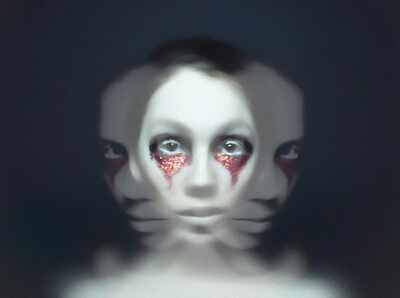
Representative image (Photo: Pexels)
Key Highlights
Whether it’s walking alone on a dark street or being approached by a stranger...women have a deep understanding of fear. And that’s what makes their stories terrifying — PRERNA GILL | WRITER & EDITOR
Bulbbul, the tale of a chudail or evil spirit who preys upon men in a 19th century Bengal village, has captured imaginations, winning plaudits for the show’s writer and director Anvita Dutt, who also wrote Pari and the dialogue for Phillauri, both films about female supernatural forces. Interestingly, all three films also share a female producer — Anushka Sharma. 
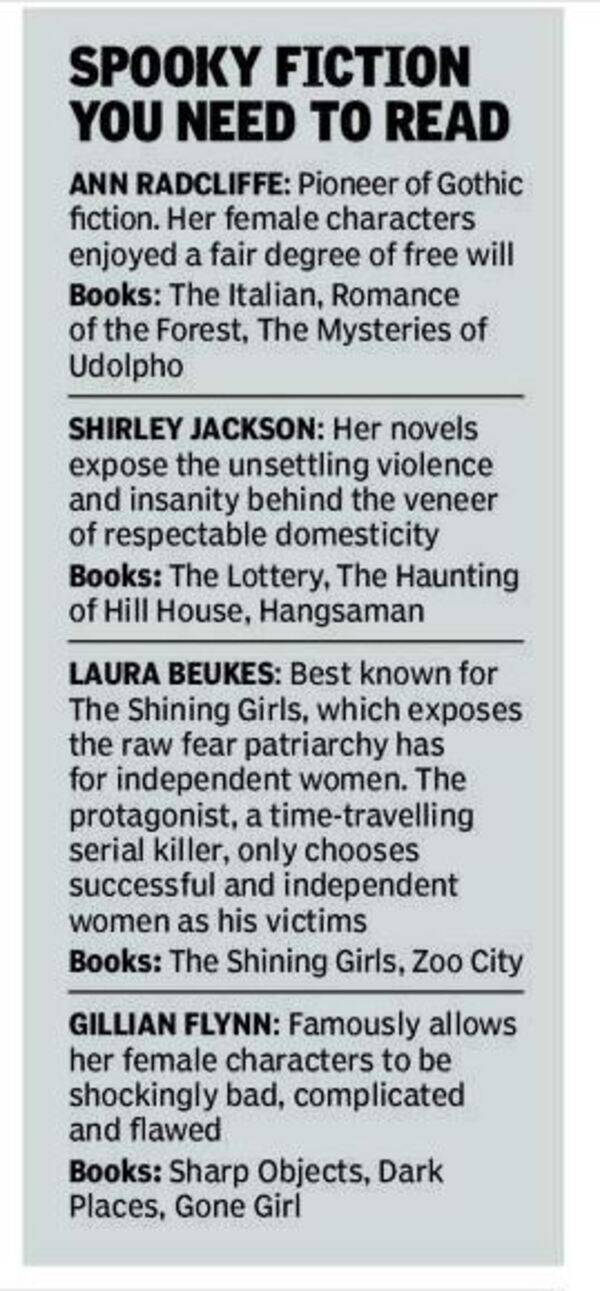
Dutt is one of an enduring line of women writers who have a special knack for spine-chilling tales of misfits and social rejects, those who, after death, keep wandering between the two worlds, seeking closure and justice. From Mary Shelley who wrote Frankenstein at the age of 19, creating the timeless trope of man’s-creation-gone-rogue, to the Bronte sisters’ haunting characters — Catherine in Wuthering Heights and the ‘madwoman in the attic’ Bertha in Jane Eyre, from Shirley Jackson to the contemporary psychological horror of Gillian Flynn’s Gone Girl — women have been penning hair-raising tales for more than two centuries, but remain in the shadow of male writers.
Dutt believes that women were the original storytellers of ghost stories. “Traditional Indian folktales and fables about female supernatural forms like chudail, dakini, pretni, all started as oral traditions. They were narrated as cautionary tales to children by women. The message was clear. For girls it was: ‘wake up and smell the roses, don’t let this happen to you’. And for boys it was: ‘don’t do anything wrong to a woman, there will be repercussions… she’ll come back to haunt you’.”
So why does the genre attract women? Living in a patriarchal and often violent world, women know what it is to fear, says Prerna Gill, who has written a book on the female supernatural being in literature and film. “Whether it’s walking alone on a dark street at night or being approached by a stranger in an unknown place, women have a deep understanding of fear. And that’s what makes their stories terrifying,” says Gill. As an editor at Harper Collins India, she also commissioned and edited a collection of horror stories by Isha Singh, called ‘Where do you go in the dark, my love’ that came out in 2019.
Similarly, Shreya Sen-Handley also channelled the pain of a turbulent first marriage in her book Strange, a collection of supernatural stories published in 2019. “Like many women, I have known psychological, sexual and physical abuse. The knowledge of what goes on in our ‘everyday’ lives beneath the unruffled surface that patriarchal society forces us to maintain is key to why women write horror, crime, and the supernatural so often and so well. We not only know what lies beneath, we have learnt to cope with it, gently and silently, building up to a startling dénouement, both in our lives and our fiction,” says Sen-Handley who is now happily married again, and lives in the UK.
In one of Sen-Handley’s stories, the protagonist and narrator is a woman deserted by her husband and taking care of a sick child all alone. She presents herself as a woman on a hard-earned holiday with her recuperating daughter. As the story unfolds, it becomes apparent that she is not a reliable narrator, and it is only in the last line that we see how troubled she is. And yet, she draws our sympathies because of her warm and relatable voice.
If the genre gives women an escape from daily horrors, it is also improved by their nuanced and sensitive portrayal of female characters. Unlike pulp horror fiction that borders on soft porn and shows virginal women in the grip of monsters, screaming to be rescued, fiction by women gives them their honest share of the story.
As Gill points out, in Bulbbul, the writer holds up a mirror to a world that struggles to understand women who know what they want and are willing to go after it. “What I really love about the film is its treatment of the ‘chudail’ and her most iconic feature: the backward feet. As a clear analogy for agency and free will, broken feet can say so much about a character who has her ambition, love and freedom stolen from her. The fact that she can turn them any way she wants represents something truly terrifying to any oppressor: a survivor with nothing left to lose and a newfound freedom to move in other directions. It is refreshing to see such a character in the role of a survivor-turned-protector,” Gill adds.
It is tragic that in the real world, women still lack agency to follow their will and to be happy, and that such agency can only be imagined, says Anvita Dutt. “I remember when Rahul Bose (the male lead in Bulbbul) read the story, he was deeply moved and asked why is it that women have to be broken to such a degree for them to rise again,” she says.

Dutt is one of an enduring line of women writers who have a special knack for spine-chilling tales of misfits and social rejects, those who, after death, keep wandering between the two worlds, seeking closure and justice. From Mary Shelley who wrote Frankenstein at the age of 19, creating the timeless trope of man’s-creation-gone-rogue, to the Bronte sisters’ haunting characters — Catherine in Wuthering Heights and the ‘madwoman in the attic’ Bertha in Jane Eyre, from Shirley Jackson to the contemporary psychological horror of Gillian Flynn’s Gone Girl — women have been penning hair-raising tales for more than two centuries, but remain in the shadow of male writers.
Dutt believes that women were the original storytellers of ghost stories. “Traditional Indian folktales and fables about female supernatural forms like chudail, dakini, pretni, all started as oral traditions. They were narrated as cautionary tales to children by women. The message was clear. For girls it was: ‘wake up and smell the roses, don’t let this happen to you’. And for boys it was: ‘don’t do anything wrong to a woman, there will be repercussions… she’ll come back to haunt you’.”
So why does the genre attract women? Living in a patriarchal and often violent world, women know what it is to fear, says Prerna Gill, who has written a book on the female supernatural being in literature and film. “Whether it’s walking alone on a dark street at night or being approached by a stranger in an unknown place, women have a deep understanding of fear. And that’s what makes their stories terrifying,” says Gill. As an editor at Harper Collins India, she also commissioned and edited a collection of horror stories by Isha Singh, called ‘Where do you go in the dark, my love’ that came out in 2019.
Singh’s experiences from a past toxic relationship inspired her to start writing. “Women experience the psychological isolation of domestic life, we know how it cripples and debilitates the mind. We often endure abuse in relationships. So, the genre works in transgressive ways for the women writing it,” she says.
Similarly, Shreya Sen-Handley also channelled the pain of a turbulent first marriage in her book Strange, a collection of supernatural stories published in 2019. “Like many women, I have known psychological, sexual and physical abuse. The knowledge of what goes on in our ‘everyday’ lives beneath the unruffled surface that patriarchal society forces us to maintain is key to why women write horror, crime, and the supernatural so often and so well. We not only know what lies beneath, we have learnt to cope with it, gently and silently, building up to a startling dénouement, both in our lives and our fiction,” says Sen-Handley who is now happily married again, and lives in the UK.
In one of Sen-Handley’s stories, the protagonist and narrator is a woman deserted by her husband and taking care of a sick child all alone. She presents herself as a woman on a hard-earned holiday with her recuperating daughter. As the story unfolds, it becomes apparent that she is not a reliable narrator, and it is only in the last line that we see how troubled she is. And yet, she draws our sympathies because of her warm and relatable voice.
If the genre gives women an escape from daily horrors, it is also improved by their nuanced and sensitive portrayal of female characters. Unlike pulp horror fiction that borders on soft porn and shows virginal women in the grip of monsters, screaming to be rescued, fiction by women gives them their honest share of the story.
As Gill points out, in Bulbbul, the writer holds up a mirror to a world that struggles to understand women who know what they want and are willing to go after it. “What I really love about the film is its treatment of the ‘chudail’ and her most iconic feature: the backward feet. As a clear analogy for agency and free will, broken feet can say so much about a character who has her ambition, love and freedom stolen from her. The fact that she can turn them any way she wants represents something truly terrifying to any oppressor: a survivor with nothing left to lose and a newfound freedom to move in other directions. It is refreshing to see such a character in the role of a survivor-turned-protector,” Gill adds.
It is tragic that in the real world, women still lack agency to follow their will and to be happy, and that such agency can only be imagined, says Anvita Dutt. “I remember when Rahul Bose (the male lead in Bulbbul) read the story, he was deeply moved and asked why is it that women have to be broken to such a degree for them to rise again,” she says.
End of Article
FOLLOW US ON SOCIAL MEDIA







Featured In Lifestyle
Popular Categories
Entertainment NewsBollywood NewsTollywood NewsKollywood NewsMollywood NewsMovie ReviewsLatest Hindi MoviesLatest Tamil MoviesMX PlayerParenting TipsHome RemediesWeight LossBeauty TipsParenting TipsHindi VideosHindi Video SongsBhojpuri Music VideosLatest Telugu MoviesBhojpuri Music VideoHindi TV News
Trending in Entertainment
Latest MoviesBollywood MoviesHollywood MoviesTamil Movies 2024Telugu Movies 2024Malayalam Movies 2024Kannada Movies 2024Marathi Movies 2024Bengali Movies 2024Top Rated Movies 2024Best Hindi MoviesBest English MoviesBest Telugu MoviesBest Tamil MoviesBest Malayalam MoviesBest Kannada MoviesBest Bengali MoviesUpcoming Hindi MoviesBest Movies Of All TimeBest Hindi Movies of All Time
Trending in Etimes
Horoscope TodayNumerology Predictions TodayDinner With TrumpTim WalzIvanka TrumpJose LopezKristina JoksimovicJoe WilsonTrump Eating The Dogs SongGermany NewsKamala HarrisPrince HarryPatriot Day 2024Diabetes RiskHappy Mindfulness Day 2024Trump Vs HarrisJoe JonasPositive Thinking Day 2024Dave Bautista
Trending in TV
Trending in Lifestyle
Trending in Regional
Movie Reviews
Visfot ReviewThalapathy Is The G.O.A.T ReviewRebel Ridge ReviewDetective Conan vs. Kid the Phantom Thief ReviewBeetlejuice Beetlejuice ReviewPad Gaye Pange ReviewA Wedding Story ReviewThe Diary Of West Bengal ReviewTikdam ReviewKinds Of Kindness ReviewAfraid ReviewThe Deliverance ReviewBlue Lock: Episode Nagi ReviewDaddio Review
Upcoming Hindi Movies
Upcoming Regional Movies
Latest News
Regina Cassandra calls herself a 'serial dater,' had many relationships :'But I’m taking a break now'7. Hindi becomes officialKaun Banega Crorepati 16: Can you guess the answer for this Rs 3,20,000 question on Navy, which contestant Naman Jain incorrectly answered?Kitchen Tips: How to elevate home cooking to Michelin levelTragic road accident on Mogili ghat road claims seven lives in Chittoor districtRusty or Ready? Falcons' Cousins Falls Flat in $180M NFL DebutRaveena Tandon apologizes to fans for not photo snub in London: "It was not my intention to offend"Preschools turn nursing homes, retirement age raised: China's demographic crisis explodesBest Phones Under 35000 To Smoothly Carry Out Multiple Tasks On A BudgetTovino Thomas praises Prithviraj Sukumaran as director: "One of the brilliant directors I have ever worked with"'Cops stood as mute spectators': Protesting doctors write to President over RG Kar impasseFatal crash in Australia's Netherby claims life of ToddlerNASA to establish New Lunar Time Standard with Coordinated Lunar Time (LTC) initiativeWWE Superstar Cody Rhodes and his Wife Brandi Rhodes Share Special Messages on Their 11th AnniversaryAnupamaa: Anuj and Anu to go legal against Ankush and Barkha'Dead cat hanging from a tree': Origin of Haitian immigrants row. Everyone heard itTop 5 least private zodiac signsPerfect comfort foods for every zodiac sign
Other Group Sites -
ETimes is an Entertainment, TV & Lifestyle industrys promotional website and carries advertorials and native advertising.