
- News
- India News
- What is Section 144?
Trending
This story is from December 19, 2019
What is Section 144?
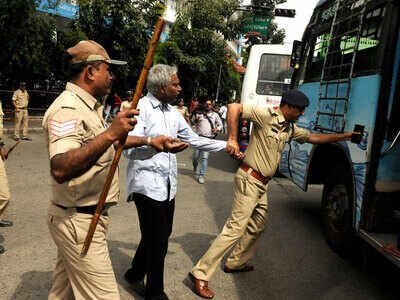
Authorities imposed Section 144 in many parts of India in the wake of anti-citizenship law protests, yet many civilians, young and old, hit the streets to protest against the Act.
Here's what you need to know about Section 144:

Here's what you need to know about Section 144:
What is Section 144 ?
Section 144 of the Criminal Procedure Code of 1973 authorises the executive magistrate of any state or territory to issue an order to prohibit the assembly of four or more people in an area. Once imposed, every member assembling can be booked for engaging in rioting and an assembly that have lawfully assembled (say, with prior permission) would be termed as an “unlawful assembly”.- Can internet be shut down under Section 144?
Yes. Section 144 also has provisions for internet shutdown. - What Supreme Court said on Section 144?
A case of note is Madhu Limaye vs Sub-Divisional Magistrate that the Supreme Court ruled on in 1970. In its judgment, the court said: “The gist of action under s. 144 is the urgency of the situation and its efficacy in the likelihood of being able to prevent some harmful consequences. It is not an ordinary power flowing from administration but a power used in a judicial manner and which can stand further judicial scrutiny.” It added “when it is not possible to distinguish between those whose conduct must be controlled and those whose conduct is clear”, a general order may be issued. “But if the action is too general, the order may be questioned by appropriate remedies for which there is ample provision in law,” the court said. In the 2012 case of Ramlila Maidan Incident vs Home Secretary of Union of India, Supreme Court said: “the perception of threat to public peace and tranquility should be real and not quandary, imaginary or a mere likely possibility.” Note: This case pertains to the anti-corruption protests during the UPA government and the assembly in the Maidan by Baba Ramdev and his followers. Then there is the opposing principles of Section 144 and Article 19 (1) (a) of the Constitution that guarantees the freedom of speech and expression to every citizen of the country. On this the Supreme Court said in 1989 (S. Rangarajan Etc vs P. Jagjivan Ram here): “Our commitment to freedom of expression demands that it cannot be suppressed unless the situations created by allowing the freedom are pressing and the community interest is endangered. The anticipated danger should not be remote, conjectural or far-fetched.” The most elucidate take on this was perhaps put forward by Justice DY Chandrachud as Supreme Court ordered the release of five activists arrested in the Elgar Parishad case. “Dissent is the safety valve of democracy. If dissent is not allowed, then the pressure cooker may burst,” he said.
End of Article
FOLLOW US ON SOCIAL MEDIA





Hot Picks
TOP TRENDING
Trending Stories
In India
Entire Website
- 'We were treated like slaves, made to work for 15 hours a day': Tricked into Ukraine war, 3 from Karnataka return home
- 'My father was on the flight': Jaishankar opens up about 1984 Air India hijack
- Airtel CEO Gopal Vittal sends letter to Reliance Jio, Vodafone-Idea, Tata Tele and BSNL CEOs; here's what he said
- Prince Harry to celebrate 40th birthday away from Meghan Markle
- Haitian immigrant pet-eating row: Ohio woman accused of eating cat is US citizen, video is not from Springfield
- Kejriwal out of jail; 'CBI arrest only to frustrate ED case bail': SC judge
- Donald Trump reveals what Laura Loomer is to his campaign: 'I don't control her'
- Hamster Kombat Daily Cipher Codes and Combo Cards for September 14, 2024: Unlock up to 1 million coins
- Laura Loomer's photo with Donald Trump viral. People ask where's Melania, where's wedding ring
- Garena Free Fire MAX redeem codes for September 13: Win in-game goodies and rewards
- Protesting doctors to attend crucial meet at Mamata's residence on RG Kar deadlock
- Blast in central Kolkata leaves 1 person injured, area cordoned off
- No driver, no haggling, Mumbai’s BKC aims for friendliest taxi service
- No party more dishonest and deceiving than Congress: PM Modi in Haryana
- Fugitive Zakir Naik misleads Muslims on Waqf bill. Minister hits back
- 'Water reached tomb of Shahjahan': After heavy rain, leakage at Taj Mahal
- Did doctors make a mistake in making Mamata wait for two hours?
- Noida woman loses Rs 27 lakh in SIM card 'hacking': Big mistake she made
- Devil's Brutality: 5 most brutal Hell in a Cell Matches
- Diljit Dosanjh cryptically reacts to sarcastic video on his expensive concert tickets

Popular Categories
Hot on the Web
Top Trends
Trending Topics
Korean TeaSector 36 ReviewGreen Apple BenefitsPriyanka Chopra TattooKottukkaali OTT ReleaseNarendra ModiGhaziabad Juice SellerHair LossSudha MurtyMalayalam ProducersIndia's Best Dancer 4Simi GarewalDilli BabuIndian National ParksLaung BenefitsVikas SethiApple iPhone 16Donald TrumpAadhar Card Update By Sept 14Wordle Answer
Living and entertainment
Latest News
Kaun Banega Crorepati 16: Can you guess the answer for this Rs 3,20,000 question on Navy, which contestant Naman Jain incorrectly answered?Edible oil import duty hiked by 20%'Calling all Swifties for Trump': Donald's new campaign merch imitates Eras Tour shirtsWWE Hall of Famer Watches 15 Hours Of Wrestling Each WeekDallas Cowboys Set to Defend AT&T Stadium in Week 2 Clash with New Orleans SaintsTovino on training for Kalaripayattu in ‘ARM’: I practiced every single day, even if I had a hectic day on set8 animals that reproduce without matingDelhi Police Files FIR for Firecracker Celebration Outside CM Kejriwal's ResidenceThrowback: When Alia Bhatt responded to insecurity questions about Ranbir Kapoor, shut down gossipIndia's T20I captain Suryakumar Yadav turns 34: A glimpse into his stellar T20 careerThe 3 Strongest Zodiac Signs: Powerhouses of the Zodiac Wheel'Forgive me, I don't belong ...' : Tamil Nadu hotelier's apology to FM Nirmala Sitharaman over GST remark triggers political rowRakul Preet Singh reveals Bollywood stylists charge from Rs 15000 to Rs 1 lakh for one event, one outfit: 'Living in Mumbai requires a lot of PR'September 14, 2024: Flying creatures and how their wings workThrashed for 'molesting' kid on train, rail staffer diesKejriwal walks out of jail, says morale is up by 100 timesDhruv Kapila's health setback shatters Indian pair's Vietnam Open semifinal hopesFormer Titans Cheerleader Danielle Sekelsky Begins WWE NXT Training
Copyright © 2024 Bennett, Coleman & Co. Ltd. All rights reserved. For reprint rights: Times Syndication Service