
- News
- India News
- Rafale didn’t fly, NYAY got no public hearing
Trending
This story is from May 24, 2019
Rafale didn’t fly, NYAY got no public hearing
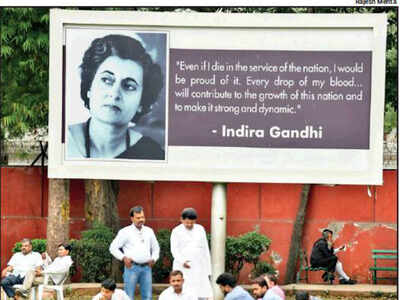
Party workers in a huddle at the Congress headquarters in Delhi on Thursday
NEW DELHI: In the end, it could have been Congress’ hammering away at Prime Minister Narendra Modi with allegations of graft in the Rafale deal that led to the undoing of its election campaign.
Only a few months ago, an upbeat Congress had won elections in the Hindi heartland states of Madhya Pradesh, Rajasthan and Chhatisgarh with agrarian crises, price rise and unemployment as the bedrock of its campaign against the incumbent BJP governments.
Come Lok Sabha, however, Congress’ focus appeared to shift, and it seemed that the common man’s concerns were put on the back burner, while the emphasis on corruption in a multi-crore defense deal that few understood and even fewer cared for took centrestage.
For a party that claims pan-India appeal, it remained largely unclear who the Congress sought to represent. It lost connect with the middle and aspirational classes who began to doubt its ability to deliver, as well as with the Muslims, Dalits and Adivasis, who seemed to favour regional forces instead. In the face of BJP’s muscular Hindutva too, Congress seemed to flounder on what it wanted to be.
The seemingly successful soft-Hindutva model, however, was abandoned in Congress’ Lok Sabha campaign with both Kailash Mansarovar and the Kumbh mela, forgotten in the heat of electioneering. "The main problem with parties that call themselves secular is that they want to fight Hindutva but don't know how to separate Hinduism from Hindutva and end up the Hindu sentiment in the process. If Rahul Gandhi must go to a temple, he must go around the year, not only during election season," said, JP Shukla, political analyst.
If its religious pitch was confused, Congress also slipped up on its manifesto promises. Pollsters say it was a snazzy manifesto — perhaps the slickest yet — that the party failed to sell.
Its flagship NYAY scheme, backed by the slogan of ‘Abki Baar Bahattar Hazaar’ to counter BJP’s ‘Phir Ek Baar Modi Sarkar’, remained a non-starter outside the Lutyens zone in the national capital. In states where agrarian distress was rampant, NYAY meant little more than a confused reference to judicial reforms and an elusive promise of justice. A dipstick test on the extant of NYAY’s reach and success was in Congress president Rahul Gandhi’s own parliamentary constituency, Amethi, which seemed unsure of how NYAY would transform lives.
Rahul Gandhi’s tireless campaign over the three months leading up to Lok Sabha polls also seemed to run in too many different directions. While the Modi-led BJP campaign was focused — harping on nationalism, strong leadership and ensuring last mile delivery of development schemes — the Congress campaign, in contrast, was fragmented, running from NYAY to corrupt governance, attacking ‘Gabbar Singh Tax’ and demonetisation, and to targeting Modi government’s weak economic policies, and questioning the Balakot strikes.
Though Rahul’s approach may have appeared earnest, it was no match to Modi’s popularity, and Rahul’s claims of having “demolished Modi’s image”, in hindsight, only sealed the elections in BJP’s favour. "Congress campaign was essentially lacking in coherence. The shifting narrative meant that nothing resonated with people also largely because they did not see the possibility of Congress returning to power or being able to deliver on promises if they cobbled together a rag-rag alliance," said Sanjay Kumar, director, Centre for the Study of Developing Societies.
Only a few months ago, an upbeat Congress had won elections in the Hindi heartland states of Madhya Pradesh, Rajasthan and Chhatisgarh with agrarian crises, price rise and unemployment as the bedrock of its campaign against the incumbent BJP governments.
Come Lok Sabha, however, Congress’ focus appeared to shift, and it seemed that the common man’s concerns were put on the back burner, while the emphasis on corruption in a multi-crore defense deal that few understood and even fewer cared for took centrestage.
For a party that claims pan-India appeal, it remained largely unclear who the Congress sought to represent. It lost connect with the middle and aspirational classes who began to doubt its ability to deliver, as well as with the Muslims, Dalits and Adivasis, who seemed to favour regional forces instead. In the face of BJP’s muscular Hindutva too, Congress seemed to flounder on what it wanted to be.
In a run up to polls in Gujarat, Karnataka, Rajasthan, Madhya Pradesh, and Chhatisgarh, for instance, Congress president Rahul Gandhi wore the Hindu Brahmin tag on his sleeve, hopping from temple to temple, praying at the banks of the Narmada, standing in the Mahakal temple in Ujjain, and scaling Mount Kailash to show the World he was a Shiv Bhakt. He blunted, as a result, BJP’s attack on Congress’ alleged “Muslim love”. Rahul’s temple run in Gujarat even delivered unexpected results, with Congress stopping short of a three-figure finish. The same happened in Karnataka.
The seemingly successful soft-Hindutva model, however, was abandoned in Congress’ Lok Sabha campaign with both Kailash Mansarovar and the Kumbh mela, forgotten in the heat of electioneering. "The main problem with parties that call themselves secular is that they want to fight Hindutva but don't know how to separate Hinduism from Hindutva and end up the Hindu sentiment in the process. If Rahul Gandhi must go to a temple, he must go around the year, not only during election season," said, JP Shukla, political analyst.
If its religious pitch was confused, Congress also slipped up on its manifesto promises. Pollsters say it was a snazzy manifesto — perhaps the slickest yet — that the party failed to sell.
Its flagship NYAY scheme, backed by the slogan of ‘Abki Baar Bahattar Hazaar’ to counter BJP’s ‘Phir Ek Baar Modi Sarkar’, remained a non-starter outside the Lutyens zone in the national capital. In states where agrarian distress was rampant, NYAY meant little more than a confused reference to judicial reforms and an elusive promise of justice. A dipstick test on the extant of NYAY’s reach and success was in Congress president Rahul Gandhi’s own parliamentary constituency, Amethi, which seemed unsure of how NYAY would transform lives.
Rahul Gandhi’s tireless campaign over the three months leading up to Lok Sabha polls also seemed to run in too many different directions. While the Modi-led BJP campaign was focused — harping on nationalism, strong leadership and ensuring last mile delivery of development schemes — the Congress campaign, in contrast, was fragmented, running from NYAY to corrupt governance, attacking ‘Gabbar Singh Tax’ and demonetisation, and to targeting Modi government’s weak economic policies, and questioning the Balakot strikes.
Though Rahul’s approach may have appeared earnest, it was no match to Modi’s popularity, and Rahul’s claims of having “demolished Modi’s image”, in hindsight, only sealed the elections in BJP’s favour. "Congress campaign was essentially lacking in coherence. The shifting narrative meant that nothing resonated with people also largely because they did not see the possibility of Congress returning to power or being able to deliver on promises if they cobbled together a rag-rag alliance," said Sanjay Kumar, director, Centre for the Study of Developing Societies.
End of Article
FOLLOW US ON SOCIAL MEDIA






Hot Picks
TOP TRENDING
Trending Stories
In India
Entire Website
- 'We were treated like slaves, made to work for 15 hours a day': Tricked into Ukraine war, 3 from Karnataka return home
- 'My father was on the flight': Jaishankar opens up about 1984 Air India hijack
- Airtel CEO Gopal Vittal sends letter to Reliance Jio, Vodafone-Idea, Tata Tele and BSNL CEOs; here's what he said
- Prince Harry to celebrate 40th birthday away from Meghan Markle
- Haitian immigrant pet-eating row: Ohio woman accused of eating cat is US citizen, video is not from Springfield
- Kejriwal out of jail; 'CBI arrest only to frustrate ED case bail': SC judge
- Donald Trump reveals what Laura Loomer is to his campaign: 'I don't control her'
- Hamster Kombat Daily Cipher Codes and Combo Cards for September 14, 2024: Unlock up to 1 million coins
- Laura Loomer's photo with Donald Trump viral. People ask where's Melania, where's wedding ring
- Garena Free Fire MAX redeem codes for September 13: Win in-game goodies and rewards
- 'Goodwill gesture': Doctors as Mamata visits protest site in 'last attempt' to resolve crisis
- Blast in central Kolkata leaves 1 person injured, area cordoned off
- No driver, no haggling, Mumbai’s BKC aims for friendliest taxi service
- No party more dishonest and deceiving than Congress: PM Modi in Haryana
- Fugitive Zakir Naik misleads Muslims on Waqf bill. Minister hits back
- 'Water reached tomb of Shahjahan': After heavy rain, leakage at Taj Mahal
- Did doctors make a mistake in making Mamata wait for two hours?
- Noida woman loses Rs 27 lakh in SIM card 'hacking': Big mistake she made
- Devil's Brutality: 5 most brutal Hell in a Cell Matches
- Diljit Dosanjh cryptically reacts to sarcastic video on his expensive concert tickets

Popular Categories
Hot on the Web
Top Trends
Trending Topics
Korean TeaSector 36 ReviewGreen Apple BenefitsPriyanka Chopra TattooKottukkaali OTT ReleaseNational Parks In IndiaGhaziabad Juice SellerGOAT CollectionSudha MurtyMalayalam ProducersIndia's Best Dancer 4Simi GarewalDilli BabuIndian National ParksLaung BenefitsVikas SethiApple iPhone 16Donald TrumpAadhar Card Update By Sept 14Wordle Answer
Living and entertainment
Latest News
Kaun Banega Crorepati 16: Can you guess the answer for this Rs 3,20,000 question on Navy, which contestant Naman Jain incorrectly answered?Edible oil import duty hiked by 20%'Calling all Swifties for Trump': Donald's new campaign merch imitates Eras Tour shirtsWWE Hall of Famer Watches 15 Hours Of Wrestling Each WeekDallas Cowboys Set to Defend AT&T Stadium in Week 2 Clash with New Orleans SaintsTovino on training for Kalaripayattu in ‘ARM’: I practiced every single day, even if I had a hectic day on set8 animals that reproduce without matingDelhi Police Files FIR for Firecracker Celebration Outside CM Kejriwal's ResidenceThrowback: When Alia Bhatt responded to insecurity questions about Ranbir Kapoor, shut down gossipIndia's T20I captain Suryakumar Yadav turns 34: A glimpse into his stellar T20 career'Forgive me, I don't belong ...' : Tamil Nadu hotelier's apology to FM Nirmala Sitharaman over GST remark triggers political rowRakul Preet Singh reveals Bollywood stylists charge from Rs 15000 to Rs 1 lakh for one event, one outfit: 'Living in Mumbai requires a lot of PR'September 14, 2024: Flying creatures and how their wings workThrashed for 'molesting' kid on train, rail staffer diesKejriwal walks out of jail, says morale is up by 100 timesDhruv Kapila's health setback shatters Indian pair's Vietnam Open semifinal hopesFormer Titans Cheerleader Danielle Sekelsky Begins WWE NXT Training"Birthday aapka hug aur paari I am getting...": Tahira Kashyap pens adorable b'day wish for hubby Ayushmann Khurrana
Copyright © 2024 Bennett, Coleman & Co. Ltd. All rights reserved. For reprint rights: Times Syndication Service