
Brains that heal
When pain strikes our own body, we do not simply mourn it. We search for a remedy. We act. If the same doesn’t happen with another’s pain, of what use is one’s intelligence? In this week’s episode, the author ponders on this question Valluvar posed, through the celebrated story of India’s ‘padman’, Arunachalam Muruganantham. Listen in.
May 16, 2026, 6:00 IST
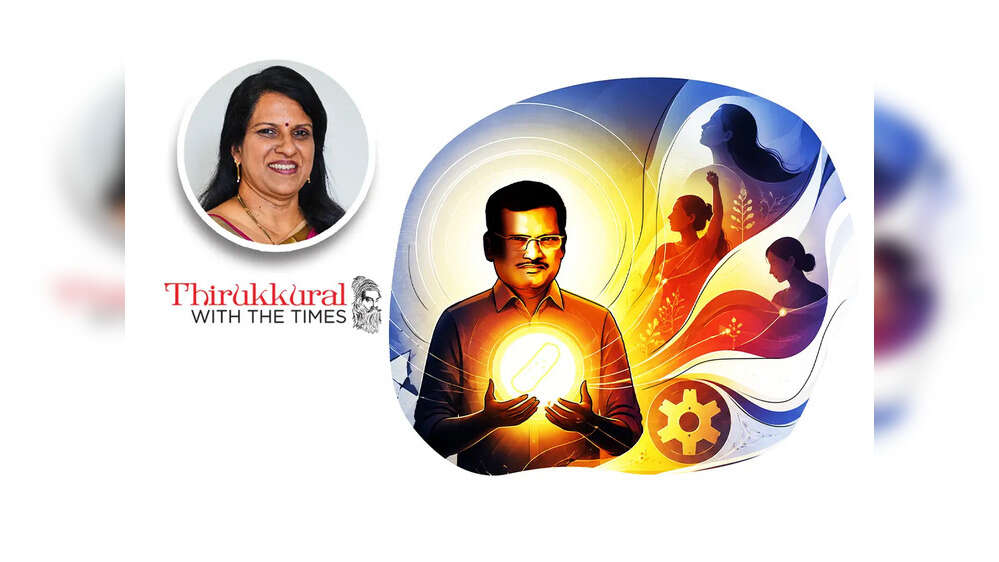
Thirukkural with the Times explores real-world lessons from the classic Tamil text ‘Thirukkural’. Written by Tamil poet and philosopher Thiruvalluvar, the Kural consists of 1,330 short couplets of seven words each. This text is divided into three books with teachings on virtue, wealth, and love and is considered one of the great works ever on ethics and morality. The Kural has influenced scholars and leaders across social, political, and philosophical spheres.Motivational speaker, author and diversity champion Bharathi Bhaskar explores the masterpiece.There are some couplets in the Thirukkural that don’t merely advise but unsettle the silence within us. They arrive like a question that refuses to leave. Kural 315 is one such mirror.“Arivinaan Aguvadundo PiridhinnoiThannoipol Potrakk Kadai”“What worth is a man’s intelligence, if he does not guard another’s pain as his own?”At first glance, the couplet appears simple. Compassion has been praised in every civilization. But Valluvar is doing something far deeper here. He is defining intelligence itself.A person may possess scholarship polished by universities, wisdom sharpened by experience, brilliance celebrated by society. What is the use of all these if another being’s suffering does not move him into action?The beauty lies in the word ‘Piridhin’.Not merely another human being.Another life.Another existence.And Valluvar does not praise tears or helpless lament. To treat another’s pain as one’s own is a responsibility.That is why this couplet kept returning to my mind when I read about Arunachalam Muruganantham being nominated for the 2026 Nobel Peace Prize.There are lives that seem to rise straight out of a Kural. Muruganantham’s life is one such.Born into poverty in rural Tamil Nadu, losing his father early, dropping out of school at 14, working as a welder to support his family — nothing in his beginnings suggested global recognition. Yet history often begins in unnoticed corners.A few months into his marriage, he discovered that his wife was using filthy rags and scraps of paper during menstruation because sanitary pads were too expensive. Behind closed doors, millions of women were enduring infection, shame, and indignity, as though suffering itself was part of womanhood.Most people would have looked away in embarrassment. Muruganantham could not.He began experimenting with cotton and other materials to design affordable pads. His wife and sisters initially helped him, but repeated failures exhausted them. Soon women in the village started avoiding him. Men mocked him.Then he uncovered another painful truth. The sanitary pads manufactured by multinational companies cost less than eleven cents yet sold at nearly 40 times the amount.With no volunteers willing to test his experiments, Muruganantham turned himself into the subject. He strapped a bladder filled with animal blood to his body and walked for hours testing absorption levels of the pads. The village ridiculed him.Yet somewhere amidst that disgrace was the quiet greatness of a man who had decided that another’s pain was his own.Years of relentless effort finally led him to create low-cost sanitary pad-making machines. He travelled across India training women to operate these machines and produce affordable pads with dignity and self-reliance. Today, his machines are used across 22 Indian states and in more than 100 countries. When approached by many companies to make this a commercial venture, Muruganantham refused as he knew the price of the pads would escalate.‘Padman’, as Arunachalam Muruganantham is affectionately called, winning the Nobel Prize would indeed be a moment of pride for the nation. One cannot help but whisper a silent prayer that the Nobel Committee sees the quiet magnitude of his work. Yet, for a man who has already brought silent smiles to millions of women, perhaps the prize has already been won.
Explore Every Corner
Across The Globe
Chud The BuilderIPL 2026 Orange CapJannik Sinner and Laila Hasanovic Net WorthRonda RouseyMontreal CanadiensFrancis NgannouSean McDonoughDianna RussiniNFL Schedule Release 2026Ben Shelton and Trinity Rodman Combined Net WorthArber XhekajVirginia FonsecaVancouver CanucksRonda RouseyNFL Trade RumorIPL Toss TodayStephen CurryMatthew SchaeferFloyd Mayweather vs Manny PacquiaoCSK vs LSG HighlightsPetrol Diesel PriceUS Iran WarIPL Purple Cap WinnerMitchell MarshDianna Russini HusbandTrevor LawrenceIPL Points TableKieron PollardElliotte FriedmanDonald Trump China Visit

Hot on the Web
Dhurandhar 2 OttMatt BergerShadaab KhanC S LewisCelina JaitlyRanveer SinghSharib HashmiJim CarreyNasreen HashmiRanbir KapoorAakhri Sawal Movie ReviewStudy Tips For StudentAlia BhattUnique Fruit TreesThe Summer I Turned Pretty MovieChinese ProverbJames McAvoy QuoteBaby NamesChef Vikas KhannaKaruppu Movie ReviewIndian Foods‘The Summer I Turned Pretty MovieBhooth Bangla Box Office CollectionPuma VS JaguarRatan Tata QuoteRishab ShettyEurope Summer FlightDhurandhar 2 Box Office CollectionRaja Shivaji Box Office CollectionHoroscope TodayHighest Mountains in The WorldDasia TaylorSnakes SlitherCleanest Lakes In The USBill GatesAttracts Snakes To ToiletMartian RockJP MorganLegal Document PropertyClaim Fixed Deposit After DeathGhost Of The WoodsCaptions For Instagram Posts
Trending Topics
Hardik PandyaIPL Points TableShardul ThakurTilak Varma ControversyRachin RavindraIPL 2026UPSC CSE Prelims Admit Card 2026Robin SinghMeningitis Outbreak BerkshireKing CharlesAkash SinghMike VrabelJasprit BumrahDeepak ChaharNikhat ZareenRavichandran AshwinSimon DobbinDonald Trump China VisitBITS Pilani student suicideUS Iran WarWB 12th Result 2026PBKS Qualification ScenarioStrait of HormuzEA FC 26 La Liga TOTS players leakedUP StormMicah Parsonsmike vrabel dianna russini controversyKerala CM AnnouncementSiddaramaiahFortnite V40 Release timeElon Musk CEO FriendOracle Revokes Job OffersSam Altman Unhappy With AppleOpenAI Caught Sharing DataHack MacOSSteve JobsNyt ConnectionsSridhar VembuGarena Free Fire MAX Redeem CodesPeroxide CodesGenshin Impact Codes
Popular Categories
HeadlinesSports NewsBusiness NewsIndia NewsWorld NewsInternational SportsHealthIndian TV ShowsTechnologyTravelEtimesAstrologyDeorhiAutoTechnology NewsGold Rate TodayWeather TodaySilver Price TodayDelhi Weather TodayPetrol Price TodayDiesel Price TodayCNG Price TodayLPG Price TodayPetrol Price MumbaiDelhi AQIIs Bank Open TodayMumbai AQI TodayIs Bank Open TomorrowPublic Holidays in MayBank Holidays in May
Trending Videos
Did Trump Actually 'Sneak Peek' At Xi's Notes? Here's What Really Happened During Beijing BanquetNvidia CEO Jensen Huang Ditches Luxury For Beijing Street Noodles After Elon's Viral 'Tourist' Blitz‘Who’s Really Begging?’: Iran EXPOSES Trump’s Backchannel Push For Talks | WATCH20 Iranian Sailors Walk Free After U.S Seized Their Ship; Pakistan Drops Big UpdateAyushmann, Sara Ali Khan, Rakul Preet & Wamiqa Gabbi spill dating app chaos and modern love dilemmasMQ-9 Reapers, Boeing E-3 Sentry & What Not: How U.S. Lost 39 Aircraft In 40 Days Of Iran WarNo Credit History? AI Could Still Get You A Loan | CXO Connect | Santosh Agarwal'Not An Iota Of Truth': PM Modi Rubbishes Report Of Restriction On Foreign TravelXi Sends Trump Home Empty-Handed: No Mega Deals, No Breakthroughs, Just Photo Ops28 Hostages From Kuki, Naga Communities Held By Armed Groups Released In ManipurWomen In Cinema Gala: Tara Sutaria Makes Debut At Red Sea Foundation's Cannes Celebration 'Chinese Can Snoop On Anyone': Trump Team Destroys Phones, Gadgets, Gifts Before China Departure'Not Even Israel Or U.S. Can Protect You': Iran's Araghchi Blasts UAE After BRICS Deadlock | WATCHPedro Pascal Reveals How Mandalorian's Physicality Was Created With Multiple ActorsViral Video Of Trump 'Drinking Champagne' At China Banquet Leaves Internet DividedIndia’s Agni Missile Journey: Could Agni-VI Become A 10,000 KM ICBM?‘Surrender… Or They’ll Pull Out A Gun!’: Drama At Lavrov's Delhi Presser After Russian FM's WarningHUGE REVEAL: Saudi VETOES UAE’s ‘Explosive Plan’ To Drag Gulf Allies Into All-Out War With Iran
Latest News
Hazaribag man drowns while fishing in lake"Behen Darr Gayi!": Fans relive ‘Bhagam Bhag’ era after watching Akshay Kumar's 'Bhooth Bangla' trailerMBOSE HSLC result 2026 to release tomorrow: Check details hereIran war risk: JPMorgan CEO Jamie Dimon warns of oil shocks, sticky inflation and higher interest ratesMake your clutch last longer with these easy driving tips“Three-against-one situation”: El Rubius opens up on being “targeted” in MrBeast’s viral $1M challengeBihar BTSC lab assistant notification released for 1091 posts at btsc.bihar.gov.in; apply hereIPL craze costs techie Rs 1.46 lakh in fake RCB vs CSK ticket scamRaising “robot-proof” kids: Why creativity and curiosity matter more than everInside ‘Satguru Sharan’: Exploring Saif Ali Khan and Kareena Kapoor Khan’s Rs 100 crore Bandra homeHow selling Alaska in 1867 was a costly mistake for Russia'Hera Pheri 3 is coming': Paresh Rawal dismisses delay reports and reveals he will 'start shooting soon'US-Iran War: A daring rescue Hollywood blockbuster is on its way. Till then, pick your favourite from these 10 films on bringing someone home against all oddsKolkata team unveils fan mural at Rash Behari Avenue, celebrating city’s first loveHow US spread a lie to rescue a pilot of a jet shot down in IranNetflix unveils ‘VOID’, an AI model that can change a movie plotAI data centers are causing 'stress' not just to tech companies, but also private insurers"Trans women are.....": Clavicular’s viral moment with trans women sparks fresh conversation on internet culture
Copyright © 2026 Bennett, Coleman & Co. Ltd. All rights reserved. For reprint rights: Times Syndication Service