
- News
- Health News
- When a key gene fails: What a new leukemia study is telling us about treatment
When a key gene fails: What a new leukemia study is telling us about treatment
The “guardian” that’s supposed to protect us
Leukemia is one of those diseases people often associate with children. But in adults, especially with certain types, it can behave very differently and often more aggressively. A recent study from the University of Chicago is trying to answer a simple but frustrating question doctors have struggled with for years: why do some adult leukemia cases come back even after treatment?
And the answer, it turns out, may lie in a single powerful gene.
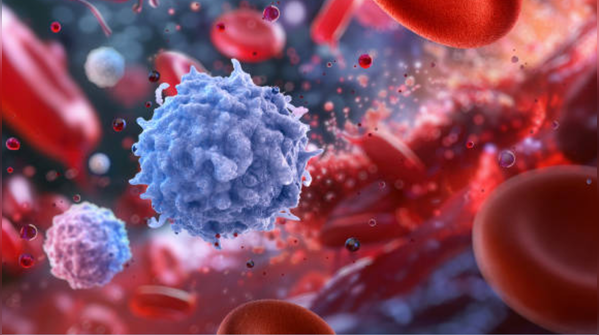
Inside every cell in your body, there’s a gene called TP53. Doctors often call it the “guardian of the genome,” and for good reason. Its job is to keep cells in check. If a cell gets damaged, this gene either pauses it for repair or tells it to shut down completely before it becomes dangerous.
So, in a way, TP53 acts like both a brake and a safety switch. It prevents faulty cells from multiplying and turning into cancer.
But what happens when that guardian itself is broken?
When the safety system stops working
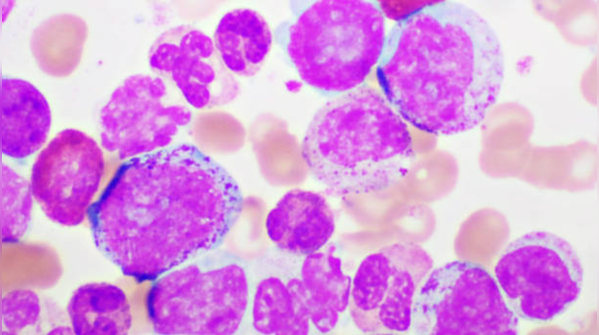
The study, published in Blood Cancer Journal, found that in some adults with acute lymphoblastic leukemia (ALL), this TP53 gene is mutated. That means it no longer does its job properly.
And when that happens, damaged cells don’t stop or die. They keep dividing, carrying more and more errors with them. Over time, those errors build up and lead to aggressive cancer.
When a key gene fails: What a new leukemia study is telling us about treatment
What makes it worse is how these cells respond to treatment. Chemotherapy is supposed to damage cancer cells enough that they self-destruct. But in these TP53-mutant cells, that self-destruct system doesn’t work.
So the treatment hits them, but doesn’t finish the job. “In earlier lab work, we found that TP53-mutant ALL cells have increased growth signals and defective cell-death pathways,” Asst. Prof. Caner Saygin at University of Chicago Medicine, the lead author of the study said. “When treated with chemotherapy, these cells accumulate DNA damage, but they don’t die the way they should because the apoptosis pathways are broken, so they persist and eventually cause relapse. That’s why these cancers are so hard to eliminate with standard therapy alone.”
Why some leukemias come back
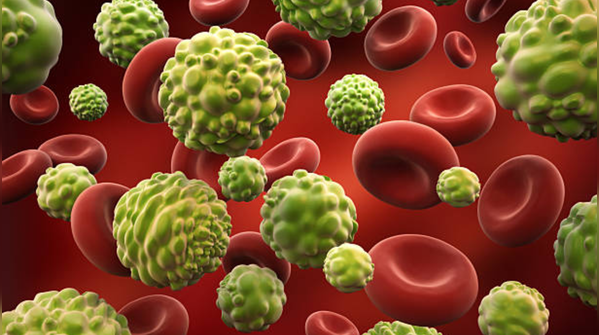
This is where things get frustrating for both doctors and patients. Even when treatment seems to work at first, the disease can return.
The study explains why. These mutated cancer cells don’t die easily. They survive treatment, stay hidden, and then slowly grow back. That’s why relapse is so common in these cases.
And it’s not a small group either. Researchers looked at data from over 800 patients and found that roughly 1 in 10 adults with this leukemia had TP53 mutations. These patients were more likely to relapse and had lower long-term survival rates.
“At the time of relapse, leukemia cells frequently undergo a variety of genetic mutations which give them different physical and metabolic characteristics than the original leukemia cells from natural onset. Because of these genetic mutations, the leukemia cells are able to survive in a way that allows them to not benefit from the effects of chemotherapy. Thus, as a result, the leukemia becomes more aggressive and has a decreased amount of response to treatment. Yes, relapsed leukemia will be typically more difficult to treat and additionally have a lower level of response to second-line chemotherapy,” adds Dr. Neha Garg, Senior Consultant & Head, Medical Oncology, Andromeda Cancer Hospital, Sonipat to this.
The cancer that learns to hide
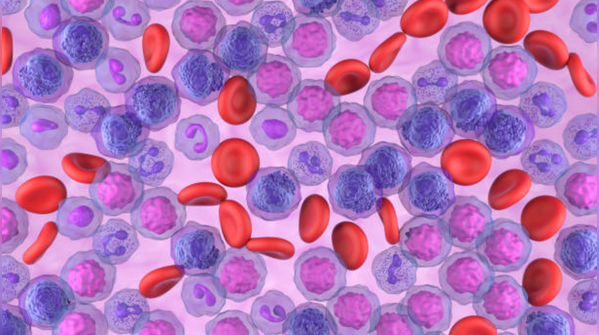
Here’s the part that really stands out. Even newer treatments, like immunotherapy, which train the immune system to attack cancer, aren’t foolproof here.
Initially, these treatments can work well. But over time, the cancer seems to adapt. The study found that when the disease comes back, many of the cancer cells actually lose the markers that these therapies use to identify them.
“Most leukemias will initially be responsive to the use of chemotherapy because most of the cancer cell's growth and reproduction require the ability of the cell's DNA to replicate quickly and thus, the cancer cell has a high level of sensitivity to the drug effect. However, at some point, due to further genetic evolution, some cells develop resistance to being killed by chemotherapy despite how fast they are replicating. Evolutionary changes that have occurred in these cells will give them life and, as a result, will allow them to continue to replicate and cause the chemotherapy to be ineffective and decrease the ability for patients to achieve a complete remission from the leukemia,” the doctor adds.And that makes it much harder to treat the second time around.
So where does this leave us?
This study doesn’t offer an immediate cure. But it does something equally important—it explains the “why.” Why some cancers don’t respond. Why do they come back? Why standard treatments aren’t always enough.
And once you understand the biology, you can start thinking about better, more targeted treatments.
Researchers now believe that identifying these mutations early could help doctors choose therapies that are more likely to work for each patient, instead of using a one-size-fits-all approach.
And that could slowly shift how aggressive adult leukemia is treated in the coming years.
“There has been a lot of new research and developments in new and improved ways to provide therapy for patients with leukemia. There has been an increased use of immunotherapy and CAR-T cell therapies to be incorporated into their treatment plans, particularly in patients who have relapsed or are resistant to initially effective therapies. As a result, there have been improved outcomes for patients being treated for leukemia, allowing for more individualized therapy options and improved chances of survival,” Dr. Neha Garg says.
Featured In Health

