
- News
- Health News
- They were young, active, and didn’t see it coming: Doctor explains the new face of heart disease and why young adults are paying the price
They were young, active, and didn’t see it coming: Doctor explains the new face of heart disease and why young adults are paying the price
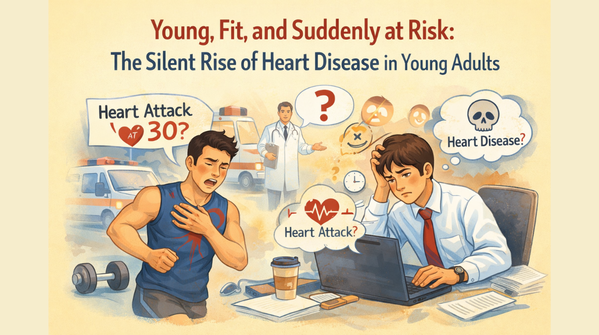
Young adults are increasingly becoming victims of heart disease
It didn’t start as a “heart story.” It started as shocking headlines.
A young tech professional in Bengaluru, working long hours and juggling deadlines, collapsed from a sudden heart attack. No known history. No warning that felt serious enough. Just a life that looked normal on the outside, busy, slightly stressful, a bit sedentary. And then, not.
Around the same time, a 40-year-old fitness enthusiast in Pune suffered a cardiac arrest while working out. He wasn’t inactive. If anything, he was doing what many would call “everything right.” Which is exactly why his case hit harder. Because it disrupted a belief most of us rely on, that youth or fitness somehow protects us.
And when you place these cases side by side, they stop feeling like isolated incidents.
Image: AI

So, what’s really changing?
We’re seeing more young adults show up with heart issues, and it’s not always tied to one obvious cause. It’s a mix. Sedentary routines, yes. But also inconsistent sleep, high stress that doesn’t switch off, rising rates of diabetes and high blood pressure, and habits that quietly build risk over time.
Kidney health and hydration: Why ‘just drink more fluid’ isn’t the full story
But here’s the uncomfortable part. Many of these people don’t “look” at risk.
Doctors say a simple waist measurement may reveal more about health than weight
They’re in their 20s or 30s. They’re working, socialising, sometimes even exercising. There’s no dramatic red flag. And so, early signs either go unnoticed or get brushed aside. Chest discomfort becomes “just acidity.” Breathlessness feels like being out of shape. Fatigue is blamed on a bad week.
So people wait it out.
Or they look it up online, hoping for reassurance.

Why the delay matters more now
But heart disease doesn’t always give you a loud warning, especially in younger adults. And when symptoms are subtle, delays become more likely. That window, when something could have been caught early, shrinks quickly.
Doctors are seeing this shift up close. More cases where intervention could have been simpler, if only the person had come in earlier. More cases where the first serious symptom is also the emergency.
Liver enlargement could be a warning sign of this rare genetic condition: What to know about Gaucher disease
And that’s what makes this trend harder to ignore. Because the idea that heart disease is a “later in life” problem doesn’t hold the way it used to. Not with how we live today. Not with the kind of stress and habits that have quietly become normal.
To create awareness around this TOI Health connected with Dr. Purshotam Lal, Interventional Cardiologist & Chairman - Metro Group of Hospitals. Dr. Purshotam Lal has shed light on the increasing cases of heart diseases in young people and what are the causes behind it.

We’re seeing more heart disease in people in their 20s and 30s, what’s really driving this shift?
What we are witnessing nowadays is not a sudden surge, but the early manifestation of imbalance in a long standing lifestyle. In today’s time younger individuals are exposed to chronic stress, irregular routines, poor patterns of diet and reduced physical activity from an early age. Adding to the same, increasing prevalence of smoking, vaping and undiagnosed metabolic conditions like hypertension and diabetes and you have a perfect storm. Most significantly, many young individuals continue to remain asymptomatic until a major event happens. The body keeps adapting in a silent way, until it cannot.

What are the early warning signs they should watch out for?
In young individuals, the challenge with heart disease is that warning signs are often untreated or ignored. Some of the symptoms such as unexplained fatigue, palpitations, discomfort in the chest or even persistent acidity like sensations. In many cases, patients usually attribute these to stress or lifestyle fatigue as well. However, the heart does signal distress, just not always in a dramatic way. A family history of heart disease also further increases the risk and warrants early screening as well. If someone is feeling unusual on a regular basis, then it is always a better option to get medically evaluated rather than considering it as harmless.

How much of this rise is linked to lifestyle, like stress, sleep, food habits, and lack of movement? Which factors worry you the most?
In today’s time lifestyle plays a very major role, easily accounting for a significant majority of early cardiac risk. Most concerning factors among all are chronic stress and poor sleep because they impact the balance of hormones and trigger long term inflammation as well. Metabolic disorders like obesity and diabetes get further accelerated through sedentary habits and ultra processed diets and these diseases are strong precursors to heart disease. A stressed individual often sleeps poorly, eats food in an irregular way and also moves less.
Heart health tips: Cardiologist lists 7 things you should never do after 8 pm

Social media is full of fitness advice, but not all of it is accurate. What are some common myths that young people should stop believing?
Being young in age automatically protects you from heart disease is the biggest myth. Another common misconception is that if you perform exercises on an occasional basis or look fit externally, your heart is healthy. Many individuals who usually have normal body weight carry high internal risk mainly because of poor diet or stress. Other factors which are very much concerning mainly include extreme fitness trends, crash diets and unverified supplements as well.

If someone in their 20s wants to protect their heart starting today, what are the simplest changes that actually make a difference?
The most effective change is often the simplest and most sustainable one. An individual should start performing regular physical exercises, at least 30 minutes of moderate exercise most days of the week. Always prioritise a good sleep ranging between 7-8 hours, as recovery is very much important for the health of hearts. Always adopt a balanced diet with reduced processed foods, while increasing fresh and whole foods as well. Equally significant is the management of stress whether it can be done through mindfulness, hobbies or simply maintaining a healthy work life balance. Lastly do not ignore the preventive health check-ups as they can help you to prevent the complications even before they arise.
Featured In Health

