One of my earliest acts of rebellion was linguistic. At less than five years old, I called my father “oye” instead of “papa.”
In an Indian middle-class household where hierarchy was sacred and respect bordered on ritual, this was not just mischief, it was treason. What followed was swift correction, the kind many children of that generation would recognise as both disciplinary and deeply memorable.
Growing up, I slammed doors dramatically, muttered under my breath, declared my parents enemies of joy in diary entries, and lived through what I then believed was a regime of unreasonable rules, homework hours, limited screen time, social restrictions and early bedtimes. At the time, they were villains.
Today, as a twenty-something living alone, paying bills and navigating adult chaos, I see things differently. I see friends who fear calling their parents when things go wrong. I see toddlers negotiating with exhausted mothers in public spaces. I see teenagers who treat boundaries as optional suggestions.
And I’ve come to a mildly uncomfortable conclusion: my parents may have been right.
Maybe the occasional slap could have been replaced with a conversation.
But the structure — the routines, the limits, the quiet insistence on discipline, shaped how I understand responsibility, resilience and respect. Turns out, science may agree.
Parenting has always been one of life’s most demanding journeys. It begins at birth but quickly evolves into a lifelong balancing act, guiding children with values that help them thrive morally, socially and emotionally.
A 2023 study within the United States by the
Pew Research Center found that 41% of parents reported that being a parent is tiring, and 29% said it is stressful all or most of the time, with the youth mental health crises reported as a common concern among parents.
While love may come naturally, setting boundaries often doesn’t. Strict curfews, firm rules and consistent discipline can make parents feel like the “villain,” a role many fear could harm their bond with their child. In recent years, this discomfort has helped fuel the rise of a softer approach: gentle parenting.
Understanding gentle parenting
Gen-Z can be considered as the first real generation that has been brought up with the gentle parenting style. It combines the ideals of positive parenting and conscious parenting and centres on acknowledging a child's feelings and motivations behind the challenging behaviour rather than correcting the behaviour itself, as per a 2024
PLOS research. It also prioritizes boundaries and giving children choices rather than orders.
Many parents (44%) wanted to raise their children differently from their own upbringing and chose the model for the same, as per the Pew Research Center report.
As per the PLOS research, self-identified gentle parents identified three themes in their approach:
- regulating one's own emotions (59.2%)
- assisting children in regulating their emotions (40.8%)
- showing emotional and physical affection to their children(26.5%)
Some of the adjectives these parents used to describe their parenting included affectionate, accepting, warm, intentional, respectful and conscious.
A 46-year-old mother of children ages 6 and 10, defined gentle parenting as: "To me, gentle refers to my response [parent regulates own emotions] in frustrating or highly emotional situations with our daughter. We do not hit, spank, demean, or punish our child to make them feel like less of a person. Gentle refers to our discipline techniques and how we respect our child enough to make better decisions on her own. Even if we have to say something many times, we still are not aggressive towards our child to get the point across."
But is it really affective? Does gentle parenting lead to the rise of emotionally stable, happy and successful children?
An age-old tale
A 2026 research from the
Institute for Family Studies, published a research titled 'Hard Parenting, Better Relationships: New Evidence' and it has taken the parenting world by storm, wrecking long-held assumptions on parenting strategies and creating a ripple of revolution on child-rearing beliefs.
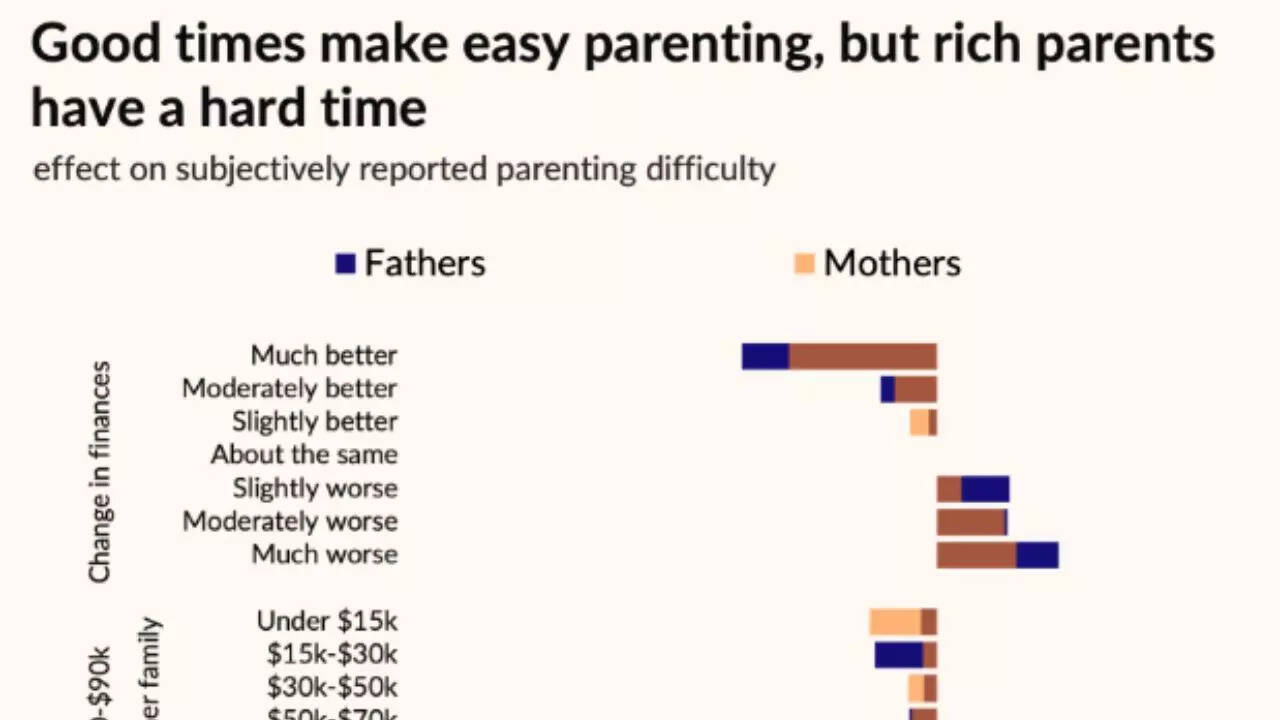
The institute surveyed 24,000 parents around the US, asking them one common question: "How difficult is parenting?" 7.4% parents in the survey said parenting is "very hard," while 36.5% said its "fairly hard."
The survey analysed parents, parenting, family conditions and more through a set of factors that remain consistent and might affect how easy or hard parents find parenting. On a four point scale from "very easy" to "very hard" these variables included:
- Ages of children in the house
- Number of children in the house
- Partner's support in parenting
- Support from surrounding communities
- Changes in financial conditions
- Family’s income and employment arrangement
Stricter parents raise happier kids?
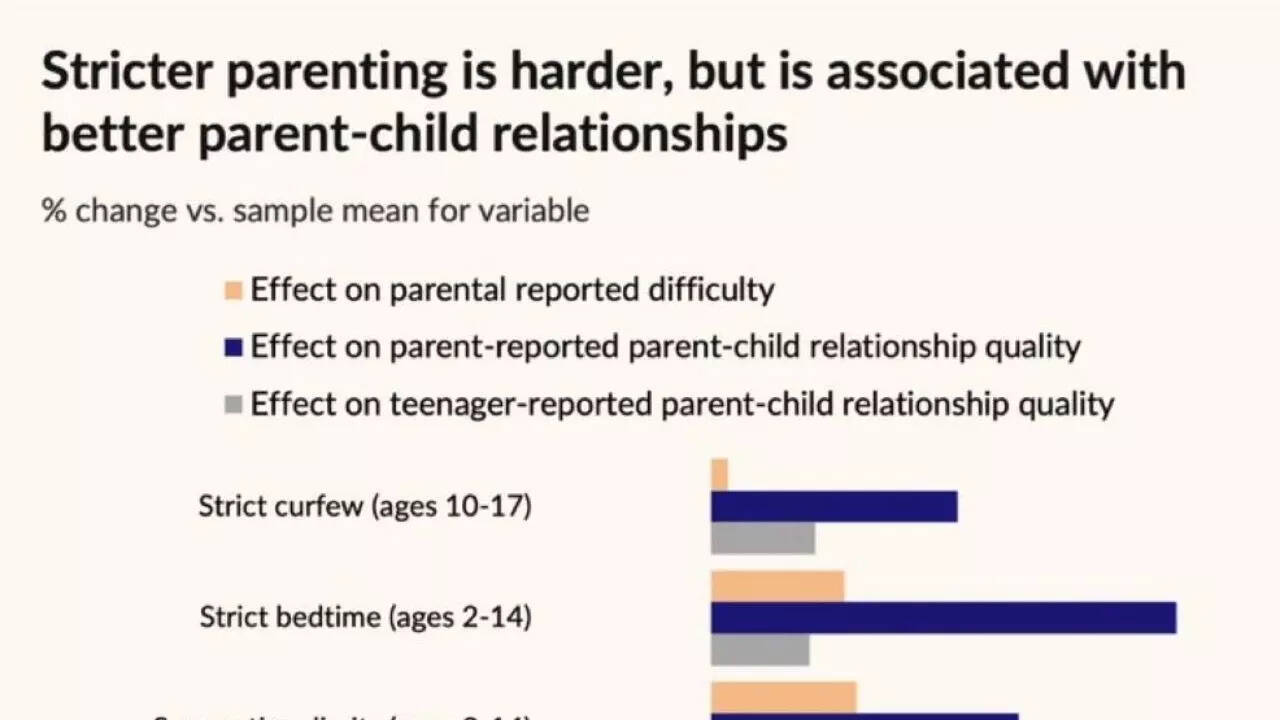
One of the most interesting revelations of the survey was that strict parents find raising kids to be harder. However, this style of parenting also leads to better parent-child relationship quality.
Parents found it difficult to apply rules like strict bedtime and screen time limit among children aged 2-14. But while they felt it affected their relationship with their child a lot, it was actually the opposite for the children.
In terms of setting limits on who their child befriends, they did not find it difficult to decide and while they thought it didn't impact their parent-child relationship a lot, the children stated it did.
In terms of allocating a dedicated homework time for children 5-17, parents found it difficult to impose and also thought it mattered significantly. While it did affect the parent-child relationship for the children as well, it wasn't to the extent the parents assumed.
Essentially, parents felt every rule they impose to make parenting feel harder. However, most parent-enforced rules were associated with better relationships with their kids, according to both the parents and the teenage children surveyed. Every parent-enforced rule except the limitations on a child's social ties is linked to better parent-child relationships.
Online reactions reflect a generational divide
The findings from the survey reveal one of the most controversial revelations to the world of parenting. Typically, parents believe that in order to have a better relationship with their children, they need to go easy on the expectations and rules. However, working hard on deciding and applying household norms and rules pays off. When parents set standards from the get-go, the relationships are actually warmer, more fulfilling and more respectful.
Many took to social media to share their reviews on the survey, sparking a pro and con debate online. "It's way easier to give your kids an iPad than it is to be present with them. It's way more rewarding to be present with them than to give them an iPad. There are 1,000's of examples just like this when it comes to parenting," wrote one user on X. '
"Don't u dare show my parents this, but im gonna show my kids" quipped another.
One X user named Dr Danish stated that over the past decade people have been sold a "watered down, Instagram friendly version of "gentle parenting"" that includes boundary avoidance, endless negotiation and emotional processing without enforcement. He added that parents are afraid of saying no as they don't want to disrupt their connection with their child but "connection without authority is dependency."
"Children need leadership, not negotiation. They need adults who can tolerate their anger. They need boundaries that do not move every time emotions spike. They need someone whose prefrontal cortex is fully myelinated," he added to the post.
Science has long said
A September 2025 survey by
Talk Researcher, of 2,000 parents found that while Gen-Z's have been raised with gentle parenting, only 32% employ the approach as parents. 43% Gen Z parents believe that the approach only works for some situations.
Diana Baumrind's approaches on parenting is one of the most cited framework in parenting scholarship. Her theory-derived parent classification system, organised around the axes of parenting warmth and discipline led to three approaches to parenting:
- Authoritative parenting characterised by high warmth and discipline
- Authoritarian parenting characterised by low parental warmth and high discipline
- Permissive parenting characterised by high parental warmth and low discipline
- Neglectful parenting characterised by low warmth and low discipline was later added by Maccoby and Martin
An investigation into these styles highlights authoritative parenting as the optimal style for parents considering its associations with wellbeing in children.
Parenting may never feel easy. Yet evidence suggests that thoughtful structure, paired with warmth, may foster stronger relationships rather than weaken them. Setting boundaries may feel tough in the moment, but over time, it could be one of the most meaningful ways to nurture happier, more secure teens.