
Trending
Humans evolved from 4-eyed weirdos: Meet the great-grandfish that had extra eyes to escape predators
Fossils from China's Chengjiang beds reveal that early vertebrate ancestors, jawless fish called myllokunmingids, possessed four image-forming eyes. These ancient creatures, dating back 518 million years, likely used their extra vision for predator avoidance in a dangerous Cambrian ocean. This discovery suggests a more complex visual system in our earliest ancestors than previously understood.
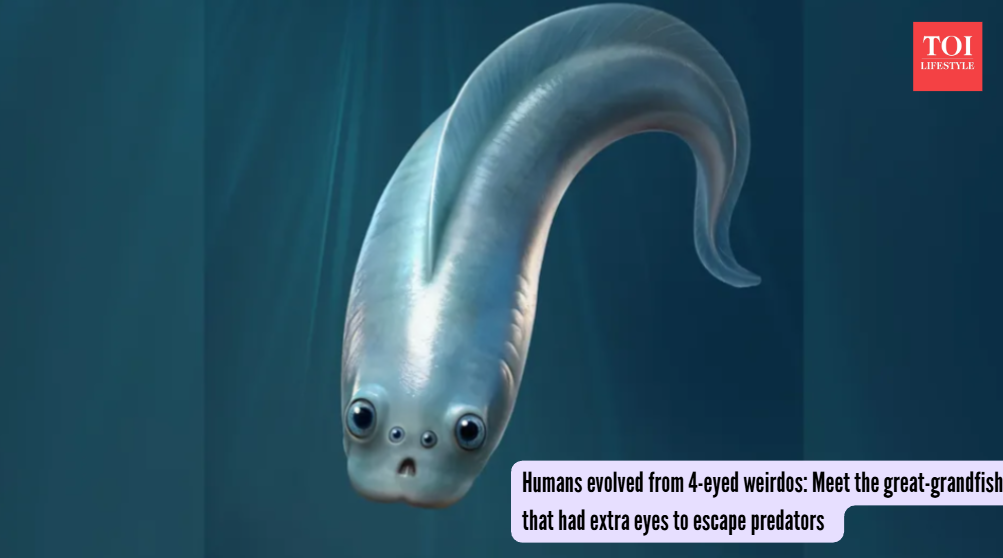
Humans evolved from 4-eyed weirdos: Meet the great-grandfish that had extra eyes to escape predators (Photo: Xiangtong Lei & Sihang Zhang )
Earth was dotted with four-eyed ancestors
Why four eyes?ns
What did scientists observe during analysis?
What does this tell us about evolution?
End of Article
Follow Us On Social Media
Tired of too many ads?go ad free now
lifestyle videos
Featured In Lifestyle

Tired of too many ads?go ad free now



Hot on the Web
Rajpal YadavSalim Khan Health UpdateSunil Malhotra DeathRamadan Mubarak MessagesSalim KhanMorgan FreemanPravina Deshpande DeathChandra Grahan March 3Smita ManjareChandra GrahanGalgotias UniversityTrisha KrishnanPremium Indian DishesRamadan 2026Holi 2026Neena Gupta'O'Romeo' Box Office CollectionSnakes Hiding SpotsJana NayaganAllu Arjun HouseMaya AngelouThe Kerala Story 2Dhurandhar 2YashAmavasya 2026Prathichaya TrailerRamadan 2026 DateBorder 2 Movie ReviewShah Rukh KhanTu Yaa Main Movie ReviewToday Gold Rate in ChennaiDelhi Weather TodayDelhi AQI TodayMumbai AQI TodayMaharashtra Public Holidays 2026Sundar PichaiElon Musk Net WorthPassports Data LeaksSridhar VembuMark CubanUnitree Go2 Robot Dog
Trending Topics
Latest MoviesBollywood MoviesHollywood MoviesTamil Movies 2026Telugu Movies 2026Malayalam Movies 2026Kannada MoviesMarathi MoviesBengali Movies 2026Top Rated Movies 2026Best Hindi MoviesBest English MoviesBest Telugu MoviesBest Tamil MoviesBest Malayalam MoviesBest Kannada MoviesBest Bengali MoviesUpcoming Hindi MoviesBest Movies Of All TimeBest Hindi Movies of All TimeLatest English MoviesLatest Malayalam MoviesEnglish TV NewsTamil TV NewsTelugu TV NewsMalayalam TV NewsKannada TV NewsMovie ReviewsBhojpuri Cinema NewsGujarati Cinema News
Popular Categories
Viral NewsK Pop NewsWeb Series NewsAnime NewsUpcoming English MoviesUpcoming Tamil MoviesUpcoming Telugu MoviesUpcoming Malayalam MoviesUpcoming Kannada MoviesFashion TipsTravel NewsEntertainment NewsBollywood NewsTollywood NewsKollywood NewsMollywood NewsFood NewsLatest Hindi MoviesLatest Tamil MoviesParenting TipsHome RemediesWeight LossBeauty TipsParenting TipsHindi VideosHindi Video SongsBhojpuri Music VideosLatest Telugu MoviesBhojpuri Music VideoHindi TV News
Latest News
Working women’s hostel opens at IAS ColonyCorrections in new UGC regulations to address students’ concerns: Nishikant Dubey3 men arrested, juvenile detained in assault outside Tamando cafeRanchi Board Exams Disrupted by Campaign Noise: Students Demand ActionExcise Department intensifies crackdown on illicit liquor ahead of civic polls in DhanbadOdisha Plus II exams begin smoothly: No malpractice reported, AI cameras monitorKerala has become a very important and special part of my artistic journey: Madhulita MohapatraStudents reach late at exam centres amid traffic chaos in DumraonAggressive wild tusker darted, relocated to SatkosiaRelief camps to lifelines: Manipur’s displaced build a new economy while waiting to go homeRajya Sabha elections: BJP, BJD eye fourth seat from state amid consensus buzzElection for three Rajya Sabha seats from Assam on Mar 16Ever wondered why some people sneeze when they look at the sunHumans evolved from 4-eyed weirdos: Meet the great-grandfish that had extra eyes to escape predatorsSR aimed at purging voters’ list of ineligible names: CECJumbo deaths averted with installation of AI towersAI chip crisis now brings ‘bad news’ for Valve Steam Deck OLED fansContract Extension: Jalen Brunson’s $113M sacrifice sets stage for $418M blockbuster contract in 2029