- News
- entertainment
- tamil
- movies
- The people with whom actors work post shoot
Trending
This story is from May 20, 2016
The people with whom actors work post shoot
There are so many departments who do the post production work of a film
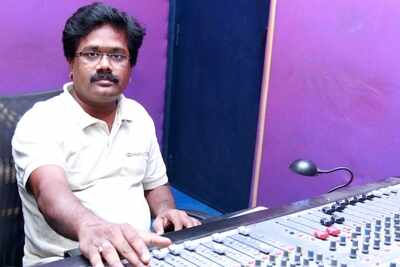
There are so many departments who do the post production work of a film, from editing to CG, mu sic, and so on, but it is only the dubbing de partment that has to work with actors. ���In some ways, the dubbing process is like shooting, except that this time, actors need to act only with their voice,��� says Kothandan, a dubbing engineer in Le Magic Lantern, one of the city's wellknown dubbing studios. He started his stint in a dubbing studio with Aadukalam, and has worked on many of the films of director Rajesh, Mysskin, actor Sivakarthikeyan, and films like Velaiilla Pattadhari and most recently, Kabali.
WHAT THEY DO
Explaining what a dubbing engineer does, he says, ���There is a difference in how we speak when we are inside a room and when outside. Also, a hero might speak in a certain way to the heroine and in a different way to the villain. So, my role is to talk to the director, understand the mood of the scene, the characters, their placement on screen and record their dialogues suitably . It is my duty to suggest what kind of modulation is needed -do they need to be loud, husky, casual and so on. As a dubbing engineer, I record the dialogues and give them to the editor so that he can trim the scenes further. Later, once the editor has done the final editing, I edit the dialogue track once again and finalise it.���

Dubbing engineers record dialogues separately for teasers and trailers because while the dialogues might have some extension in the film, but in the trailer, they need only the punchlines.Actors concentrate specifically on these lines while recording them. ���For Kabali's teaser, the Superstar managed to record the lengthy Nambiar dialogue in 2-3 takes,��� informs Kothandan.
STRAIGHT FILM VS DUBBED FILM
Talking about how different it is to dub a straight Tamil film and a dubbing film, Veera, a dubbing engineer at Mantra Studio says, ���For a straight film, the lip-sync is crucial, but with a dubbed film, we mainly need to take care and ensure that the dialogues start and end with the opening and closing of the actor's lips. This will automatically give the illusion of the lines being in sync.���
WORKING WITH ACTORS
To actors, the dubbing engineer plays the pilot track (the dialogue that was recorded on location) before they start recording to help them get into the mood of the scene and recall their emotions when they had shot it. ���Some actors are so comfortable with the process that they will listen to the pilot three to four times and finish recording the dialogue in just a couple of takes. Vijay Sethupathi, who I had recorded for Purampokku Engira Podhuvudamai, has this ability to deliver lengthy dialogues in one take,��� he says.
���With Rajini sir, I used to play the scene after he has recorded and he will immediately find if he needs to go for a retake or not,��� reveals Kothandan and adds, ���Actors like Prakash Raj, who often records in a single take, in fact know that if we play the scene again to them, it means something wasn't right and they need to go for another take. Sivakarthikeyan will record the entire line even if it is just one word that we need for another take.���
Generally , actors finish their dubbing in two to four days, says Kothandan. ���Vijay sir usually takes two days to dub his portions -one day for the first half and the next day for the second,��� he says. Some actors record whenever they are free, so their sessions might be spread out over a few days.
���With experienced actors and dubbing artistes generally know what is expected out of them, but with those who are relatively new, the role of a dubbing engineer becomes important,��� says Chandru, a dubbing and mixing engineer at Prasad Studios, who has worked on over 1,000 films. ���Given that many of our heroines are from Mumbai or Bangalore, they need dubbing artistes. When we do a voice test, we look for a dubbing artiste who can act, react and modulate closer to the actress,��� he says on how a dubbing artiste is chosen for an actor or an actress.
FROM LARGE STUDIOS TO COMPACT ONES
M Ravi, the secretary of the Cine Audiographers' Association of South India, says that before the advent of digital technology, dubbing was being done mostly in large studios as the set-up needed space and manpower. ���We had the loop system where the same reel used to be played continuously and actors had to concentrate and record their lines when their portions came up. Later, we had reversible projection system, which automatically reversed the reel so that eased things a bit. Now, with digital, we can move to wherever we want and start recording. We can even record just one word that is out of sync in the entire dialogue and rectify a mistake,��� he says. Still, he feels that technology has also increased the time spent on the process. ���Actors know that the dubbing engineer can go back and record again if there is a mistake. So, some tend to have a casual approach towards this resulting in many takes,��� he adds.
THE CROWD'S VOICE
Recording crowd scenes for films is a fun, creative process, for these engineers. There are two types of scenes -stationary crowd and moving crowd -and there are specific approaches that these engineers follow. ���For stationary scenes, I place 2 mics and record the output in stereo.First, I split the 20-odd dubbing artistes into two groups, place them in front of each of the mics and record them. Then, I switch the places of these groups and record them. Finally , while mixing, I combine both these sounds in such a way that in the theatre, the audience will feel as if an actual crowd had been recorded live,��� says Veera.
For scenes that have a For scenes that have a moving crowd, he says, he makes the dubbing artistes walk from one end of the room to other inside the recording room while talking at the same time. ���The mics will remain in a fixed place and the sound will seem as if it has been picked-up when the characters were on the move,��� he says.
ANY-TIME WORK
While dubbing engineers have regular work timings, they are expected to be available whenever the artiste needs it. So, if an actor is available only in the night, they need to be at the studio then. ���But that is also one of the interesting aspects of this job. I've never felt bad that I have been called to work on a Sunday ,��� smiles Kothandan, who adds that it is important that a dubbing engineer is on good terms with the stu dio bosses. ���In my case, Lissy ma'am has given us total freedom to do our work and regularly checks with us on what we need to keep ourselves and the studio update with the latest tools,��� he says.
In addition to a monthly salary from the studio and daily batas as per their association rules, dubbing engineers also get a certain percentage from the package that the studio has negotiated with the producer for a particular film. Still, Ravi informs that producers tend to be tight-fisted when it comes to spending on the sound department.
WHAT THEY DO
Explaining what a dubbing engineer does, he says, ���There is a difference in how we speak when we are inside a room and when outside. Also, a hero might speak in a certain way to the heroine and in a different way to the villain. So, my role is to talk to the director, understand the mood of the scene, the characters, their placement on screen and record their dialogues suitably . It is my duty to suggest what kind of modulation is needed -do they need to be loud, husky, casual and so on. As a dubbing engineer, I record the dialogues and give them to the editor so that he can trim the scenes further. Later, once the editor has done the final editing, I edit the dialogue track once again and finalise it.���
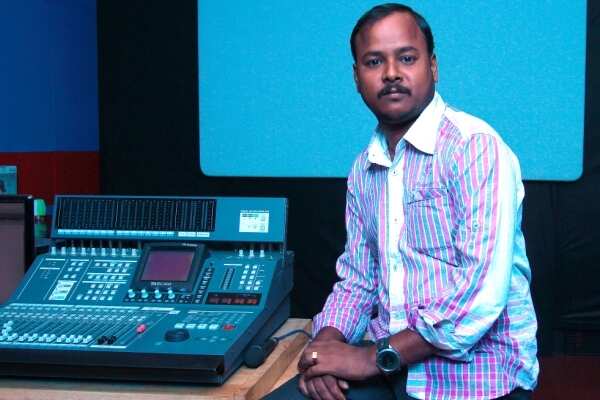
Dubbing engineers usually work with the film's sound designers, who will tell them what kind of sound they need -the sound level, the sound focus, and modulation. ���For example, in Irudhi Suttru, the heroine has to talk to the hero as they are walking down the stairs and in a slightly tense manner. The sound designers, Vishnu Govind and Sree Sankar, actually made the dubbing artiste get ruffled by repeatedly asking her to give one more take. So, without her realising it, she started speaking in an agitated way,��� recounts Kothandan. It takes a couple of days to sync the dialogues for the entire film. After this, a sync editor (either the film's editor or his assistant) comes to the studio and looks at it minutely frame by frame.The dubbing process, on an average, takes 20 days to finish. A month's time, dubbing engineers feel, is ideal. For dubbing films, the process takes only 10 days.
Dubbing engineers record dialogues separately for teasers and trailers because while the dialogues might have some extension in the film, but in the trailer, they need only the punchlines.Actors concentrate specifically on these lines while recording them. ���For Kabali's teaser, the Superstar managed to record the lengthy Nambiar dialogue in 2-3 takes,��� informs Kothandan.
STRAIGHT FILM VS DUBBED FILM
Talking about how different it is to dub a straight Tamil film and a dubbing film, Veera, a dubbing engineer at Mantra Studio says, ���For a straight film, the lip-sync is crucial, but with a dubbed film, we mainly need to take care and ensure that the dialogues start and end with the opening and closing of the actor's lips. This will automatically give the illusion of the lines being in sync.���
WORKING WITH ACTORS
To actors, the dubbing engineer plays the pilot track (the dialogue that was recorded on location) before they start recording to help them get into the mood of the scene and recall their emotions when they had shot it. ���Some actors are so comfortable with the process that they will listen to the pilot three to four times and finish recording the dialogue in just a couple of takes. Vijay Sethupathi, who I had recorded for Purampokku Engira Podhuvudamai, has this ability to deliver lengthy dialogues in one take,��� he says.
���With Rajini sir, I used to play the scene after he has recorded and he will immediately find if he needs to go for a retake or not,��� reveals Kothandan and adds, ���Actors like Prakash Raj, who often records in a single take, in fact know that if we play the scene again to them, it means something wasn't right and they need to go for another take. Sivakarthikeyan will record the entire line even if it is just one word that we need for another take.���
Generally , actors finish their dubbing in two to four days, says Kothandan. ���Vijay sir usually takes two days to dub his portions -one day for the first half and the next day for the second,��� he says. Some actors record whenever they are free, so their sessions might be spread out over a few days.
���With experienced actors and dubbing artistes generally know what is expected out of them, but with those who are relatively new, the role of a dubbing engineer becomes important,��� says Chandru, a dubbing and mixing engineer at Prasad Studios, who has worked on over 1,000 films. ���Given that many of our heroines are from Mumbai or Bangalore, they need dubbing artistes. When we do a voice test, we look for a dubbing artiste who can act, react and modulate closer to the actress,��� he says on how a dubbing artiste is chosen for an actor or an actress.
FROM LARGE STUDIOS TO COMPACT ONES
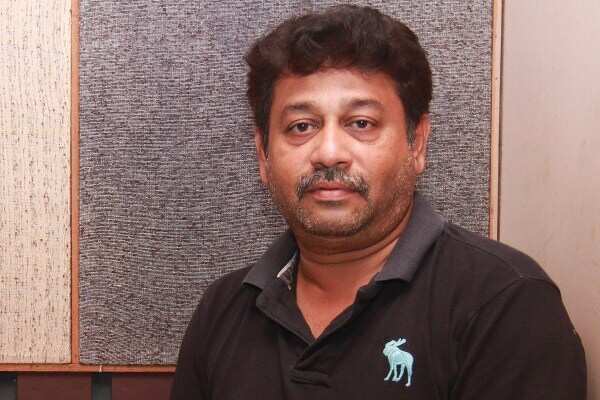
M Ravi, the secretary of the Cine Audiographers' Association of South India, says that before the advent of digital technology, dubbing was being done mostly in large studios as the set-up needed space and manpower. ���We had the loop system where the same reel used to be played continuously and actors had to concentrate and record their lines when their portions came up. Later, we had reversible projection system, which automatically reversed the reel so that eased things a bit. Now, with digital, we can move to wherever we want and start recording. We can even record just one word that is out of sync in the entire dialogue and rectify a mistake,��� he says. Still, he feels that technology has also increased the time spent on the process. ���Actors know that the dubbing engineer can go back and record again if there is a mistake. So, some tend to have a casual approach towards this resulting in many takes,��� he adds.
THE CROWD'S VOICE
Recording crowd scenes for films is a fun, creative process, for these engineers. There are two types of scenes -stationary crowd and moving crowd -and there are specific approaches that these engineers follow. ���For stationary scenes, I place 2 mics and record the output in stereo.First, I split the 20-odd dubbing artistes into two groups, place them in front of each of the mics and record them. Then, I switch the places of these groups and record them. Finally , while mixing, I combine both these sounds in such a way that in the theatre, the audience will feel as if an actual crowd had been recorded live,��� says Veera.
For scenes that have a For scenes that have a moving crowd, he says, he makes the dubbing artistes walk from one end of the room to other inside the recording room while talking at the same time. ���The mics will remain in a fixed place and the sound will seem as if it has been picked-up when the characters were on the move,��� he says.
ANY-TIME WORK
While dubbing engineers have regular work timings, they are expected to be available whenever the artiste needs it. So, if an actor is available only in the night, they need to be at the studio then. ���But that is also one of the interesting aspects of this job. I've never felt bad that I have been called to work on a Sunday ,��� smiles Kothandan, who adds that it is important that a dubbing engineer is on good terms with the stu dio bosses. ���In my case, Lissy ma'am has given us total freedom to do our work and regularly checks with us on what we need to keep ourselves and the studio update with the latest tools,��� he says.
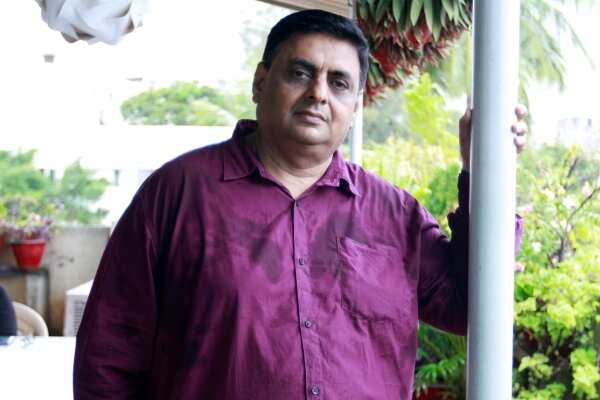
In addition to a monthly salary from the studio and daily batas as per their association rules, dubbing engineers also get a certain percentage from the package that the studio has negotiated with the producer for a particular film. Still, Ravi informs that producers tend to be tight-fisted when it comes to spending on the sound department.
End of Article
FOLLOW US ON SOCIAL MEDIA









entertainment videos
Featured In Movies
Popular Categories
Entertainment NewsBollywood NewsTollywood NewsKollywood NewsMollywood NewsMovie ReviewsLatest Hindi MoviesLatest Tamil MoviesMX PlayerParenting TipsHome RemediesWeight LossBeauty TipsParenting TipsHindi VideosHindi Video SongsBhojpuri Music VideosLatest Telugu MoviesBhojpuri Music VideoHindi TV News
Trending in Entertainment
Latest MoviesBollywood MoviesHollywood MoviesTamil Movies 2024Telugu Movies 2024Malayalam Movies 2024Kannada Movies 2024Marathi Movies 2024Bengali Movies 2024Top Rated Movies 2024Best Hindi MoviesBest English MoviesBest Telugu MoviesBest Tamil MoviesBest Malayalam MoviesBest Kannada MoviesBest Bengali MoviesUpcoming Hindi MoviesBest Movies Of All TimeBest Hindi Movies of All Time
Trending in Etimes
Horoscope TodayNumerology Predictions TodayDinner With TrumpTim WalzIvanka TrumpJose LopezKristina JoksimovicJoe WilsonTrump Eating The Dogs SongGermany NewsKamala HarrisPrince HarryPatriot Day 2024Diabetes RiskHappy Mindfulness Day 2024Trump Vs HarrisJoe JonasPositive Thinking Day 2024Dave Bautista
Trending in TV
Trending in Lifestyle
Trending in Regional
Movie Reviews
Berlin ReviewThe Buckingham Murders ReviewSpeak No Evil ReviewVisfot ReviewThalapathy Is The G.O.A.T ReviewRebel Ridge ReviewDetective Conan vs. Kid the Phantom Thief ReviewBeetlejuice Beetlejuice ReviewPad Gaye Pange ReviewA Wedding Story ReviewThe Diary Of West Bengal ReviewTikdam ReviewKinds Of Kindness ReviewAfraid Review
Upcoming Hindi Movies
Upcoming Regional Movies
Latest News
Regina Cassandra calls herself a 'serial dater,' had many relationships :'But I’m taking a break now'Kaun Banega Crorepati 16: Can you guess the answer for this Rs 3,20,000 question on Navy, which contestant Naman Jain incorrectly answered?Exclusive - Has Palak Sindhwani aka Sonu from Taarak Mehta Ka Ooltah Chashmah breached her contract; Neela Film Productions to issue a legal notice to the actress?Mexico's president asks Sinaloa cartel to act 'responsibly' as violence escalates in the northKitchen Tips: How to elevate home cooking to Michelin levelFord drives into India for 3rd timePIL: Publicise laws, penalties to curb crimes against womenGrowth potential 7.5% or more: RBI governorHindus take to Bangladesh streets to stop attacks and demand justiceE-commerce speeds up to catch up with Quick commerce'Will take digital public infrastructure stack to 50 nations'Justin Timberlake faces DWI charges: Court-ordered apology, fine and community serviceTragic road accident on Mogili ghat road claims seven lives in Chittoor districtSebi gives clean chit to NSE, ex-executives in co-location caseRusty or Ready? Falcons' Cousins Falls Flat in $180M NFL DebutEdible oil import duty hiked by 20%Preschools turn nursing homes, retirement age raised: China's demographic crisis explodesBest Phones Under 35000 To Smoothly Carry Out Multiple Tasks On A Budget
Other Group Sites -
ETimes is an Entertainment, TV & Lifestyle industrys promotional website and carries advertorials and native advertising.