- News
- entertainment
- hindi
- bollywood
- There is a difference between being patriotic and being rhetoric: Rakeysh Omprakash Mehra
Trending
This story is from November 12, 2019
There is a difference between being patriotic and being rhetoric: Rakeysh Omprakash Mehra
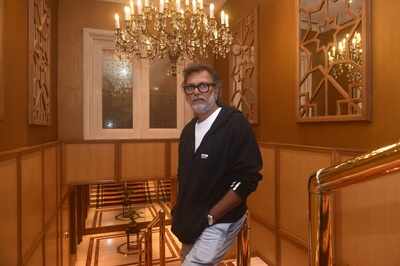
He first came to Kolkata when he was in school and believes that the city has preserved itself very well. He is also one of those rare creative minds, who is, oddly, thankful to those who try to suppress the voices of creative people. That is Rakeysh Omprakash Mehra for you. The Rang De Basanti director was in Kolkata to be a part of a panel discussion and CT caught up with him for a freewheeling chat...
This not your first visit to Kolkata. How do you view this city?
I remember coming to Kolkata when I was in school. It was for my swimming nationals and then I came again for inter-college nationals. It was the early ’80s. I remember visiting Fort William and Park Street. After that, whenever I have visited Kolkata, I have found that the city has preserved itself very well. When I compare it to other cities, I see that it has been a guardian of its own culture and beliefs. At the same time it has integrated very well with the rest of the world. The city has embraced the larger world without changing its identity. This is something I really admire. I only hope that it plays a larger role in the building of this country. There is so much intellect here. It should be put to greater use for the country.
What do you think of Kolkata’s youth and its politics?
Do you think the present political situation is choking the creative atmosphere of the country?
I don’t think so. It’s a bit of an overstatement. Nobody can choke anybody’s voice. If you try to do so, it only goes stronger. In that case, you will have to thank the choker for making the voice stronger. If the voice is there, it needs to be heard.
In 2006, Rang De Basanti ignited a certain patriotism among the youth. Thirteen years later, how do you view patriotism now?
I have always believed that there is a difference between being patriotic and being rhetoric. True patriotism is about the freedom of your spirit. It’s not about getting freedom from the goras or a certain political party or ideology. It’s all about change and the only person you need to change is the person you look at in the mirror. The patriotism shown in Rang De Basanti and the feeling in today’s society are different and they should be. So much time has passed and
for good or worse, patriotism should evolve.
Hindi cinema is witnessing an interesting change. Small-budget content-driven films have become the audiences’ first choice. What kind of challenges does it bring for filmmakers?
I thank god for this. I have been saying this for the last 10 years on the top of my voice that unless and until our filmmakers, writers and actors come from the small towns of India, we won’t have Indian cinema. Take the example of cricket as well. When it was the game of the rich and rajas and maharajas and their sons played it, nothing happened. But, the day we got regular players from small towns — we became the world champions. That is the true representation of our country. Presently, Indian cinema doesn’t have true representation. So, I think art needs to develop from the small towns of India.
In that case, what do you think about nepotism in Bollywood?
See, nepotism is there in every walk of life — not just in Bollywood. I hate the idea of entitlement. It takes opportunity away from others. In entertainment, if you are from a film family there is a sense of entitlement. But, the audience can sense it soon enough and they appreciate only true talent. Family background might open doors for you, but finally it’s your talent that will be judged. Besides, India is a difficult country to survive in for the common man. So, filmmakers have mastered the art of selling escapism to them. It provides a kind of relief at the end of the day. They live a difficult life. They don’t go to the theatre to be reminded of that.
Some say that the #MeToo movement is cleansing the film industry, while others say that it has done more harm than good. What’s your take?
How can it do any harm? Yes there are instances of misuse of the movement, but if it empowers women, it is a brilliant thing. In India, we pray to female deities, but we don’t recognise women as power symbols. It is very important and I think that this sort of movement should take place everywhere. Other than some misuse here and there, I support it entirely.
OTT shows and digital content are the new buzz. Can we expect to see you work in that space anytime soon?
See, when I started, I thought I cannot watch films on a small screen. For me, it’s all about the screen size. I have grown up on big feature films. So, I had built a wall between me and OTT shows. I thought that cinema had an irreplaceable place. But now, that wall is dissolving. I have seen the reach of OTT and if I enter OTT, I am going to enter as a global player. My products will reach millions of households in dozens countries. I can make a difference globally. So, I am all for it now.
This not your first visit to Kolkata. How do you view this city?
I remember coming to Kolkata when I was in school. It was for my swimming nationals and then I came again for inter-college nationals. It was the early ’80s. I remember visiting Fort William and Park Street. After that, whenever I have visited Kolkata, I have found that the city has preserved itself very well. When I compare it to other cities, I see that it has been a guardian of its own culture and beliefs. At the same time it has integrated very well with the rest of the world. The city has embraced the larger world without changing its identity. This is something I really admire. I only hope that it plays a larger role in the building of this country. There is so much intellect here. It should be put to greater use for the country.
What do you think of Kolkata’s youth and its politics?
Kolkata’s youth and politics have been on fire since pre-Independence days. But, now I think the voices of political parties speak louder than the voices of the youth. If I go back to the era of Kazi Nazrul Islam, it was all about the voices of the common people. Now, it feels more like that their voices are suppressed and are politically motivated. So, youths should stand up against this because they are the stronger ones in society. It’s not just in Kolkata or India, it has been the story of the entire world.
Do you think the present political situation is choking the creative atmosphere of the country?
I don’t think so. It’s a bit of an overstatement. Nobody can choke anybody’s voice. If you try to do so, it only goes stronger. In that case, you will have to thank the choker for making the voice stronger. If the voice is there, it needs to be heard.
In 2006, Rang De Basanti ignited a certain patriotism among the youth. Thirteen years later, how do you view patriotism now?
I have always believed that there is a difference between being patriotic and being rhetoric. True patriotism is about the freedom of your spirit. It’s not about getting freedom from the goras or a certain political party or ideology. It’s all about change and the only person you need to change is the person you look at in the mirror. The patriotism shown in Rang De Basanti and the feeling in today’s society are different and they should be. So much time has passed and
for good or worse, patriotism should evolve.
Hindi cinema is witnessing an interesting change. Small-budget content-driven films have become the audiences’ first choice. What kind of challenges does it bring for filmmakers?
I thank god for this. I have been saying this for the last 10 years on the top of my voice that unless and until our filmmakers, writers and actors come from the small towns of India, we won’t have Indian cinema. Take the example of cricket as well. When it was the game of the rich and rajas and maharajas and their sons played it, nothing happened. But, the day we got regular players from small towns — we became the world champions. That is the true representation of our country. Presently, Indian cinema doesn’t have true representation. So, I think art needs to develop from the small towns of India.
In that case, what do you think about nepotism in Bollywood?
See, nepotism is there in every walk of life — not just in Bollywood. I hate the idea of entitlement. It takes opportunity away from others. In entertainment, if you are from a film family there is a sense of entitlement. But, the audience can sense it soon enough and they appreciate only true talent. Family background might open doors for you, but finally it’s your talent that will be judged. Besides, India is a difficult country to survive in for the common man. So, filmmakers have mastered the art of selling escapism to them. It provides a kind of relief at the end of the day. They live a difficult life. They don’t go to the theatre to be reminded of that.
Some say that the #MeToo movement is cleansing the film industry, while others say that it has done more harm than good. What’s your take?
How can it do any harm? Yes there are instances of misuse of the movement, but if it empowers women, it is a brilliant thing. In India, we pray to female deities, but we don’t recognise women as power symbols. It is very important and I think that this sort of movement should take place everywhere. Other than some misuse here and there, I support it entirely.
OTT shows and digital content are the new buzz. Can we expect to see you work in that space anytime soon?
See, when I started, I thought I cannot watch films on a small screen. For me, it’s all about the screen size. I have grown up on big feature films. So, I had built a wall between me and OTT shows. I thought that cinema had an irreplaceable place. But now, that wall is dissolving. I have seen the reach of OTT and if I enter OTT, I am going to enter as a global player. My products will reach millions of households in dozens countries. I can make a difference globally. So, I am all for it now.
End of Article
FOLLOW US ON SOCIAL MEDIA






entertainment videos
Featured In Movies

Popular Categories
Entertainment NewsBollywood NewsTollywood NewsKollywood NewsMollywood NewsMovie ReviewsLatest Hindi MoviesLatest Tamil MoviesMX PlayerParenting TipsHome RemediesWeight LossBeauty TipsParenting TipsHindi VideosHindi Video SongsBhojpuri Music VideosLatest Telugu MoviesBhojpuri Music VideoHindi TV News
Trending in Entertainment
Latest MoviesBollywood MoviesHollywood MoviesTamil Movies 2024Telugu Movies 2024Malayalam Movies 2024Kannada Movies 2024Marathi Movies 2024Bengali Movies 2024Top Rated Movies 2024Best Hindi MoviesBest English MoviesBest Telugu MoviesBest Tamil MoviesBest Malayalam MoviesBest Kannada MoviesBest Bengali MoviesUpcoming Hindi MoviesBest Movies Of All TimeBest Hindi Movies of All Time
Trending in Etimes
Horoscope TodayNumerology Predictions TodayDinner With TrumpTim WalzIvanka TrumpJose LopezKristina JoksimovicJoe WilsonTrump Eating The Dogs SongGermany NewsKamala HarrisPrince HarryPatriot Day 2024Diabetes RiskHappy Mindfulness Day 2024Trump Vs HarrisJoe JonasPositive Thinking Day 2024Dave Bautista
Trending in TV
Trending in Lifestyle
Trending in Regional
Movie Reviews
Visfot ReviewThalapathy Is The G.O.A.T ReviewRebel Ridge ReviewDetective Conan vs. Kid the Phantom Thief ReviewBeetlejuice Beetlejuice ReviewPad Gaye Pange ReviewA Wedding Story ReviewThe Diary Of West Bengal ReviewTikdam ReviewKinds Of Kindness ReviewAfraid ReviewThe Deliverance ReviewBlue Lock: Episode Nagi ReviewDaddio Review
Upcoming Hindi Movies
Upcoming Regional Movies
Latest News
7. Hindi becomes officialJulie Chen to miss Big Brother live eviction for first time, taps Jerry O'Connell to hostTragic road accident on Mogili ghat road claims seven lives in Chittoor districtRaveena Tandon apologizes to fans for not photo snub in London: "It was not my intention to offend"Bonedi baris hope for a peaceful start to PujoPreschools turn nursing homes, retirement age raised: China's demographic crisis explodesTovino Thomas praises Prithviraj Sukumaran as director: "One of the brilliant directors I have ever worked with"Man shot near Delhi's Greater Kailash-I gym, gang war suspected8 animals that reproduce without mating'Cops stood as mute spectators': Protesting doctors write to President over RG Kar impasseFatal crash in Australia's Netherby claims life of ToddlerNASA to establish New Lunar Time Standard with Coordinated Lunar Time (LTC) initiativeDivya Bansal explores themes of human resilience, love and positive transformation in debut poetry bookWWE Superstar Cody Rhodes and his Wife Brandi Rhodes Share Special Messages on Their 11th AnniversaryAnupamaa: Anuj and Anu to go legal against Ankush and Barkha'Dead cat hanging from a tree': Origin of Haitian immigrants row. Everyone heard itTop 5 least private zodiac signsPerfect comfort foods for every zodiac sign
Other Group Sites -
ETimes is an Entertainment, TV & Lifestyle industrys promotional website and carries advertorials and native advertising.