- News
- entertainment
- hindi
- bollywood
- Pratik Gandhi: Success is not permanent, I come from a family of salaried teachers and I know the value of every rupee – Exclusive!
Trending
This story is from September 16, 2021
Pratik Gandhi: Success is not permanent, I come from a family of salaried teachers and I know the value of every rupee – Exclusive!
After the success of Hansal Mehta's ‘Scam 1992’, its face and lead actor Pratik Gandhi has become a household name. So much so, that anyone who’s wanting to make anything in the film industry, wants to work with Pratik. It’s literally like someone shone a 24x7 spotlight on the young man, turning him into a sensation.
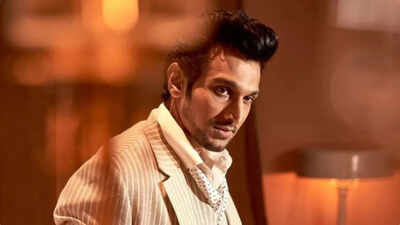
After the success of Hansal Mehta's ‘Scam 1992’, its face and lead actor Pratik Gandhi has become a household name. So much so, that anyone who’s wanting to make anything in the film industry, wants to work with Pratik. It’s literally like someone shone a 24x7 spotlight on the young man, turning him into a sensation. But Pratik knows better than to bask in the glory. He draws wisdom from his modest background and middle-class upbringing. And that’s why he doesn’t make any noise about his success, nor about the plethora of opportunities at his disposal right now. Even as his next film, ‘Bhavai’ courts controversy over a title change, Pratik Gandhi plays it down and focuses on the next project. Speaking to ETimes, the young actor reveals the secrets to his modesty and reasons for his passion. Excerpts from the chat:
Things have changed a lot. There is a lot of excitement within the audience and the makers, which is overwhelming for any actor. I guess an actor dreams for such a phase where you are approached with good scripts and people have faith in your craft and they want to work with you. I waited for this stage of life for almost 16 years. It is an exciting time right now. I feel really lucky to have ‘Scam 1992’ as my first national release, in fact it became international because of the OTT. Since it is a long format show I got good enough time to dwell in the character. And since the character was so well written, I could portray a lot and in the end, the character got loved by all. Even kids know the dialogues by heart. That rarely happens these days.
What can’t change is the zeal and passion I have for work. I still work the same way now as I used to before ‘Scam 1992’. Because that’s how I think and create characters. I enjoy being on stage and being in front of the camera. My selection process is also very organic. It is purely based on gut instincts. If I develop a connection to a script or character then I want to do it.
I don't go by the name of the banner or by the name of the people involved. I certainly want to go by the script first and of course who is making it. Their vision, the kind of films they have made earlier will give me some idea about how they think about the story and the emotion. If I resonate with the same world and character, then I really want to be a part of it.
I have a lot of interesting projects on offer from a lot of interesting people. One of the biggest banners of India, T-Series is working with me on ‘Dedh Bigha Zameen’ where Hansal (Mehta) sir is also a co-producer. It is a sweet film and it talks about a current issue in India. It is a common man’s story and it’s relatable and heart-breaking, too. We will finish the shoot tonight. I am in Jhansi shooting for the film.
Thankfully, I wasn’t offered anything like ‘Scam’ after its release and everybody was willing to explore new subjects and characters with me. So, I am very happy about that. Apart from the brand offers, I guess everyone wants to encash on the success of ‘Scam’. Now with the festive season approaching, I have a lot of offers from digital engagement and social media engagement.
It is very difficult to deal with. I am an engineer (laughs). Commerce ka koi lena dena hi nahi hai life mein (Commerce is totally unrelated to my life). Thankfully I am Gujarati, and by virtue of that I am able to manage little bit of it. I come from a family that has always believed in FDs (fixed deposits). I come from a family of teachers. We have lived on salaries. It is for the first time that I am seeing such different figures in life. I have always been repaying loans, managing medical emergencies at home. I know the value of each and every rupee.
Earlier, title of the film was ‘Raavan Leela’. Now they have changed it to ‘Bhavai’. Certain people said that the earlier title had hurt their sentiments. But the film has got nothing to do with Ravan or Ram per se. It is named ‘Raavan Leela’ for a reason. Once people watch the film they will get it. Nevertheless, changing the name it not going to affect or harm our film so we are okay with it.
The film’s intention was never to hurt anyone. It is not a religious film at all. It is about two actors who are performing different characters on stage in Ram Leela. How the world outside perceives this situation and what difficulties these characters go through, the moral dilemma that our country and world is going through. The point being, it is very difficult for the world to understand the difference between reel and real.
There’s a compromise with the subject and then there is the censor board to cut down scenes. I feel the reason could be that the film industry has a deep reach into society. This is the only industry that reaches every household in India through various mediums. The industry is a soft target for one and all, because we’ve always been open to scrutiny. In the world of social media now, everybody's a critic. Everybody has an opinion, everybody wants to drive something or the other. This so-called freedom of expression has taken an off-beat route altogether.
In the current scenario, where the internet has become cheaper and people have become largely free from work, we have to fight a bigger evil. It is easy to colour somebody's thoughts, now. People can shout on top of their voice labelling something as wrong and the common man will believe that. It is a complex scenario and if you think from the business angle too, from the makers’ point of view, they’re scared that any reaction should not go against the film.
‘Bhavai’ is not anti-religion. We were talking about Ram and Ravan because they are playing Ram Leela on stage. People attack the personal life of actors, bad mouth them on social media. But they forget that actors are humans, they have a personal life, too. What you see of them on screen is just their reel life. There are many layers to storytelling and you can’t keep peeling every layer and explaining it those people.
There was nothing to unlearn. It is just that I had to be more flexible and open. The moment you move from theatre to regional cinema your canvas gets a little bigger. Again, the transition from regional to mainstream follows a similar pattern. The overall canvas changes. But my approach as an actor doesn’t change.
I don’t think differently for Hindi and Gujarati. Yes, the language and culture is different, so wherever there are fine nuances I have to tweak certain aspects to get into the skin of the character. But the process doesn’t change, only the budgets change.
Everything is going through turmoil right now. Once the cinemas start again we should get good footfalls in theatres. OTT has also made its way into the world of regional cinema. My first Gujarati web series ‘Vithal Teedi’ was screened on OHO, an OTT platform for Gujarati content. There are many more OTT platforms that have started now.
It is going through a big upheaval as well. I don’t know where and how can we restart with that. Even if we start theatre it will take a while to get back to the glory days again. Managing overheads and resources is going to be difficult but theatre is not going anywhere. That is the only live form of art that we have right now.
Absolutely. I was about to perform here in Jhansi as well. I had identified a theatre. It was just because of the tight schedule and Covid restrictions that we could not put up a show here. The moment I come back to Mumbai and if the theatres are allowed to open -- I am going to go straight back on stage.
I miss my dad. He always wanted to see me in this place, where I am today. And yet, he is not around when I finally got there. I miss talking to him.
‘Scam 1992’ changed your life and today you’re one of the most sought after actors in the Hindi film industry.
Things have changed a lot. There is a lot of excitement within the audience and the makers, which is overwhelming for any actor. I guess an actor dreams for such a phase where you are approached with good scripts and people have faith in your craft and they want to work with you. I waited for this stage of life for almost 16 years. It is an exciting time right now. I feel really lucky to have ‘Scam 1992’ as my first national release, in fact it became international because of the OTT. Since it is a long format show I got good enough time to dwell in the character. And since the character was so well written, I could portray a lot and in the end, the character got loved by all. Even kids know the dialogues by heart. That rarely happens these days.
How do you keep a level head after such huge success?
It is a personal trait. It is your own experience in life that teaches you how to deal with such things. Where I come from, the family, upbringing, whatever I have seen in life, I know for sure that nothing is permanent. It changes every second, every day and more so, my time in theatre taught me the same thing. When you do the same play again and again, you see that one show ends up being too good, where we get standing ovations for 5 minutes and the next show of the same play will not get any reaction from the audience. That experience taught me a lot. Ultimately, at the end of the day, we are humans and I am here in the entertainment industry for experiments, to create new characters and to tell stories, that's it. I don't think much about success. It will keep changing with every project.
What can’t change is the zeal and passion I have for work. I still work the same way now as I used to before ‘Scam 1992’. Because that’s how I think and create characters. I enjoy being on stage and being in front of the camera. My selection process is also very organic. It is purely based on gut instincts. If I develop a connection to a script or character then I want to do it.
How much does the stature of the production house backing a project matter to you?
I don't go by the name of the banner or by the name of the people involved. I certainly want to go by the script first and of course who is making it. Their vision, the kind of films they have made earlier will give me some idea about how they think about the story and the emotion. If I resonate with the same world and character, then I really want to be a part of it.
You’re not too bothered about big banners, but are the big banners bothered about signing you?
I have a lot of interesting projects on offer from a lot of interesting people. One of the biggest banners of India, T-Series is working with me on ‘Dedh Bigha Zameen’ where Hansal (Mehta) sir is also a co-producer. It is a sweet film and it talks about a current issue in India. It is a common man’s story and it’s relatable and heart-breaking, too. We will finish the shoot tonight. I am in Jhansi shooting for the film.
After ‘Scam 1992’, were you offered similar kind of films and projects?
Thankfully, I wasn’t offered anything like ‘Scam’ after its release and everybody was willing to explore new subjects and characters with me. So, I am very happy about that. Apart from the brand offers, I guess everyone wants to encash on the success of ‘Scam’. Now with the festive season approaching, I have a lot of offers from digital engagement and social media engagement.
With great success comes great wealth. How are you dealing with this new found commerce of life?
It is very difficult to deal with. I am an engineer (laughs). Commerce ka koi lena dena hi nahi hai life mein (Commerce is totally unrelated to my life). Thankfully I am Gujarati, and by virtue of that I am able to manage little bit of it. I come from a family that has always believed in FDs (fixed deposits). I come from a family of teachers. We have lived on salaries. It is for the first time that I am seeing such different figures in life. I have always been repaying loans, managing medical emergencies at home. I know the value of each and every rupee.
A lot has been spoken and speculated about the change in title of ‘Ravan Leela ’ to ‘Bhavaai’. What’s the real story?
Earlier, title of the film was ‘Raavan Leela’. Now they have changed it to ‘Bhavai’. Certain people said that the earlier title had hurt their sentiments. But the film has got nothing to do with Ravan or Ram per se. It is named ‘Raavan Leela’ for a reason. Once people watch the film they will get it. Nevertheless, changing the name it not going to affect or harm our film so we are okay with it.
The film’s intention was never to hurt anyone. It is not a religious film at all. It is about two actors who are performing different characters on stage in Ram Leela. How the world outside perceives this situation and what difficulties these characters go through, the moral dilemma that our country and world is going through. The point being, it is very difficult for the world to understand the difference between reel and real.
Why does the industry compromise every time someone stands up with an objection?
There’s a compromise with the subject and then there is the censor board to cut down scenes. I feel the reason could be that the film industry has a deep reach into society. This is the only industry that reaches every household in India through various mediums. The industry is a soft target for one and all, because we’ve always been open to scrutiny. In the world of social media now, everybody's a critic. Everybody has an opinion, everybody wants to drive something or the other. This so-called freedom of expression has taken an off-beat route altogether.
In the current scenario, where the internet has become cheaper and people have become largely free from work, we have to fight a bigger evil. It is easy to colour somebody's thoughts, now. People can shout on top of their voice labelling something as wrong and the common man will believe that. It is a complex scenario and if you think from the business angle too, from the makers’ point of view, they’re scared that any reaction should not go against the film.
‘Bhavai’ is not anti-religion. We were talking about Ram and Ravan because they are playing Ram Leela on stage. People attack the personal life of actors, bad mouth them on social media. But they forget that actors are humans, they have a personal life, too. What you see of them on screen is just their reel life. There are many layers to storytelling and you can’t keep peeling every layer and explaining it those people.
After your foray into Hindi films, did you have to unlearn the experiences of Gujarati film and theatre?
There was nothing to unlearn. It is just that I had to be more flexible and open. The moment you move from theatre to regional cinema your canvas gets a little bigger. Again, the transition from regional to mainstream follows a similar pattern. The overall canvas changes. But my approach as an actor doesn’t change.
I don’t think differently for Hindi and Gujarati. Yes, the language and culture is different, so wherever there are fine nuances I have to tweak certain aspects to get into the skin of the character. But the process doesn’t change, only the budgets change.
How would you describe the current status of Gujarati cinema?
Everything is going through turmoil right now. Once the cinemas start again we should get good footfalls in theatres. OTT has also made its way into the world of regional cinema. My first Gujarati web series ‘Vithal Teedi’ was screened on OHO, an OTT platform for Gujarati content. There are many more OTT platforms that have started now.
What about Gujarati theatre?
It is going through a big upheaval as well. I don’t know where and how can we restart with that. Even if we start theatre it will take a while to get back to the glory days again. Managing overheads and resources is going to be difficult but theatre is not going anywhere. That is the only live form of art that we have right now.
Will you continue featuring in theatre?
Absolutely. I was about to perform here in Jhansi as well. I had identified a theatre. It was just because of the tight schedule and Covid restrictions that we could not put up a show here. The moment I come back to Mumbai and if the theatres are allowed to open -- I am going to go straight back on stage.
What’s that one change in life that you regret now?
I miss my dad. He always wanted to see me in this place, where I am today. And yet, he is not around when I finally got there. I miss talking to him.
End of Article
FOLLOW US ON SOCIAL MEDIA








Photostories
entertainment videos

Featured In Movies
Popular Categories
Entertainment NewsBollywood NewsTollywood NewsKollywood NewsMollywood NewsMovie ReviewsLatest Hindi MoviesLatest Tamil MoviesMX PlayerParenting TipsHome RemediesWeight LossBeauty TipsParenting TipsHindi VideosHindi Video SongsBhojpuri Music VideosLatest Telugu MoviesBhojpuri Music VideoHindi TV News
Trending in Entertainment
Latest MoviesBollywood MoviesHollywood MoviesTamil Movies 2024Telugu Movies 2024Malayalam Movies 2024Kannada Movies 2024Marathi Movies 2024Bengali Movies 2024Top Rated Movies 2024Best Hindi MoviesBest English MoviesBest Telugu MoviesBest Tamil MoviesBest Malayalam MoviesBest Kannada MoviesBest Bengali MoviesUpcoming Hindi MoviesBest Movies Of All TimeBest Hindi Movies of All Time
Trending in Etimes
Horoscope TodayNumerology Predictions TodayDinner With TrumpTim WalzIvanka TrumpJose LopezKristina JoksimovicJoe WilsonTrump Eating The Dogs SongGermany NewsKamala HarrisPrince HarryPatriot Day 2024Diabetes RiskHappy Mindfulness Day 2024Trump Vs HarrisJoe JonasPositive Thinking Day 2024Dave Bautista
Trending in TV
Trending in Lifestyle
Trending in Regional
Movie Reviews
Berlin ReviewThe Buckingham Murders ReviewSpeak No Evil ReviewVisfot ReviewThalapathy Is The G.O.A.T ReviewRebel Ridge ReviewDetective Conan vs. Kid the Phantom Thief ReviewBeetlejuice Beetlejuice ReviewPad Gaye Pange ReviewA Wedding Story ReviewThe Diary Of West Bengal ReviewTikdam ReviewKinds Of Kindness ReviewAfraid Review
Upcoming Hindi Movies
Upcoming Regional Movies
Latest News
Kaun Banega Crorepati 16: Can you guess the answer for this Rs 3,20,000 question on Navy, which contestant Naman Jain incorrectly answered?Edible oil import duty hiked by 20%'Calling all Swifties for Trump': Donald's new campaign merch imitates Eras Tour shirtsWWE Hall of Famer Watches 15 Hours Of Wrestling Each WeekDallas Cowboys Set to Defend AT&T Stadium in Week 2 Clash with New Orleans SaintsTovino on training for Kalaripayattu in ‘ARM’: I practiced every single day, even if I had a hectic day on set8 animals that reproduce without matingDelhi Police Files FIR for Firecracker Celebration Outside CM Kejriwal's ResidenceThrowback: When Alia Bhatt responded to insecurity questions about Ranbir Kapoor, shut down gossipIndia's T20I captain Suryakumar Yadav turns 34: A glimpse into his stellar T20 careerThe 3 Strongest Zodiac Signs: Powerhouses of the Zodiac Wheel'Forgive me, I don't belong ...' : Tamil Nadu hotelier's apology to FM Nirmala Sitharaman over GST remark triggers political rowRakul Preet Singh reveals Bollywood stylists charge from Rs 15000 to Rs 1 lakh for one event, one outfit: 'Living in Mumbai requires a lot of PR'September 14, 2024: Flying creatures and how their wings workThrashed for 'molesting' kid on train, rail staffer diesKejriwal walks out of jail, says morale is up by 100 timesDhruv Kapila's health setback shatters Indian pair's Vietnam Open semifinal hopesFormer Titans Cheerleader Danielle Sekelsky Begins WWE NXT Training
Other Group Sites -
ETimes is an Entertainment, TV & Lifestyle industrys promotional website and carries advertorials and native advertising.