Distribution teams, over years, would regularly inform me – of ten with charts – that “intelligent cinema” does not work in smaller centres or single screens. This came as news to me, because as a youngster I had seen
Ardh Satya, Chakra, Dharavi, Khamosh, Jaane Bhi Do Yaaron, Akrosh in packed theatres – many of them single screens, many of them smaller centres. Apparently, intelligence had since migrated exclusively to metros. I was shown data. Lots of data. And as everyone likes to say, data never lies – though it occasionally misses reasons.

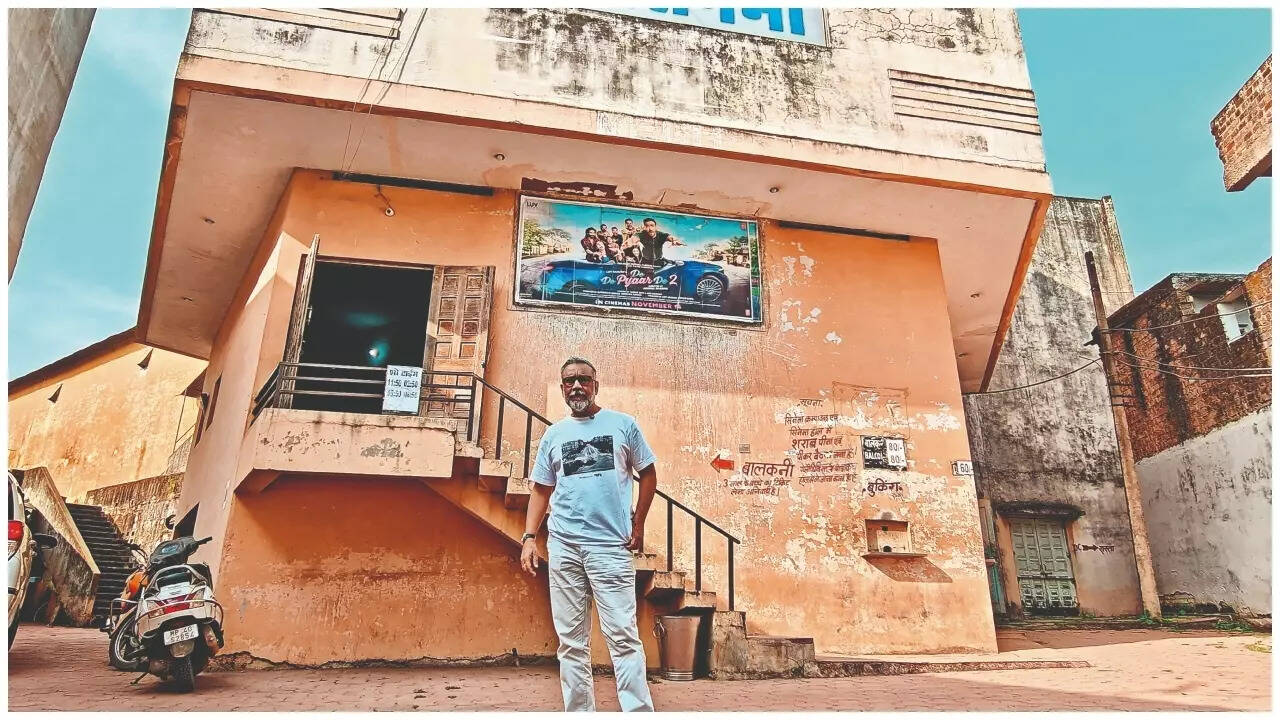
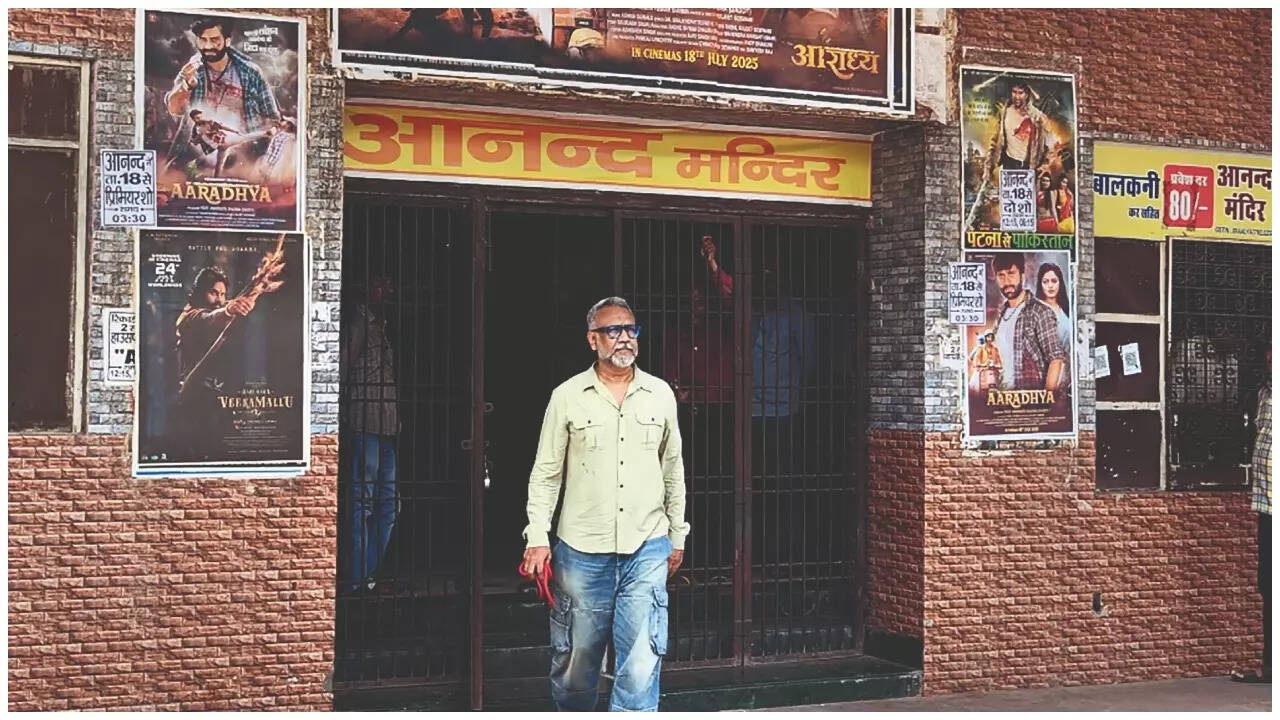
Anubhav Sinha outside a small theatre in Vidisha.
Earlier in 2025, while working on a script about youngsters in a small town, I realised I had no idea what youngsters in small towns actually did anymore... I felt strangely disconnected from my roots, which is not a great feeling when you’re writing about them. These were not answers available in books, newspapers, or even panel discussions. They needed to be experienced: all over again
Anubhav Sinha
All this while, another idea was quietly taking shape. Earlier in 2025, while working on a script about youngsters in a small town, I realised I had no idea what youngsters in small towns actually did anymore... I felt strangely disconnected from my roots, which is not a great feeling when you’re writing about them. These were not answers available in books, newspapers, or even panel discussions. They needed to be experienced: all over again BUXAR
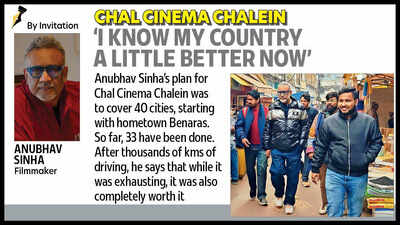
Anubhav Sinha’s plan for
Chal Cinema Chalein was to cover 40 cities, starting with hometown Benaras. So far, 33 have been done. After thousands of kms of driving, he says that while it was exhausting, it was also completely worth it PRAYAGRAJ All this while, another idea was quietly taking shape.
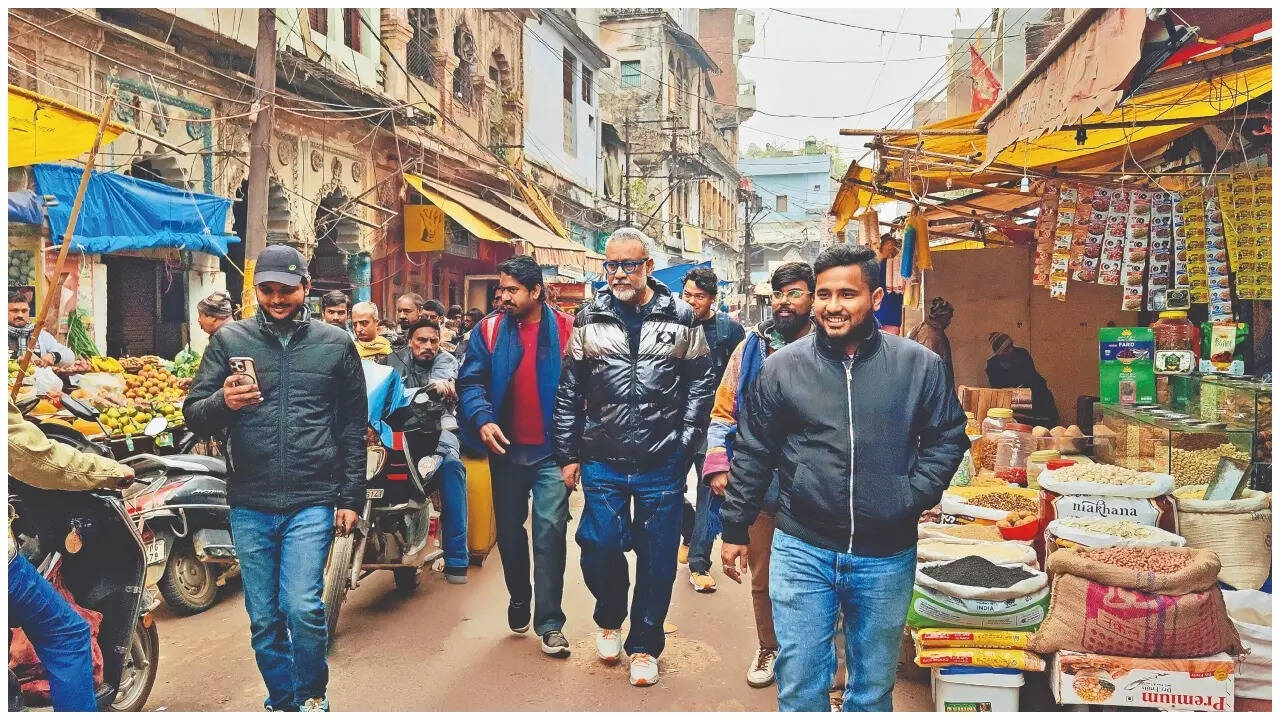
Anubhav Sinha walks through the streets of Prayagraj
Earlier in 2025, while working on a script about youngsters in a small town, I realised I had no idea what youngsters in small towns actually did anymore. What did their evenings look like? Were they dating? We certainly weren’t at 17 or 18 – unless walking home together count ed.
I felt strangely disconnected from my roots, which is not a great feeling when you’re writing about them. These were not answers available in books, newspapers, or even panel discussions. They needed to be experienced: all over again. Then came the declarations: cinema theatres were dead. COVID had killed them, we were told, and the funeral seemed to be held every Friday.
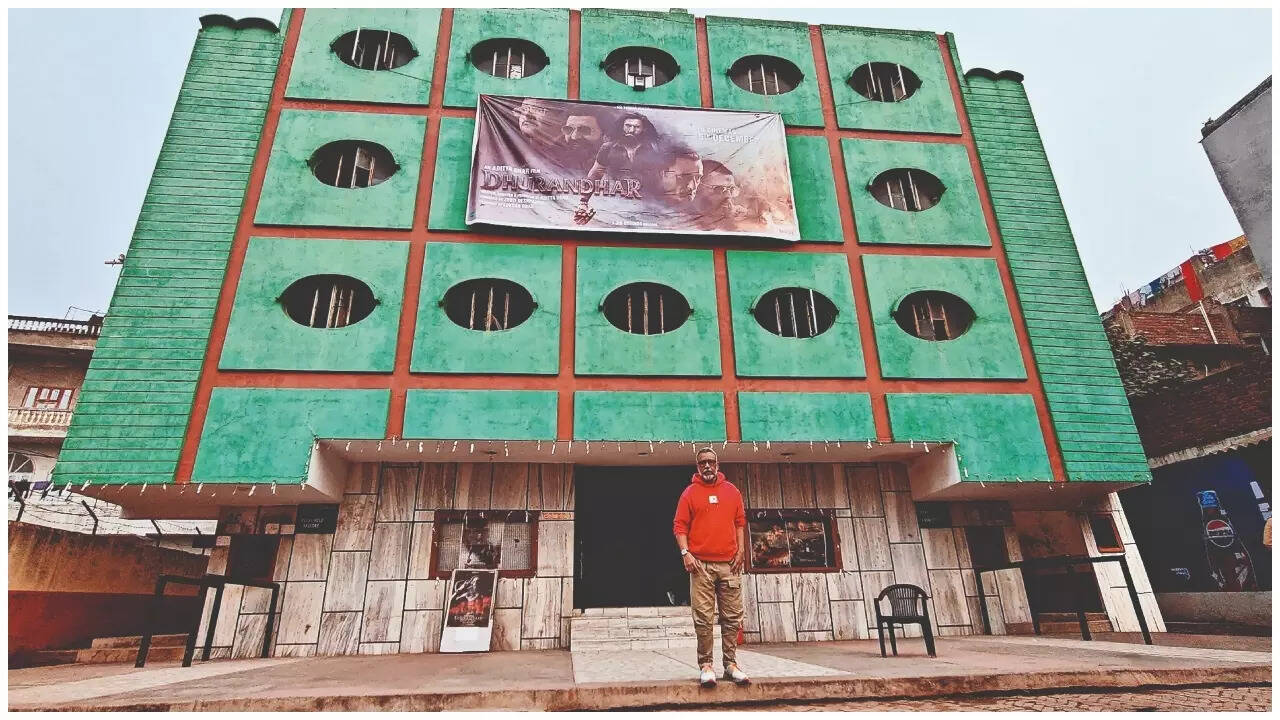
Anubhav Sinha poses outside a small theatre in Buxar
I am also wary of public self-flagellation. ‘Bollywood this, Bollywood that.’ I’ve heard it often, sometimes from people who have made their entire living from the industry. I don’t subscribe to that. Yes, Bollywood is flawed. But then, so is most of humanity
Anibhav Sinha
Meanwhile, films continued to break box-office records with impressive disregard for these obituaries. 2022 gave us
The Kashmir Files and
Bhool Bhulaiyaa 2. 2023 followed with
Pathaan, Jawan, Animal, Gadar 2. The box office was witnessing numbers so large they required new adjectives. And yet, article after article mourned the death of theatres – sometimes with what felt like enthusiasm. One began to wonder who was benefiting from this narrative. Be cause this was no accident. It was a campaign. It still is. So I decided to go and check for myself. Multiplex chains are listed companies; their numbers are easily available.
They also represent only about half of India’s theatrical business. The other half exists utterly ignored, away from press releases and publicity materials. I wanted to meet cinema hall owners in these cities and ask them what was actually happening. I will admit – since honesty is the theme – that local food was also a motivating factor. We listed forty cities and made a travel plan. The budget file was named
Chal Picture Chalein. I had no idea this yatra would soon become about far more than movies – people, society, changing culture, history, and an alarming amount of street food. I had passed through some of these cities before, even visited a few briefly, but never with intent.
Anubhav Sinha visits Anand Mandir, a local movie theatre in Banaras.
In every city, I visited cinema halls – some crumbling, some renovated. Some in ruins and someflourishing. Almost unanimously,the owners dismissed two popular beliefs: that theatres were dying, and that smaller centres wouldn’t watch 'intelligent cinema'
Anubhav Sinha
This time, the plan – or the lack of it – was to spend a day in each city and pretend that was enough. The team decided the journey should be docu mented, which is how four air tickets and two cars entered the picture. The first stop was obvious: home. Benaras. I made a firm decision: no fine dining. All meals would be on the street. I would meet anyone who wanted to meet me. A message went out on social media with a phone number.
The Times of India found this intriguing and sent a photographer from Delhi to document my Benaras days. They published a generous spread. Benaras, as it tends to do, took charge of the journey. Over the next few weeks, across 33 cities, I met digital creators, film clubs, theatre workers, literary organisations, vice-chancellors, senior journalists. I visited schools, colleges, universities, newspaper offices, and radio stations. Young people ferried me around on motorbikes, navigating traffic with a confidence I no longer possess. One morning in Benaras, my understanding shifted.
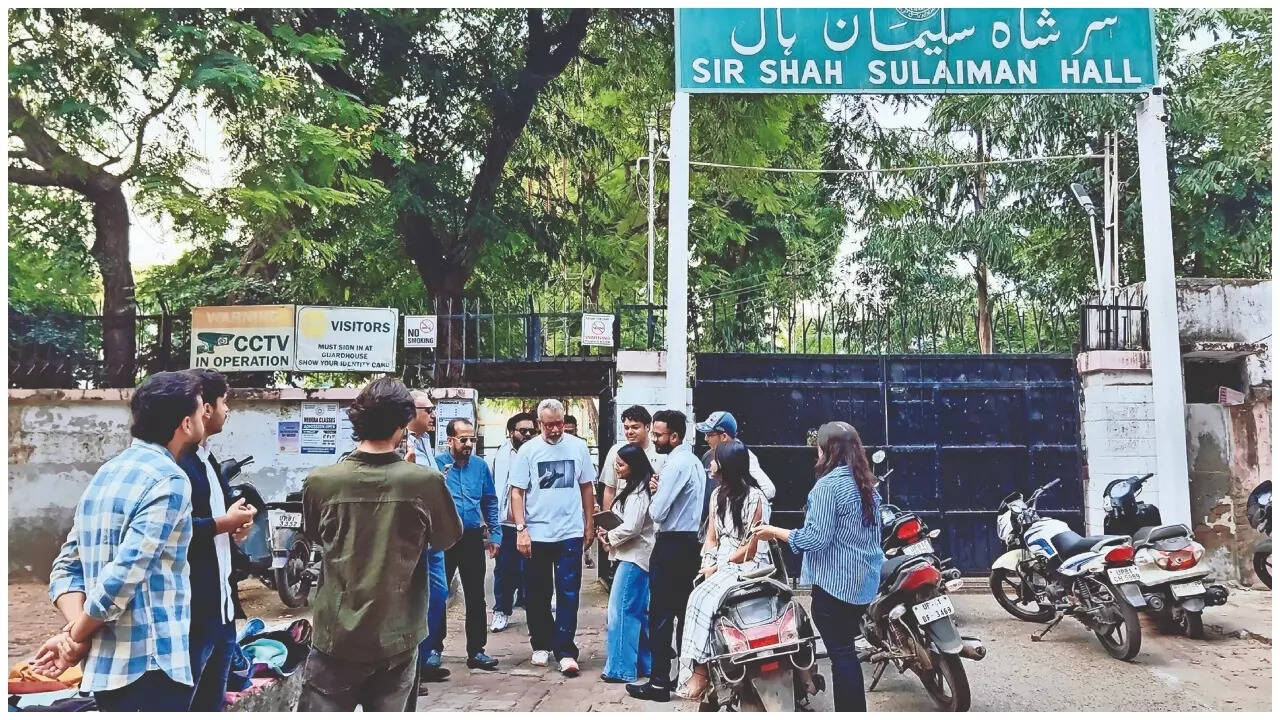
A group of youngsters interact with filmmaker Anubhav Sinha in Aligarh
We listed forty cities and made a travel plan. The budget file was named ‘Chal Picture Chalein’. I had no idea this yatra would soon become about far more than movies – people, society, changing culture, history, and an alarming amount of street food.
Anubhav Sinha
A group of young digital creators invited me for a 6.30am photowalk, followed by what they called a “breakfast crawl.” They showed me parts of my own city I had never seen, and eateries I had never en tered. They knew Benaras better than I ever had. That morning, I realised something uncomfortable but impor tant: I had been away too long. I am grateful to those youngsters for the reminder. It reset the tone of everything that followed. In every city, I visited cinema halls – some crumbling, some renovated. Some in ruins and some flourishing. Almost unanimously, the owners dismissed two popular beliefs: that theatres were dying, and that smaller centres wouldn’t watch “intelligent cinema.” So why did Mumbai’s data show poor collections for non-massy films?
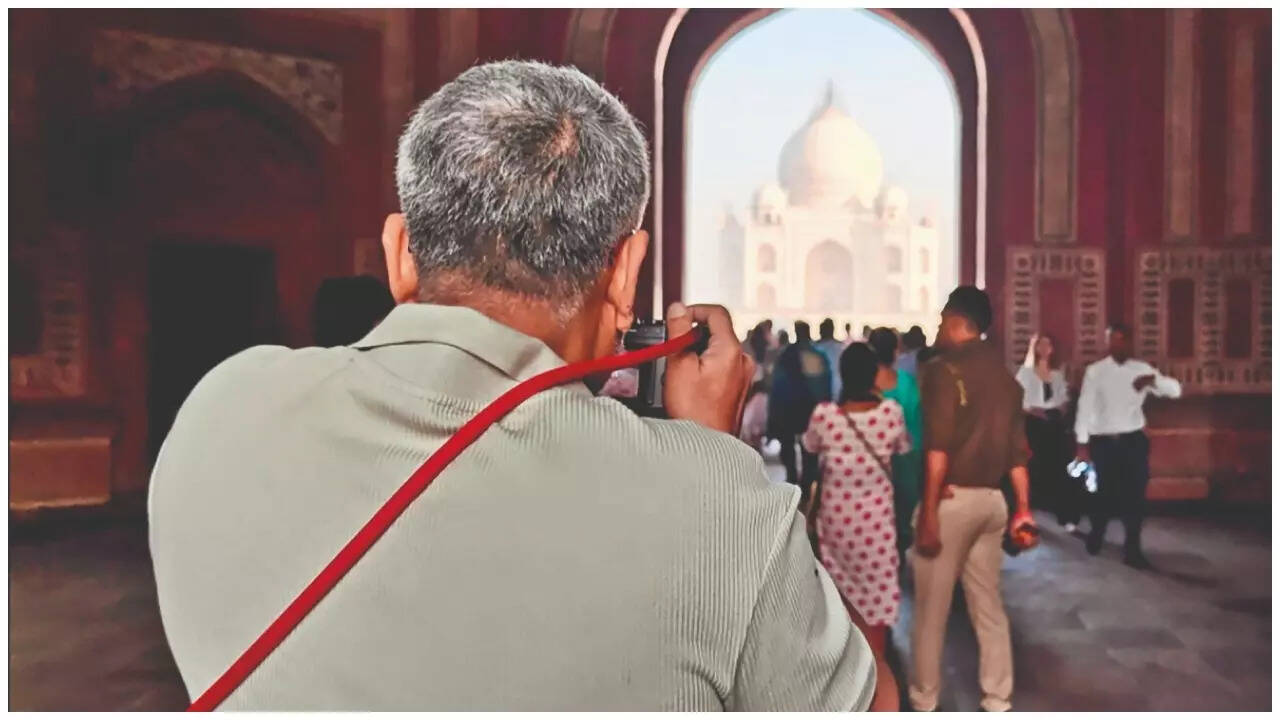
Filmmaker Anubhav Sinha, who also enjoys photography, captures the Taj Mahal in Agra
The plan was forty cities. Thirty three are done – after days of three to four hundred kilometres of driving, a rotating cast of hotel rooms, and a growing intimacy with unfamiliar beds. It was exhausting. It was also completely worth it. I know my country a little better now. The list of forty cities has quietly become sixty – just in North India
Anubhav Sinha
There were explanations – technical ones – but not ones that fit into headlines. Nor should they. That’s our problem to solve, the audience should just concentrate on liking the films or not. I am also wary of public self-flagellation. “Bollywood this, Bollywood that.” I’ve heard it often, sometimes from people who have made their entire living from the industry. I don’t subscribe to that. Yes, Bollywood is flawed. But then, so is most of humanity. We can return to that later. Friends often ask me what I learned. I don’t have a tidy answer. I may never. When I asked Sudhir bhai (Mishra, filmmaker) what this journey might do to me, he said, “You will never know. But it will show up in your future work.”
That felt accurate, and also safely unquantifiable. The plan was forty cities. Thirty three are done – after days of three to four hundred kilometres of driving, a rotating cast of hotel rooms, and a growing in timacy with unfamiliar beds. It was exhausting. It was also completely worth it. I know my country a little better now.