Defence Minister
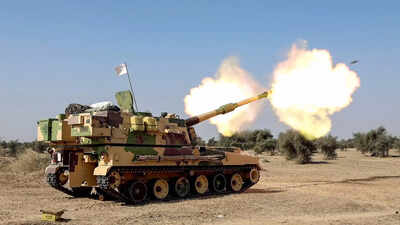
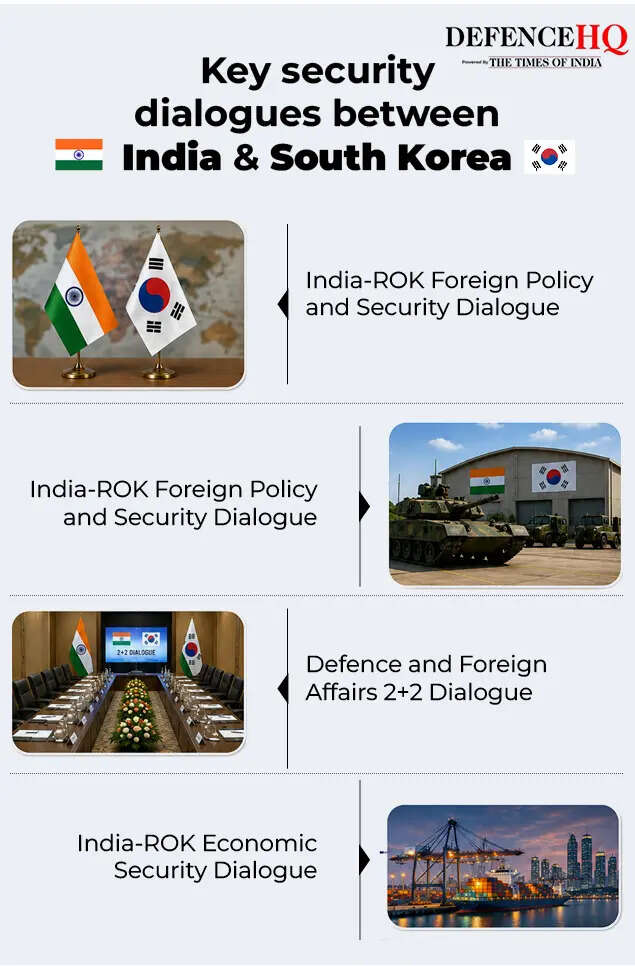
Rajnath Singh’s visit to South Korea marks a significant moment in the evolution of India and South Korea defence cooperation. During his engagements in Seoul, Singh will hold bilateral talks with his South Korean counterpart Ahn Gyu‑back to review ongoing collaboration and explore new avenues of cooperation. The discussions are expected to cover programmes such as the K9 Vajra‑T, missile systems, anti‑aircraft platforms, and the proposed Korea‑India Defence Accelerator (KIND‑X). Rajnath Singh will also meet Defence Acquisition Program Administration (DAPA) Minister Lee Yong‑cheol and chair the India–Korea business roundtable, underscoring the economic and industrial dimensions of the partnership.
India’s military role in the Korean Peninsula dates back to the post‑World War II era. During the Korean War, India dispatched the 60th Parachute Field Ambulance, a medical unit consisting of 627 personnel led by Lt Col AG Rangaraj. This medical unit treated nearly 2,20,000 patients and performed 2,500 surgeries. India also played a pivotal role in brokering peace. Lt Gen KS Thimayya (who later became the army chief) chaired the Neutral Nations Repatriation Commission, while Custodian Forces‑India, a 5,230‑strong contingent under Maj Gen (later Lt Gen) SSP Thorat, facilitated the repatriation of Prisoners of War (POW).
To honour India's rich legacy, Rajnath Singh and South Korean Minister of Patriots and Veterans Affairs Kwon Oh‑eul will jointly inaugurate the Indian War Memorial on May 21, 2026. The memorial will serve as a reminder of India’s humanitarian role during the Korean War.
Strategically, the natural alignment of India’s ‘Act East Policy’ and South Korea’s ‘Indo‑Pacific Strategy’ has opened new avenues for cooperation. While the two countries elevated their relationship to a Special Strategic Partnership in 2015, progress has been uneven. Bilateral trade has grown modestly from USD 20.5 billion in 2011 to USD 27 billion in 2026, far short of earlier targets. Both governments have now pledged to raise trade to USD 50 billion by 2030, though past promises have faltered.
Defence cooperation between the two emerging economies is entering a new phase. The KIND‑X initiative aims to move beyond procurement toward co‑design and co‑development of advanced systems. Focus areas include autonomous weapon systems, AI‑driven military applications, next‑generation missile defence and cyber‑security. With greater cooperation between startups, universities and investors through various initiatives, there is a plan to build a robust innovation ecosystem. Seoul’s openness to licensed manufacturing in India, as offers opportunities for deeper industrial integration. Rajnath Singh’s visit builds on the momentum of President Lee Jae Myung’s state visit to India last month, where both sides announced a Joint Strategic Vision for 2026–2030.
Defence Minister Rajnath Singh’s visit to South Korea marks a significant moment in the evolution of India and South Korea defence cooperation. During his engagements in Seoul, Singh will hold bilateral talks with his South Korean counterpart Ahn Gyu‑back to review ongoing collaboration and explore new avenues of cooperation. The discussions are expected to cover programmes such as the K9 Vajra‑T, missile systems, anti‑aircraft platforms, and the proposed Korea‑India Defence Accelerator (KIND‑X). Rajnath Singh will also meet Defence Acquisition Program Administration (DAPA) Minister Lee Yong‑cheol and chair the India–Korea business roundtable, underscoring the economic and industrial dimensions of the partnership.
India’s military role in the Korean Peninsula dates back to the post‑World War II era. During the Korean War, India dispatched the 60th Parachute Field Ambulance, a medical unit consisting of 627 personnel led by Lt Col AG Rangaraj. This medical unit treated nearly 2,20,000 patients and performed 2,500 surgeries. India also played a pivotal role in brokering peace. Lt Gen KS Thimayya (who later became the army chief) chaired the Neutral Nations Repatriation Commission, while Custodian Forces‑India, a 5,230‑strong contingent under Maj Gen (later Lt Gen) SSP Thorat, facilitated the repatriation of Prisoners of War (POW).
To honour India's rich legacy, Rajnath Singh and South Korean Minister of Patriots and Veterans Affairs Kwon Oh‑eul will jointly inaugurate the Indian War Memorial on May 21, 2026. The memorial will serve as a reminder of India’s humanitarian role during the Korean War.
Strategically, the natural alignment of India’s ‘Act East Policy’ and South Korea’s ‘Indo‑Pacific Strategy’ has opened new avenues for cooperation. While the two countries elevated their relationship to a Special Strategic Partnership in 2015, progress has been uneven. Bilateral trade has grown modestly from USD 20.5 billion in 2011 to USD 27 billion in 2026, far short of earlier targets. Both governments have now pledged to raise trade to USD 50 billion by 2030, though past promises have faltered.
Defence cooperation between the two emerging economies is entering a new phase. The KIND‑X initiative aims to move beyond procurement toward co‑design and co‑development of advanced systems. Focus areas include autonomous weapon systems, AI‑driven military applications, next‑generation missile defence and cyber‑security. With greater cooperation between startups, universities and investors through various initiatives, there is a plan to build a robust innovation ecosystem. Seoul’s openness to licensed manufacturing in India, as offers opportunities for deeper industrial integration. Rajnath Singh’s visit builds on the momentum of President Lee Jae Myung’s state visit to India last month, where both sides announced a Joint Strategic Vision for 2026–2030.