

Watch B-1B Lancer 'BONE' in action: What makes this US supersonic bomber so powerful
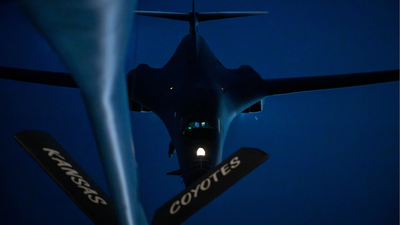
What makes the B-1B Lancer significant
Key features of the B-1B Lancer
- The aircraft can carry up to 75,000 pounds (about 34,000 kg) of weapons, making it one of the largest conventional payload carriers in the US arsenal.
- The bomber can reach speeds of around Mach 1.2, enabling it to rapidly penetrate contested airspace and strike distant targets.
- Its distinctive swing-wing design allows the aircraft to adjust wing positions for different flight conditions, enabling both high-speed penetration and efficient long-range cruising.
- The B-1B can conduct intercontinental missions and remain airborne for extended periods with
aerial refuelling . - Unlike nuclear-capable bombers such as the B-2 Spirit, the B-1B today primarily carries conventional precision weapons, including JDAMs, cruise missiles and other guided munitions.
- The bomber has been widely deployed in conflicts including Afghanistan, Iraq and Syria, where its heavy payload and endurance allowed it to provide sustained close air support and long-range strike missions.

About the AuthorTOI News Desk
End of Article
Tired of too many ads?go ad free now
Arsenal
- Missiles
- Tanks
- Guns
- Submarines
RS-28 Sarmat Satan II
Missiles
- RS-28 Sarmat Satan II
Russia
- Trident II D5
USA
- LGM-30G Minuteman III
USA
- RS-24 Yars
Russia
- M51.3
France
- Agni-V
India
- Hwasong-17
N. Korea
- RT-2PM2 Topol-M
Russia
- Julang-2
China
- Agni-V
India
- Agni-P
India
- K-4
India
- BrahMos
India
- Pralay
India
- Nirbhay
India
- Astra Mk2
India
- MR-SAM
India
- Iron Dome Tamir
Israel
- Arrow 2
Israel
- Jericho III
Israel
- LORA
Israel
- Delilah
Israel
- Popeye Turbo ALCM
Israel
- Spike NLOS
Israel
- Python 5
Israel
- Derby
Israel
- SM-6
USA
- Tomahawk Block V
USA
- JASSM-ER
USA
- AIM-120D AMRAAM
USA
- BGM-109 Tomahawk Block IV
USA
- Shahab-3
Iran
- Emad
Iran
- Sejjil-2
Iran
- Kheibar Shekan
Iran
- Fattah-1
Iran
- Soumar
Iran
- Paveh
Iran
- Noor
Iran
- Khalij Fars
Iran
- Fateh-110
Iran
Russia

Missile
RS-28 Sarmat Satan II
Service Start
2023
Service End
Present
Range
18000 km
Defence Videos


Iran Finally Unleashes Weapon Israel, US Feared? 1.5-Ton ‘SEJJIL MISSILE' Makes Deadly Debut | Watch

'Will Burn Gas & Oil Sites': IRGC Shoots Chilling Warning To Trump & Israel Over Energy Strikes

Iran Unleashes 44TH Wave Of Operation True Promise 4; IRGC Claims Hitting Israel, U.S. Assets
Defence News

Defence |5 hours ago
Cluster bombs to 'dancing missiles': Weapons powering Iran’s strikes against the US and Israel
Defence |9 hours ago
Watch B-1B Lancer 'BONE' in action: What makes this US supersonic bomber so powerful
Defence |6 hours ago
Iran’s Sejjil-2 ‘dancing missile’: The solid-fuel weapon that can strike 2,000 km away