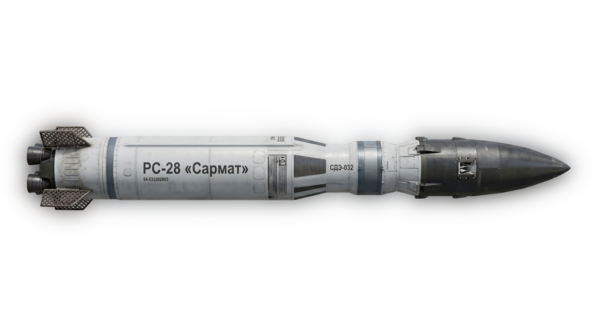
As ranges of Air-to-Air Missiles (AAMs) and Surface-to-Air Missiles (SAMs) extend to hundreds of kilometers, concerns mount over the vulnerability of large, slow-moving force multipliers like mid-air refuelers and Airborne Early Warning & Control (AEW&C) systems. These aircraft typically operate a few hundred kilometers behind frontlines to maintain distance from threats. Yet some missiles, such as the Russian R-37 and Chinese PL-17, are purpose-built to strike them at extended ranges, crippling the opposing force's effectiveness.
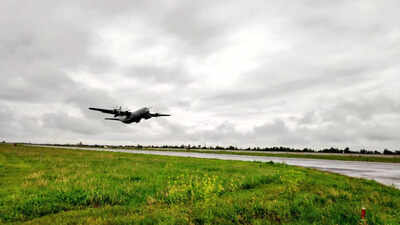
Large aircraft such as AEW&C platforms, mid‑air refuelers and transport aircraft fly slower than fighter jets and have far less maneuverability. This makes them relatively easy targets for long‑range missiles. Unlike modern fighters, which have a very low Radar Cross Section (RCS) and appear tiny on radar, these aircraft have a very large RCS and can be detected at much greater distances. The
Indian Air Force shot down a large Pakistani aircraft at a range of about 300 km, as recently highlighted by Air Marshal AK Bharti, who was Director General of Air Operations during the 88‑hour
Operation Sindoor.
China-Turkey-Pak Vs India In Op Sindoor 2.0? Indian Army’s 3-Front War Bombshell Decoded
To protect its force multipliers, the United States Air Force (USAF) plans to invest more than $500 million by 2031 to develop the Large Aircraft Survivability System (LASS), an integrated protection suite for cargo and refueling aircraft. The fiscal 2027 budget requests $68 million for research, development, test and evaluation of LASS. This includes $50 million for sensors that scan upward and downward to detect threats and $18 million for designing an effector system that combines processors with kinetic and non‑kinetic weapons to defeat long‑range threats autonomously,
Air & Space Forces Magazine reported.
Officials say modularity will let the system deliver tailored protection packages for each airframe and mission. Autonomous defeat capabilities are designed to reduce dependence on escort fighters and ground‑based defenses, boosting operational flexibility and survivability during contested logistics and aerial refueling operations.
The requirements for such a system were validated in March under the Platform Agnostic Kinetic Self‑Defense (PAKS‑D) attributes document. Overall, the USAF projects $508 million across five years through 2031. This includes $264 million earmarked for the effector system in 2028–2029 and $176.2 million for sensors from 2028–2031. Initial contracting is expected to use Other Transaction Agreements to accelerate prototyping, though timelines have not been specified. LASS is supposed to complement, rather than replace, existing systems such as the Large Aircraft Infrared Countermeasures (LAIRCM),
Aviation Week reported.