

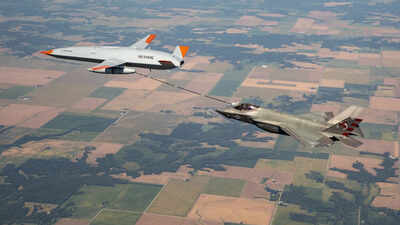
Role of unmanned aerial systems set to grow as first in service MQ-25 takes off to break the mould

About the AuthorTOI News Desk
End of Article
Tired of too many ads?go ad free now
Arsenal
- Missiles
- Tanks
- Guns
- Submarines
RS-28 Sarmat Satan II
Missiles
- RS-28 Sarmat Satan II
Russia
- Trident II D5
USA
- LGM-30G Minuteman III
USA
- RS-24 Yars
Russia
- M51.3
France
- Agni-V
India
- Hwasong-17
N. Korea
- RT-2PM2 Topol-M
Russia
- Julang-2
China
- Agni-V
India
- Agni-P
India
- K-4
India
- BrahMos
India
- Pralay
India
- Nirbhay
India
- Akash-NG
India
- Astra Mk2
India
- Rudram-1
India
- MR-SAM
India
- Iron Dome Tamir
Israel
- David's Sling Stunner
Israel
- Arrow 2
Israel
- Arrow 3
Israel
- Jericho III
Israel
- LORA
Israel
- Delilah
Israel
- Popeye Turbo ALCM
Israel
- Spike NLOS
Israel
- Python 5
Israel
- Derby
Israel
- Patriot PAC-3 MSE
USA
- THAAD
USA
- SM-3 Block IIA
USA
- SM-6
USA
- Tomahawk Block V
USA
- JASSM-ER
USA
- AIM-120D AMRAAM
USA
- BGM-109 Tomahawk Block IV
USA
- Shahab-3
Iran
- Emad
Iran
- Sejjil-2
Iran
- Kheibar Shekan
Iran
- Fattah-1
Iran
- Soumar
Iran
- Paveh
Iran
- Noor
Iran
- Khalij Fars
Iran
- Shahed-136
Iran
- Bavar-373
Iran
- Fateh-110
Iran
Russia
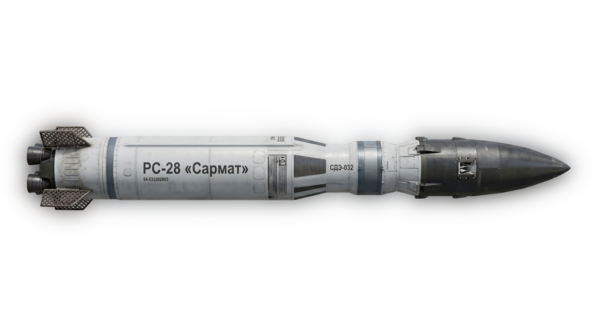
Missile
RS-28 Sarmat Satan II
Service Start
2023
Service End
Present
Range
18000 km
Defence Videos


Defence News

Defence |2 hours ago
Role of unmanned aerial systems set to grow as first in service MQ-25 takes off
Defence |3 hours ago
How long-range glide bombs are changing aerial warfare and keeping fighter pilots safe
Defence |4 hours ago
SCO summit: Rajnath Singh flags state-sponsored terrorism, warns of ‘justifiable punishment’