As the war between the United States, Israel and Iran deepens, one of the most contentious questions in Washington is how to deal with Tehran’s stockpile of enriched uranium. American officials fear that despite repeated airstrikes on Iranian nuclear facilities, the material could still be retrieved and eventually refined into weapons-grade fuel.
US President
Donald Trump has indicated that the possibility of sending American troops into Iran to secure the material has not been ruled out. Speaking to reporters aboard Air Force One, he suggested that such a step would only be taken under extraordinary circumstances but kept the option open. “At some point maybe we will. That would be a great thing,” Trump said when asked about the idea of securing Iran’s nuclear stockpile.
U.S.-Iran-Israel War: The U.S. Dropped $11.3 Billion In 7 Days, Here Is Where It All Went
The debate has intensified as intelligence assessments suggest that hundreds of kilograms of uranium enriched to around 60 per cent purity may still exist despite earlier strikes. If further enriched to 90 per cent, experts say the material could theoretically be used to produce several nuclear weapons.
Officials in Washington and Tel Aviv are now weighing a range of military and strategic options from covert raids to continued airstrikes to ensure the material cannot be weaponised.
Special forces raid on nuclear sites
One of the most discussed options is a limited ground operation aimed at locating and securing Iran’s enriched uranium. According to reports cited by outlets including Axios, the mission would involve elite special operations units entering Iran to seize or neutralise the material.
The operation would likely target major nuclear complexes such as Natanz Nuclear Facility, Fordow Fuel Enrichment Plant and Isfahan Nuclear Technology Center.
Military planners believe such a mission would only be attempted after sustained airstrikes significantly weaken Iran’s defences.
Possible operational approaches include:Seizing the uranium stockpile: Special forces could physically capture the enriched uranium and transport it out of Iran under military escort.
Neutralising it on site: Nuclear specialists could dilute the uranium to lower enrichment levels, rendering it unusable for weapons development.
Securing the facility: Troops could hold the site temporarily until additional forces arrive to remove or process the material.
Officials say such an operation could involve American commando units working alongside nuclear scientists and potentially experts from the International Atomic Energy Agency.
“The first question is where it is,” a US official told The War Zone while describing the challenge. “The second question is how do we get to it and get physical control.”
How such a raid could work
If authorised, the operation would likely rely heavily on US special operations forces trained in counter-weapons of mass destruction missions.
Elite units such as:
- US Army Delta Force
- US Navy SEAL Team Six
- Ranger and Green Beret elements
are routinely trained to operate in hazardous environments involving nuclear, chemical or radiological materials.
Since 2016, the US Special Operations Command has been the lead entity for counter-WMD missions, a report in The War Zone noted. These operations often involve close coordination with specialised government units, including nuclear disarmament teams from the Department of Energy.
A typical raid could involve several phases:
- Insertion: Special forces infiltrate the target site by air or land.
- Site control: Commandos secure tunnels, storage areas and laboratories holding nuclear material.
- Technical assessment: nuclear experts determine whether the uranium can be moved or must be neutralised on site.
- Extraction: material is transported out or the site is destroyed.
However, experts note that unlike conventional weapons, nuclear material cannot simply be destroyed with explosives without risking radioactive contamination.
Major risks and operational challenges
Despite the appeal of a decisive operation, analysts warn that carrying out a raid inside Iran would be extremely complex and dangerous.
Several obstacles stand out:
- Logistical difficulties
- Enriched uranium is extremely heavy and stored in specialised containers.
- Moving nearly half a tonne of nuclear material would require significant equipment and time.
- Fortified underground facilities
- Many Iranian nuclear sites are buried deep underground.
Access could require heavy machinery or extended time to break through tunnels and reinforced structures.
Hostile combat environment
Iranian forces would likely attempt to counterattack any raiding force.
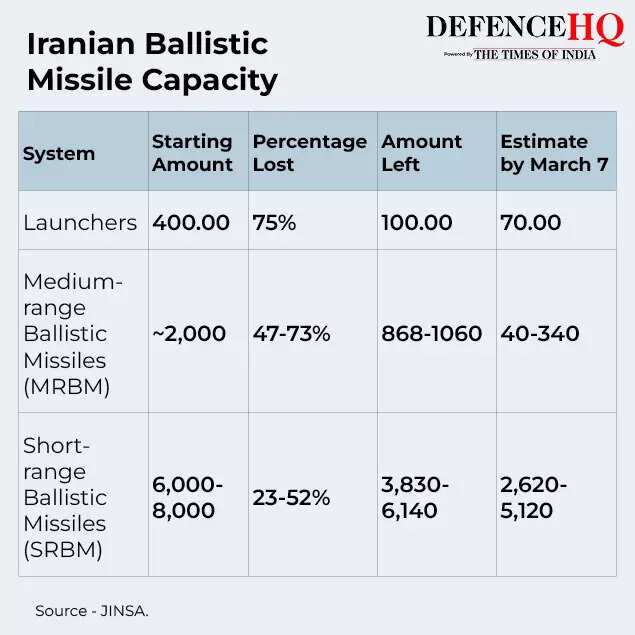
Even degraded, Tehran still retains missiles, artillery and armed security units capable of responding quickly.
Length of operation
Neutralising uranium on site could take hours or even days.
The longer troops remain inside Iran, the greater the risk of casualties or escalation.
Military analysts also warn that extracting nuclear material during an active conflict could expose troops to both enemy fire and radiological hazards.
Alternative strategies under discussion
Because of these risks, officials are also examining other ways to prevent Iran from recovering its nuclear material without sending ground troops.
Possible alternatives include:
- Continued airstrikes targeting entrances to underground facilities to prevent access.
- Persistent surveillance to track any movement of nuclear material.
- Interdiction operations to stop shipments of uranium if they are transported elsewhere.
- Economic pressure, including potential seizure of strategic assets such as Kharg Island Oil Terminal, which handles most of Iran’s crude exports.
Another possibility is waiting until Iran’s military capability is further weakened before considering any direct action on the ground.
Even then, officials stress that any raid would likely involve a limited contingent of troops rather than a large invasion force.
A nuclear dilemma in an escalating war
The debate over securing Iran’s uranium highlights the broader strategic dilemma facing Washington. Airstrikes may damage facilities, but they cannot easily eliminate nuclear material that may already exist.
At the same time, sending troops into Iranian territory risks widening the conflict and triggering retaliation across the region.
Warnings from nuclear watchdogs have added another layer of concern. Rafael Mariano Grossi has cautioned that attacks on nuclear infrastructure could trigger radiological incidents affecting not only Iran but neighbouring countries with nuclear facilities.
For now, the United States appears to be keeping multiple options on the table. Whether the situation leads to continued strikes, covert operations, or a high-risk commando raid will depend largely on intelligence about where Iran’s uranium stockpile is located and how quickly it could be turned into a weapon.