
- News
- City News
- varanasi News
- Heavy metals in ecosystem threat for plant, crop growth: Banaras Hindu University study
Trending
This story is from February 15, 2023
Heavy metals in ecosystem threat for plant, crop growth: Banaras Hindu University study
study conducted by the researchers from the department of Botany, Institute of Science, Banaras Hindu University, Bhabha Atomic Research Center (BARC) and department of Atomic Energy, Government of India, discovered that increased concentration of heavy metals like Cadmium is a threat for growth of plants and crops, increasing the concerns of food security. The study, led by an assistant professor Yogesh Mishra and his research scholars Akanksha Srivastava and Subhankar Biswas, tried to understand how cyanobacteria maintain photosynthesis under stressful conditions, particularly in the presence of heavy metals. Other members of the research team include Hema Rajaram and Arvind Kumar from BARC.
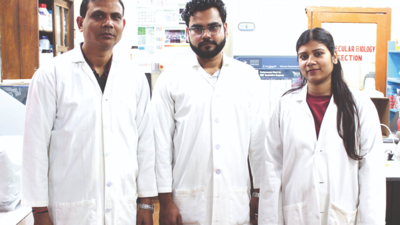
BHU researchers discover that increased concentration of heavy metals like Cadmium is a threat for growth of plants and crops, increasing the concerns of food security

The latest finding has been published in the globally reputed scientific journal BBA-Proteins and Proteomics (January 2023).
“Growing human activities have resulted in a significant increase in the concentration of heavy metals in different ecosystems. Experts believe that this poses a serious threat to the growth of living organisms, especially photosynthetic organisms, as the structural and functional aspects of photosynthesis are extremely sensitive to heavy metals,” said Mishra, adding that the enhanced stress of Cadmium adversely impacts the productivity of plants/crops and could add to concerns of food security, already escalated by climate change situations. Interestingly, cyanobacteria (blue green algae), a significant class of photosynthetic prokaryotes that first appeared on earth at least 2.6 billion years ago when environmental conditions were harsh, are comparatively resistant to heavy metals.
He said that the process of photosynthesis has two modes -linear electron flow and cyclic electron flow. The enhanced accumulation of cadmium concentration adversely affects the linear electron flow. The research team observed that in case of highly toxic heavy metal cadmium stress in a model cyanobacterium, Anabaena sp. PCC 7120, linear electron flow gets affected while the cyclic electron flow gets activated to maintain the photosynthetic process. Another breakthrough finding revealed that LexA protein regulates these photosynthetic responses by regulating related key photosynthetic genes. This is the first such discovery so far in this direction.
Mishra said the finding is a result of a detailed study carried out over the years. The finding is expected to pave the way for further research to address the challenges of heavy metal toxicity in the ecosystem and also help in developing stress tolerant crops with improved photosynthesis efficiency, helping in dealing with the question of food security, he added. “Since photosynthesis is one of the vital processes that is affected by heavy metal stress, our findings are promising for the development of recombinant cyanobacteria with improved photosynthetic efficiency and heavy metal tolerance capacity,” said Mishra. Previous works of the series were published in reputed peer-reviewed journals Environmental and Experimental Botany (2022) and Algal Research (2021), he added.
Mishra also worked as a post-doctoral fellow at the Max Plank Institute in Cologne, Germany, and the Umea Plant Science Center in Sweden, from 2008 to 2013. His area of interest is molecular stress biology of cyanobacteria and plants.
End of Article
FOLLOW US ON SOCIAL MEDIA







Photostories

Hot Picks
TOP TRENDING
Popular Categories
Hot on the Web
Top Trends
IND vs NZ Live ScoreBengaluru Collages Bomb ThreatSteve SmithNEET PG SC HearingMohammad KaifShailaja PaikHaryana Election ResultUGC NET ResultRishabh PantNima Hospital Doctor MurderTaylor SwiftThe RockWomen's T20 World CupTop MBA Colleges of IndiaT20 WC ScheduleWomen T20 World Cup Points TableLive Cricket Score
Trending Topics
Samantha Ruth PrabhuNavratri Colours 2024Navratri Day 2 ColourTMKOC New SonuNaga ChaitanyaDevara CollectionGOAT OTT ReleaseRajinikanthDeepika PadukoneGovindaDevaraGovinda NewsDevara Movie ReviewHealthy RaitasSwatantrya Veer SavarkarColdplay India tour 2025Maa Durga 108 NamesNavratri JewellerySony Bravia 55 inch 4k Ultra HD TVWordle Answer
Living and entertainment
Latest News
Kolkata’s Ganga ghats transform into a hub of rituals with the arrival of DurgaNavratri Will Be Luckiest for These Signs5 corporate employees share their workplace horror storiesStart construction on 12th October this Navaratri and you will say WOW!Neelam Kothari speaks out against ageism says 'aunties' label is uncoolJr NTR-Hrithik Roshan dance-off in 'War 2' set to be shot during THIS timeYouTube Shorts extends duration to 3 minutesWill join NCP (SP) with supporters, says BJP leader Harshvardhan Patil'Was screaming, hitting him': 5-year-old Florida boy suffers cardiac arrest on Disney rollercoaster ride'We spoke about it and ...': What Trump said on wife Melania backing abortion rights in new memoirTDP welcomes SC's ruling on SIT to probe Tirupati laddu adulterationJannik Sinner not 'comfortable' as doping case clouds Shanghai campaignKolkata shoppers flood markets ahead of Durga Puja weekend rushCongress leader urges West Bengal governor to act against politicians for polarizing votersTwo Indian-Americans among 15 selected for prestigious 2024-2025 White House fellowshipWWE Throwback: Shawn Michaels retires with a heartfelt speech after losing the “Career vs Streak” matchSupreme Court dismisses pleas seeking review of sub-classifications in SC reservation judgmentCoin Master free spins and coins for 4 October, 2024: Earn million of coins using today’s link
Copyright © 2024 Bennett, Coleman & Co. Ltd. All rights reserved. For reprint rights: Times Syndication Service