
- News
- City News
- vadodara News
- Vadodara lab helps Congo document medicinal treasure
Trending
This story is from July 21, 2021
Vadodara lab helps Congo document medicinal treasure
Roots of rubia cordifolia popularly known as ‘manjishta’ are used as blood purifier, for treatment of tinnitus or vertigo in India. But in Central Africa, its leaves are used to treat erectile dysfunction, hepatic problems or hypotension.

Though Congo is extremely rich in natural resources, it has suffered from political instability and turmoil for around 60 years
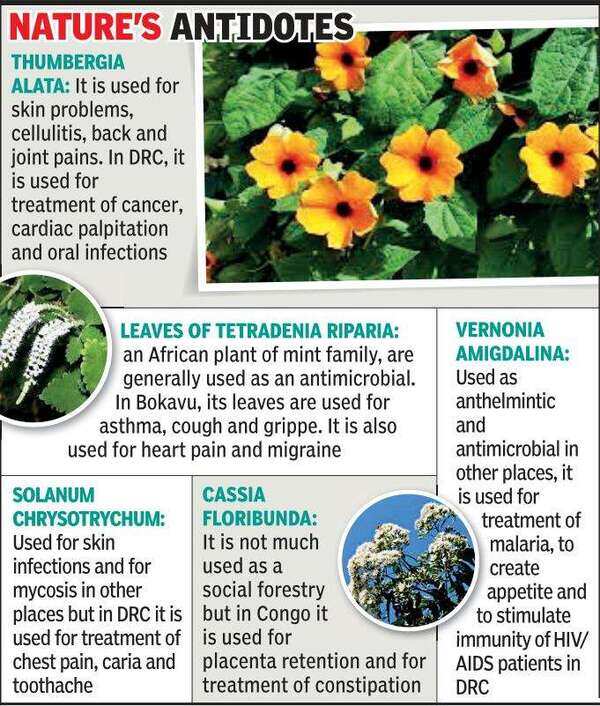
Similarly, the world is not aware about the uses of African plant — spermacoce princeae. But it is used to treat conjunctivitis, skin infections and body ache in the Democratic Republic of Congo (DRC).

A city-based lab run by a former dean of M S University has started helping DRC exploit, documents and showcase its medicinal treasures to the world. Home to world’s second largest contiguous rainforest after the Amazon, DRC is well reputed for its richness in flora but its natural resources are very poorly documented and exploited.
Vadodara-based Dr Daniel’s Laboratories has signed a MoU with the Faculty of Science of The State University of Bukavu (Université Officielle de Bukavu or UOB) to help students and staff to make medicinal formulations and herbal supplements, conduct clinical studies, commercially produce them and to transfer the knowledge to rural people in DRC.
Though Congo is extremely rich in natural resources, it has suffered from political instability and turmoil for around 60 years. “According to
World Wildlife Fund, unique habitats and species make DRC one of the most valuable yet vulnerable areas in the world for biodiversity, wildlife protection and rainforest sustainability,” said professor M Daniel, former head of Department of Botany and former dean of Faculty of Science.
“Medicinal plants occupy the most preponderant place in households in DRC. In fact, more than three quarters of its population depend on natural resources to survive financially and health-wise, due to economic issue and the inability of some modern medicines to cure some diseases. Congo people cannot buy modern drugs because of poverty and lack of medical structures or facilities in the villages,” he said.
Daniel’s lab will collect scientific data of African plants and even those medicinal plants whose medicinal uses vary in DRC.

About the Author
Prashant RuperaEnd of Article
FOLLOW US ON SOCIAL MEDIA






Hot Picks
TOP TRENDING
Popular Categories
Hot on the Web
Top Trends
IND vs BAN Live ScoreNEET UG CounsellingRohit SharmaKamindu MendisDU ElectionIsrael StrikesMichael VaughanHigh Paying Freelance JobsElon Musk Dating MeloniUS FDAKerala Lottery ResultsShaheen AfridiTamil Nadu NEET UG CounsellingWho is Dominik Mysterios WifeChina SubmarineIsrael Hezbollah WarLive Cricket Score
Trending Topics
Devara CollectionNavya Naveli NandaPawan KalyanJungle SafariStree 2 OTT ReleaseRose GardenDevara CollectionOTT Release MovieMasala OmeletteEmergencyDevaraTaaza Khabar 2 Twitter ReviewDevara Movie ReviewHealthy RaitasSwatantrya Veer SavarkarColdplay India tour 2025Smartphone DealsApple Macbook Air M1Amazon SaleWordle Answer
Living and entertainment
Latest News
Vineeth Radhakrishnan calls Tovino Thomas a ‘phenomenal performer’ after watching 'ARM'Chennai Metro Rail phase 2: Stalin meets PM, seeks early approval of 50:50 equity sharing between Centre and TNCelebrating the legacy of Maggie Smith: Professor McGonagall's iconic moments in 'Harry Potter'Once in a blue moon: Delhiites breathe easy, AQI drops to 80Vishnu Manchu reacts to his online face-off with Prakash Raj over Tirupati Laddu issue: 'I have no ill intentions towards him'Cease-work at Sagore Dutta Hospital in Kolkata after 'assault' on junior doctorsThe Blaze Star is about to explode: All the details on how to watch it and where to lookTop Tory leadership contender pledges ban on UK visas to Indians if India does not accept returnsControl sexual urges; Pakistan in Bangalore: When judges forgot they were in courtHoroscope Today, September 28, 2024: Read your today's astrological predictionsCauvery authority orders Karnataka, TN to abide by SC orderTapSwap Daily Codes for September 28, 2024: Earn coins and cryptocurrency by completing tasksMedical Breakthrough: 1st lung cancer vaccine BNT116 clinical trials launched, vaccine based on Covid mRNAWrestling Veteran Supports Rikishi's Take on Jacob Fatu's Backstage Meeting with Triple HMinimum wages for unorganised sector to rise as variable DA upPremium Soundbars with Dolby Audio: Top Picks OnlineHC ticks off Punjab for not releasing Ayushman funds to private hospitalsMicrosoft CEO Satya Nadella says, for me a true leader is who …
Copyright © 2024 Bennett, Coleman & Co. Ltd. All rights reserved. For reprint rights: Times Syndication Service