
Trending
This story is from July 9, 2018
Soccer players of old, the call from Mumbai mills, and the hat-trick that floored Bagan
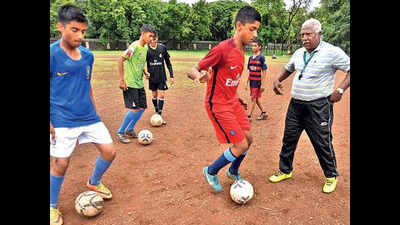
Nandu Angirwal puts his students through their paces at J N Petit; Samson Francis on the B J Medical College ground in his heyday
How nice poverty looks in retrospect, Art Garfunkel had once reminisced during a concert.

Angirwal was employed with Telco in Pune at Rs 400 a month when he got a call to join Mafatlal in Mumbai for twice the salary in 1973. He was in the team when Mafatlal won the prestigious Harwood league in Mumbai from 1976 to 1978. In 1976, his salary had swelled to Rs 1,400 and he was given free accommodation at the company’s Byculla guesthouse.
Then, the tumultous Datta Samant-led mill strike happened in 1982, unsettling the stability of many a worker. Angirwal was forced to return to Pune. He now coaches the students of J N Petit school.
Playing as a right-back for Mafatlal in a match against Orkay Mills in the Nadkarni Cup tournament in the late 70s, Angirwal had unleashed an impressive long-ranger that found the mark. His teammate at Fatima Sports Club in Pune, Rosario Antao, happened to see a clip of that goal in the newsreel that used to be played in the movie-halls. Impressed, Antao called up Angirwal and soon headed to Mumbai to join Orkay.
Now, Antao was a born athlete, having played with Fatima SC while just in the 8th standard at Ornella’s school and having excelled in track events at the industrial meets in Pune while working for Buckau Wolf (now Krupp Industries). He also played handball for six years and was even selected for the Indian team in 1977. However, the government scrapped the team’s visit to Kuwait for an international tournament citing lack of funds. Disillusioned, Antao turned his focus to football.
Antao had a golden patch with Orkay, even going on to captain the side and scoring a famed hat-trick against the feared, star-studded Mohun Bagan in the quarterfinals of the 1978 Rovers Cup. He joined Goa’s Dempo in 1980 and also played for the state team there. On returning to Mumbai to work for Century Rayon, he got a letter of selection for the Indian football team. However, his letter landed at the mill while it was locked out for six months during the 1982 strike. His dream of playing for India lay shattered.
Samson Francis, who played for Tamil United earlier, was the founder of Ghorpadi Young Ones, a team which still plays the leagues. Aspiration drew him too to Mumbai, when he underwent a week’s training session with Mafatlal in 1974. He later moved to Century Rayon, from where he retired. A certified coach from the National Institute of Sports, Francis, at 66, still mentors the Century Rayon team.
In the Pune of the 70s and early 80s, just around 20 clubs played under the aegis of the Poona District Football Association (PDFA). Soccer was largely played and followed in the Pune and Khadki cantonments. Teams like Fatima, Ghorpadi Young Ones, City Club, Youngsters and Shivaji Centre (now Shivajians) were the fancied ones and they had a fair to heavy sprinkling of players from the Goan, Tamil, Muslim and Maharashtrian communities.
During tournaments, spectators would crowd the chalked sidelines of the BJ Medical College and Ammunition Factory Khadki (AFK) grounds. Now, despite the PDFA having around 150 clubs, grounds are hard to come by and spectator interest too is poor, says Deepak Bhalerao of the association. The PDFA gets the Ghorpadi ground for little to nothing, but AFK does not let out its field and BJ Medical College charges a stiff Rs 15,000 per match.
Angirwal fondly recalls the plethora of tournaments that kept soccer vibrant in India then — Rovers Cup, DCM Cup, Durand Cup, Nadkarni Cup, Sait Nagjee Trophy in Kochi and Indian Football Association Shield in Kolkata, among others. “Today, most of these tournaments have either wound up or have lost their charm. Lack of tournaments is hitting India’s prospects of making the big league. The Cooperage in Mumbai would see a near stampede during the Rovers Cup matches then. Now, you have to invite spectators for tournaments,” he rues.
End of Article
FOLLOW US ON SOCIAL MEDIA











Hot Picks
TOP TRENDING
Popular Categories
Hot on the Web
Top Trends
IND vs BAN Live ScoreUGC NET Result 2024Rohit SharmaKamindu MendisDU ElectionIsrael StrikesMichael VaughanHigh Paying Freelance JobsElon Musk Dating MeloniUS FDAKerala Lottery ResultsShaheen AfridiTamil Nadu NEET UG CounsellingWho is Dominik Mysterios WifeChina SubmarineIsrael Hezbollah WarLive Cricket Score
Trending Topics
Devara CollectionNavya Naveli NandaPawan KalyanJungle SafariStree 2 OTT ReleaseRose GardenDevara CollectionOTT Release MovieMasala OmeletteEmergencyDevaraTaaza Khabar 2 Twitter ReviewDevara Movie ReviewHealthy RaitasSwatantrya Veer SavarkarColdplay India tour 2025Smartphone DealsApple Macbook Air M1Amazon SaleWordle Answer
Living and entertainment
Latest News
Vineeth Radhakrishnan calls Tovino Thomas a ‘phenomenal performer’ after watching 'ARM'Chennai Metro Rail phase 2: Stalin meets PM, seeks early approval of 50:50 equity sharing between Centre and TNCelebrating the legacy of Maggie Smith: Professor McGonagall's iconic moments in 'Harry Potter'Once in a blue moon: Delhiites breathe easy, AQI drops to 80Vishnu Manchu reacts to his online face-off with Prakash Raj over Tirupati Laddu issue: 'I have no ill intentions towards him'Cease-work at Sagore Dutta Hospital in Kolkata after 'assault' on junior doctorsThe Blaze Star is about to explode: All the details on how to watch it and where to lookTop Tory leadership contender pledges ban on UK visas to Indians if India does not accept returnsControl sexual urges; Pakistan in Bangalore: When judges forgot they were in courtHoroscope Today, September 28, 2024: Read your today's astrological predictionsTapSwap Daily Codes for September 28, 2024: Earn coins and cryptocurrency by completing tasksMedical Breakthrough: 1st lung cancer vaccine BNT116 clinical trials launched, vaccine based on Covid mRNAWrestling Veteran Supports Rikishi's Take on Jacob Fatu's Backstage Meeting with Triple HMinimum wages for unorganised sector to rise as variable DA upPremium Soundbars with Dolby Audio: Top Picks OnlineHC ticks off Punjab for not releasing Ayushman funds to private hospitalsMicrosoft CEO Satya Nadella says, for me a true leader is who …Policybazaar eyes new model for mediclaims
Copyright © 2024 Bennett, Coleman & Co. Ltd. All rights reserved. For reprint rights: Times Syndication Service