
Trending
This story is from July 11, 2017
KalamSat plants seeds of possible human mission
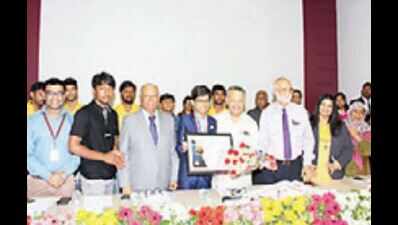
The tiny satellite, which weighed a mere 64g, was launched by Nasa on June 22. It was designed and developed at the T Nagar residence of the mission director Srimathy Kesan in Chennai.

In an interaction with students, Rifath Sharook, lead scientist, said among the payloads in the small spacecraft were 5g of seeds, including those of fig, basil and sunflower.
“We exposed them to a microgravity environment and we want to assess its impact on them. We also want to see the impact of cosmic radiation on these seeds. For the purpose of evaluation, we will plant half the seeds and send the remaining half to a biology research centre for analysis,” he said, while adding if humans have to become an interplanetary species then agriculture in space will play an important role.
Mission biologist T Gopinath said the seeds were acquired from Bengaluru. “We want to see how they react without soil and water,” he said.
Kesan said Nasa will be sending back the spacecraft soon and after that the process of decoding the data will begin, which will be shared.
Asked why the spacecraft was not launched by Isro, the KalamSat team said they have been asked this question 900 times in the last few days. “Nasa gives a lot of opportunity to students. In India, we are a bit conservative,’’ Kesan added.
Harshvardhan Sinhzala from Ahmedabad, was also given a similar award for developing a drone.
End of Article
FOLLOW US ON SOCIAL MEDIA





Hot Picks
TOP TRENDING
Trending Stories
In City
Entire Website
- 'We were treated like slaves, made to work for 15 hours a day': Tricked into Ukraine war, 3 from Karnataka return home
- 'My father was on the flight': Jaishankar opens up about 1984 Air India hijack
- Airtel CEO Gopal Vittal sends letter to Reliance Jio, Vodafone-Idea, Tata Tele and BSNL CEOs; here's what he said
- Prince Harry to celebrate 40th birthday away from Meghan Markle
- Haitian immigrant pet-eating row: Ohio woman accused of eating cat is US citizen, video is not from Springfield
- Kejriwal out of jail; 'CBI arrest only to frustrate ED case bail': SC judge
- Donald Trump reveals what Laura Loomer is to his campaign: 'I don't control her'
- Hamster Kombat Daily Cipher Codes and Combo Cards for September 14, 2024: Unlock up to 1 million coins
- Laura Loomer's photo with Donald Trump viral. People ask where's Melania, where's wedding ring
- Garena Free Fire MAX redeem codes for September 13: Win in-game goodies and rewards
- Will Mamata's surprise visit to doctors' protest site pay off? Crucial meeting at CM's residence
- 'Nafrat ki dukaan pe ...': PM Modi attacks Congress over 'brutality' in US
- 'I was molested in ambulance in which my husband was fighting for life'
- Blast in central Kolkata leaves 1 person injured, area cordoned off
- Trump defends 'loony' Laura Loomer amid MAGA meltdown
- 'This plane is going down': California man threatens to kill everyone on plane
- Hum do hamare chaar: Why is south India junking population control?
- Bengaluru woman sparks controversy with comments about Swiggy delivery executive
- 'Rohit didn't practice as hard as Sachin': Rhodes
- No party more dishonest and deceiving than Congress: PM Modi in Haryana

Popular Categories
Hot on the Web
Top Trends
Trending Topics
World Largest HorseSector 36 ReviewGreen Apple BenefitsPriyanka Chopra TattooKottukkaali OTT ReleaseNarendra ModiGhaziabad Juice SellerHair LossSudha MurtyMalayalam ProducersIndia's Best Dancer 4Simi GarewalDilli BabuIndian National ParksLaung BenefitsVikas SethiApple iPhone 16Donald TrumpAadhar Card UpdateWordle Answer
Living and entertainment
Latest News
Kaun Banega Crorepati 16: Can you guess the answer for this Rs 3,20,000 question on Navy, which contestant Naman Jain incorrectly answered?Edible oil import duty hiked by 20%'Calling all Swifties for Trump': Donald's new campaign merch imitates Eras Tour shirtsWWE Hall of Famer Watches 15 Hours Of Wrestling Each WeekDallas Cowboys Set to Defend AT&T Stadium in Week 2 Clash with New Orleans SaintsTovino on training for Kalaripayattu in ‘ARM’: I practiced every single day, even if I had a hectic day on set8 animals that reproduce without matingDelhi Police Files FIR for Firecracker Celebration Outside CM Kejriwal's ResidenceThrowback: When Alia Bhatt responded to insecurity questions about Ranbir Kapoor, shut down gossipIndia's T20I captain Suryakumar Yadav turns 34: A glimpse into his stellar T20 careerThe 3 Strongest Zodiac Signs: Powerhouses of the Zodiac Wheel'Forgive me, I don't belong ...' : Tamil Nadu hotelier's apology to FM Nirmala Sitharaman over GST remark triggers political rowRakul Preet Singh reveals Bollywood stylists charge from Rs 15000 to Rs 1 lakh for one event, one outfit: 'Living in Mumbai requires a lot of PR'September 14, 2024: Flying creatures and how their wings workThrashed for 'molesting' kid on train, rail staffer diesKejriwal walks out of jail, says morale is up by 100 timesDhruv Kapila's health setback shatters Indian pair's Vietnam Open semifinal hopesFormer Titans Cheerleader Danielle Sekelsky Begins WWE NXT Training
Copyright © 2024 Bennett, Coleman & Co. Ltd. All rights reserved. For reprint rights: Times Syndication Service