
Trending
This story is from September 2, 2016
Bhau Rangari Ganapati looks for place under sun
There is no fanfare, no demand for donations and no glittering decorations.Yet the Bhau Rangari Ganapati trust celebrating 125th year of Ganapati festival celebration, has a special place in the hearts of Puneites.
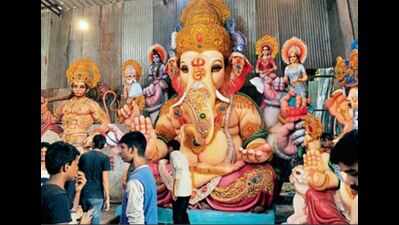
There is no fanfare, no demand for donations and no glittering decorations.Yet the Bhau Rangari Ganapati trust celebrating 125th year of Ganapati festival celebration, has a special place in the hearts of Puneites.
Pune: There is no fanfare, no demand for donations and no glittering decorations. Yet the Bhau Rangari Ganapati trust celebrating 125th year of Ganapati festival celebration, has a special place in the hearts of Puneites.
Ganeshotsav was started by Bhausaheb Laxman Javale, known as Bhau Rangari, in 1892. The trustees said he started the festival two years before Lokmanya Bal Gangadhar Tilak and hence should be given credit.

"The state government has announced Lokmanya Sarvajanik Ganeshotsav Abhiyan and Lokmanya Utsav this year but we feel it should be named after Bhau Rangari. In fact, in his will Rangari donated all his estate for celebrating public Ganeshotsav and named Lokmanya Tilak as the first trustee. He also played an important role in the freedom struggle so his contributions should be acknowledged," a statement issued by the trust said.
The freshly water-colour painted idol made of paper and pulp, stands tall in all its glory at the wada in Budhwar Peth, near the historic Shaniwarwada. It was made by Javale and first installed in the presence of Annasaheb Patwardhan, Nanasaheb Khasgiwale, Dagdusheth Halwai, Khandoba Tarawade and Mama Hasbnis.
"Bhausaheb Javale started the Ganapati festival two years before Bal Gangadhar Tilak. Javale's name got little mention because Tilak was a political leader while he was a revolutionary who mobilised the masses to fight against the British rule," Anant Madhav Kusarkar, trustee of the wada, told TOI.
He said Bhausaheb Rangari also installed two other Ganapatis in 1892, one at Ganapatrao Ghotavdekar's home and another at Nanasaheb Khasgiwale's property. "All the three Ganapati idols were taken out in a procession for immersion on Anant Chaturdashi day," he said, adding that Tilak himself lauded Bhau Rangari's efforts in the issue of daily Kesari of September 23, 1893 and started the public Ganeshotsav in 1894 by installing an idol at Vinchurkarwada where he used to reside.
The mandal does not collect donations from the public; the trustees and voluntary contributions pool in money for the celebrations. "We do not use loudspeakers and the idol is eco-friendly. We shy away from using gulal or any form of colours and have preserved the chariot that was used in 1892," Kusarkar added.
End of Article
FOLLOW US ON SOCIAL MEDIA







Photostories

Hot Picks
TOP TRENDING
Popular Categories
Hot on the Web
Top Trends
SA vs WI Live ScoreUGC NET ResultHarbhajan SinghAbhimanyu EaswaranShailaja PaikStock Market TodayHaryana Election ResultIsrael Hezbollah WarNima Hospital Doctor MurderTaylor SwiftTirupati Laddu RowNEET PG SC HearingWomen's T20 World CupTop MBA Colleges of IndiaT20 WC ScheduleWomen T20 World Cup Points TableLive Cricket Score
Trending Topics
Samantha Ruth PrabhuNavratri Colours 2024Navratri Day 2 ColourTMKOC New SonuNaga ChaitanyaDevara CollectionGOAT OTT ReleaseRajinikanthDeepika PadukoneGovindaDevaraGovinda NewsDevara Movie ReviewHealthy RaitasSwatantrya Veer SavarkarColdplay India tour 2025Upcoming Smartphones In OctoberNavratri JewellerySony Bravia 55 inch 4k Ultra HD TVWordle Answer
Living and entertainment
Latest News
Start construction on 12th October this Navaratri and you will say WOW!Jr NTR-Hrithik Roshan dance-off in 'War 2' set to be shot during THIS timeYouTube Shorts extends duration to 3 minutesWill join NCP (SP) with supporters, says BJP leader Harshvardhan Patil'Was screaming, hitting him': 5-year-old Florida boy suffers cardiac arrest on Disney rollercoaster ride'We spoke about it and ...': What Trump said on wife Melania backing abortion rights in new memoirTDP welcomes SC's ruling on SIT to probe Tirupati laddu adulterationJannik Sinner not 'comfortable' as doping case clouds Shanghai campaignThis is the stock trading app linked to Rs 500 crore investment fraud; YouTubers Elvish Yadav, Bharti Singh among 5 summonedCongress leader urges West Bengal governor to act against politicians for polarizing votersTwo Indian-Americans among 15 selected for prestigious 2024-2025 White House fellowshipTop Republican urges Biden to rush 2,000-pound bombs to Israel held up over human rights concernsCoin Master free spins and coins for 4 October, 2024: Earn million of coins using today’s linkSolar eclipse 2024 date and time: When is Surya Grahan in October? Will it be visible in India?Surabhi Lakshmi on receiving praise from Akshay Kumar: I never imagined he would remember me; overwhelmed by his wordsNidec accelerates Commercial Vehicle electrification in India with Ashok Leyland partnership, Indian footprint investmentsNavratri 2024: 10 Interesting ways to reuse leftover sabudanaTumbbad actor Sohum Shah reveals Salman Khan is the reason he started wearing jeans
Copyright © 2024 Bennett, Coleman & Co. Ltd. All rights reserved. For reprint rights: Times Syndication Service