
- News
- City News
- nagpur News
- Creativity and originality are compromised in online classes
Trending
This story is from April 3, 2022
Creativity and originality are compromised in online classes
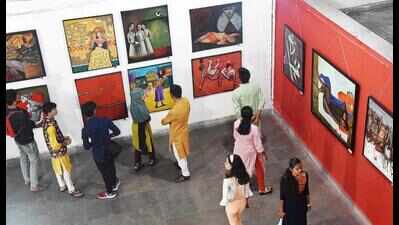
“Most of the learning in the first year is by observing the work of seniors through exhibitions that are held in the college and learning from each other.

“Online classes were of no help. They were just about academic assignments while we learn best by practising and from guidance given to us by our teachers individually and in person on the campus,” say students who feel that they have been deprived of the most formative two years of their arts education.
Arts is a subject of interest and students who get into the colleges are eager to learn the techniques and hone their skills. Getting admission in government colleges in Mumbai, Pune, Nashik and Nagpur is tough as there are only 375 seats for which more than 10,000 students compete. Admissions are through CET. At a very nominal fee, these government colleges offer the best of facilities and faculty.
“Most of the students in Nagpur come from smaller districts like Wardha, Chandrapur, Buldana, Yavatmal and Amravati. Many are also from economically weaker sections and can barely afford their education,” says Kishore Ingle, a college lecturer.
“In the first year, students are taught the basics of drawing. These are the most formative classes for an arts student. The college hires models for Rs 400 per day to help them learn portrait paintings. We also place antiques in class which they see and draw. All this was not possible in online classes,” adds Ingle.
Students also had to struggle to procure material like paper, canvas, charcoal pencils, acrylic colours and other specific material as shops selling these items remained closed during the lockdowns. “There are specific shops that sell arts material. Most remained closed and those which were open ran out of stock. We had to practice sketching on newspapers and use coal as charcoal pencils were not easily available,” says Harshita Heliwala, a second year student.
“Assignments given to us in the first year were not challenging enough for our creativity to emerge. In fact most of the time we had to just copy the drawings,” complains Shridhar Dhalvi, a second year student.
“We are back on the campus now but are feeling a bit clueless. There have been no introductions between our classmates, we don’t even have a proper understanding of material or drawing sheets that we use. Now there is this rush to complete the syllabus. It feels as if we are in fast forward mode,” says Mitesh Ghose, and adds that many among them are also attending first year classes too to pick up on what they have missed.
Those in the third and final year also say that the closing down of colleges left them in the lurch. “Some of us take up painting jobs outside the college to cover the cost of education. We also take part in exhibitions and network with art buyers. But during the lockdown there was no work and no activity. With the world of arts in a slump, there is a sense of insecurity,” says Sayantan Bose, a final year student and this year’s winner of the Bombay Art Society award.
Creativity and learning have been compromised due to online teaching, agrees Ingle but adds, “It can be corrected if one is willing to work hard.”
Giving an example of a student from Amravati, Aniket Devgirkar, who got admission in 2020, Ingle continues, “He didn’t have a smart phone so was missing classes. The same year his father died in an accident. His mother works as a cook. His brother said they couldn’t afford a smartphone so I put a request in my social media groups and people responded.”
A brilliant student, Aniket wanted to join the JJ School of Arts so he again appeared for the CET and got the 10th rank and is now at JJ. “I tell the students that the college and studio are open in summer and that they can come and catch up with what they have missed,” says Ingle.

About the Author
Barkha MathurEnd of Article
FOLLOW US ON SOCIAL MEDIA







Hot Picks
TOP TRENDING
Trending Stories
In City
Entire Website
- GK for students: 7 Fascinating Features of These Unique Birds
- 'Wearing undergarments must but...': Delta's 'specific' memo for flight attendants
- We're 'disturbed' by findings of CBI's RG Kar report: SC
- What are pagers? Devices that led to wave of blasts in Lebanon
- Fired techie who worked as Swiggy delivery partner shares his 'survival story' on LinkedIn, post goes viral
- India Post GDS Result 2024: Merit list 2 released for all regions, state-wise direct links to check
- Traffic Police announce road restrictions for Eid on Wednesday
- Melania Trump spotted in New York, Eric had to walk for stepmother's enhanced security
- Diddy and Donald's photo viral as Sean charged with sex trafficking: 'Why all Trump's friends...'
- NPS Vatsalya: FM Nirmala Sitharaman launches National Pension Scheme variant for children; check details
- Round 2? Now Hezbollah's walkie talkies explode across Lebanon, day after pagers blast
- 'One nation, one poll': PM says 'important for vibrant democracy'; Oppn dubs it 'impractical'
- One nation, two elections is the way to go here
- Indus Water Treaty: India serves formal notice to Pak, seeks modification
- Monkeypox in India: Second case of Mpox confirmed in Kerala
- Exclusive: 'Bangladesh played very well in Pakistan, but India…'
- How quality stocks can save your portfolio in a bear market
- Fired techie shares his 'survival story' on LinkedIn, post viral
- Diljit Dosanjh’s 5 most honest confessions proving he is like us
- J&K election: 'About 59% voting recorded in 1st phase of polls,' says J&K CEO

Popular Categories
Hot on the Web
Top Trends
Oleksandr UsykIndia Fastest Metro ServiceVince McMahonNPS VatsalyaDonald TrumpKolkata Doctor Rape CaseShreyas IyerTaiwan PagersGautam Gambhir Press ConferenceUGC Net ResultVirat KohliSukanya Samriddhi YojanaIsrael Hezbollah WarNEET UG Admission CriteriaPager Attack in LebanonArvind KejriwalLive Cricket Score
Trending Topics
Diljit DosanjhsJatt Juliet 3 OTT ReleaseAbdu RozikKhatron Ke Khiladi 14Chinas EggBigg Boss 18Sunita AhujaGoat CollectionLebanon Pager BlastPitra Paksha 2024CheetahsKangana RanautAditi Rao HydariDalljiet KaurHoliday DestinationVikas SethiBest Selling Earbuds Under 1000Apple iPhone 16 ProVirat KohliWordle Answer
Living and entertainment
Latest News
Shilpa Shetty just rolled out the latest sari trend 'a rainbow sari'Zilla Fatu Reacts to Armando Estrada's Contract Signing with WWEChandrayaan-4, Venus Mission, New-Gen Rocket, Space Station get Cabinet nod, Gaganyaan budget doubles to Rs 20,000 croreFormer WWE star addresses potential heel turn in AEWCM Punk to Step In as Guest Referee for NXT Title Match at WWE NXT Chicago EventWaterborne disease cases spiked after flood in VadodaraThe man who wants to 'cancel' Adani from Sri LankaSuriya to play the antagonist in 'Dhoom 4', here's what we know11 get new lease of life with organs from two in SuratMrBeast aka Jimmy Donaldson, Amazon sued by ‘Beast Games’ contestants over sexual harassment and chronic mistreatment allegations - reportsAmazon India appoints new country headBigg Boss Tamil 8: Actress Sachana Namidass to participate in the upcoming season?India 'very big abuser' of trade ties with US, says Donald TrumpJr NTR's 'Devara: Part 1' to have early morning showsGrieving mom's heart-wrenching letter blames toxic culture for daughter’s deathRicky Ponting is new Punjab Kings head coachA lot at stake as Mohun Bagan get ready for Asian footballWhy am I feeling irritable? Common causes of mood swings and how to manage them
Copyright © 2024 Bennett, Coleman & Co. Ltd. All rights reserved. For reprint rights: Times Syndication Service