
- News
- City News
- mumbai News
- BJP gets smaller share of fauji votes than in 2014 Maharashtra assembly polls
Trending
This story is from October 26, 2019
BJP gets smaller share of fauji votes than in 2014 Maharashtra assembly polls
It is widely believed that the BJP gets a much larger share of postal votes—the overwhelming majority of which are from people serving in the armed forces and paramilitary—than its share of the overall vote.

Representative image

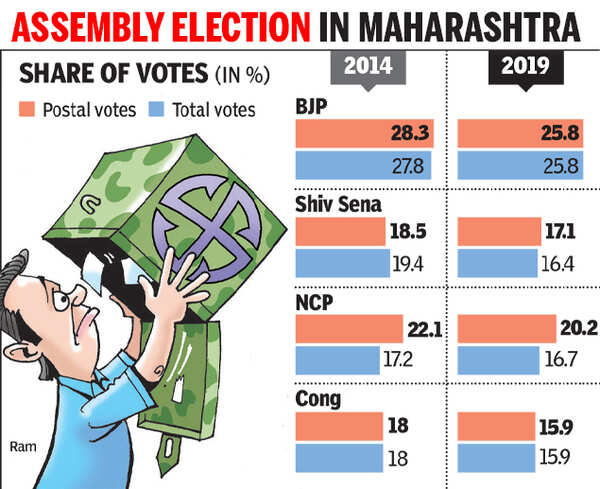
Both in the 2014 and 2019 assembly polls, the NCP was the only party among the four big four in the state that got a significantly higher share of postal (read fauji) votes than it did of the overall votes ( see graphic). In 2014, the NCP got 22.1% of the 2.1 lakh-odd postal votes in the state assembly elections, while its overall voteshare was much lower at 17.2%. Similarly, in the 2019 assembly polls, it got 20.2% of the nearly 2.8 lakh postal votes cast in the state. Again, its overall voteshare of 16.7% was significantly lower.
The Sena also, in these elections, got a higher share of postal votes (17.1%) than its overall voteshare of 16.4%. This was unlike in 2014, where it got 18.5% of postal votes and 19.4% of the overall votes.
In 2014, the BJP’s share of postal votes was slightly higher than its share of overall votes, but by just 0.5 percentage points. The Congress in those elections too had got the same share of postal votes as it did of votes cast in EVMs.
The combined BJP-Sena share of postal votes in 2019, at 42.9% was sharply down from 46.8% in 2014, just as its overall vote share went down from 47.2% to 42.2%.
What explains the slightly higher share for NCP in postal votes? It may well have to do with the regions in which postal votes are concentrated. In the 60 seats of the Mumbai region, for instance, there were less than 15,000 postal votes spread over 60 seats, an average of less than 250 votes per seat. In contrast, western Maharashtra had an average of over 1,200 postal votes per seat. The NCP’s strength in this region would have helped it secure more fauji votes.
Another possible reason could be that certain communities tend to be more represented in the armed forces than others for historical reasons and parties that have a social base among those communities would therefore tend to have a larger share of postal votes.
Either way, what it suggests is that just like other parts of the population, voting preferences of those serving in the armed forces are determined by a host of local factors and not just grand national narratives.
End of Article
FOLLOW US ON SOCIAL MEDIA









Photostories

Hot Picks
TOP TRENDING
Popular Categories
Hot on the Web
Top Trends
Nigeria Football Team LibyaUGC NET ResultIsrael Hezbollah WarShaheen AfridiGautam GambhirBaba Siddique NewsRussell WilsonsBahraich ViolenceSarfaraz KhanGen AI Shift ImpactsAmazon LayoffsPM Internship SchemeSSC GD Constable ExamMayank YadavTamil Nadu Board Exam Time TableN ChandrasekaranLive Cricket Score
Trending Topics
Diwali WishesAtul ParchureBaba SiddiqueShraddha KapoorVettaiyan CollectionVettaiyan ReviewNatasa StankovicDevara CollectionBigg Boss 18Deepika PadukoneShraddha KapoorRatan Tata Passed AwayJigra Movie ReviewVettaiyan Movie ReviewSwatantrya Veer SavarkarDussehra 2024Star Health Hacker DemandedViral MemesUltimate Football Codes October 2024Wordle Answer
Living and entertainment
Latest News
Zodiac Signs Who Are Easily HurtUPSC Releases EPFO 2024 Interview Schedule: Dates from November 4 to December 6PCB defends decision to drop Babar Azam, Shaheen Afridi, Naseem ShahMini setback for Season 1 of women's Hockey India League, four teams instead of sixFormer Maharashtra CM Uddhav Thackeray admitted to HN Reliance HospitalInfosys to no longer send job offer letters and attachments, the company will ...Happy Dev Diwali 2023: Best Wishes, Images, Status, Quotes, Messages, Facebook and WhatsApp Greetings to Share on Dev DeepawaliZodiac Signs Who Love Too HardChina September soybean imports surge to near record 11.37 million tonsMithun Chakraborty REVEALS he never asked anybody to give work to his kids in BollywoodWhat Are Square Aspects in Astrology?Reliance Jio reaches this milestone in less than two years of 5G launch30 detained, internet shutdown after massive violence erupts in UP's BahraichPapankusha Ekadashi 2024: Date, Parana Time, Puja Rituals and SignificanceNorth Korea preparing to demolish inter-Korean roads, claims South KoreaBattling accomplished Ashwin, Jadeja crucial for New Zealand: Rachin RavindraRajveer Singh’s inspiring transformation on completing a decade in the TV Industry, says 'My passion for becoming an actor fueled my determination'Winners of The Times Hospitality Icons- Ludhiana 2024, 1st Edition
Copyright © 2024 Bennett, Coleman & Co. Ltd. All rights reserved. For reprint rights: Times Syndication Service