
- News
- City News
- kolkata News
- Iranian film shot during 2019’s floods competes at KIFF
Trending
This story is from January 15, 2021
Iranian film shot during 2019’s floods competes at KIFF
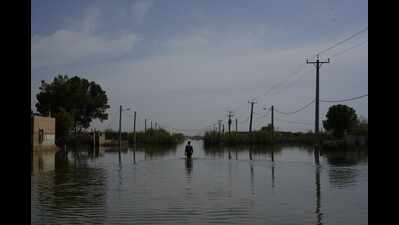
A still from 'Bander Band'
Her personal film career is long and eventful. In 1995, she began working as a producer. In 2002, she directed her debut feature titled ‘Women’s Prison’ on the situation of Iranian women prisoners.

Her latest, ‘Bandar Band’, is in the international competition at KIFF. It is a road movie with a difference. Most of her film takes place inside a van which acts as a refuge for the three musicians as they navigate their way through flooded terrains to attend a music competition in Tehran. Owing to the devastating floods in 2019, their journey to Tehran reveals more than the just the lives and stories of the protagonists. Roads are washed away. So are lives. Yet, life moves on. Excerpts from an interview with the director:
How did your documentary background help in making this film?
As a matter of fact, even before making a documentary film, you are forming your documentary background. Your ideas, your thoughts and your panoramic view of your surroundings, the history and the society you’re living in contribute to the formation of this background. Coming to the intellectual maturity, every filmmaker longs to make documentaries. As is evident in most of my works, there are some docu-style narratives that originated either from my own experiences as an observer or as my deductions through the field researches my team and I are always pursuing.
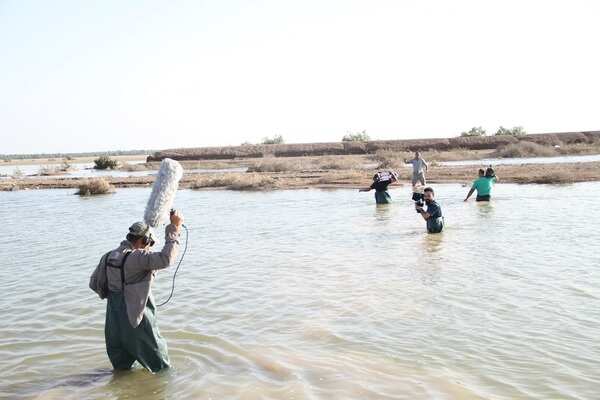
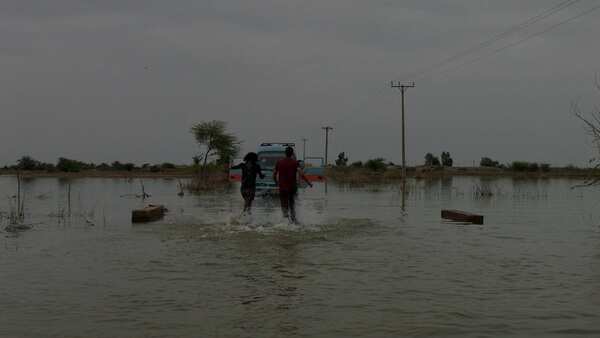
How did you shoot the scenes that depict the journey across the flooded landscape of Iran?
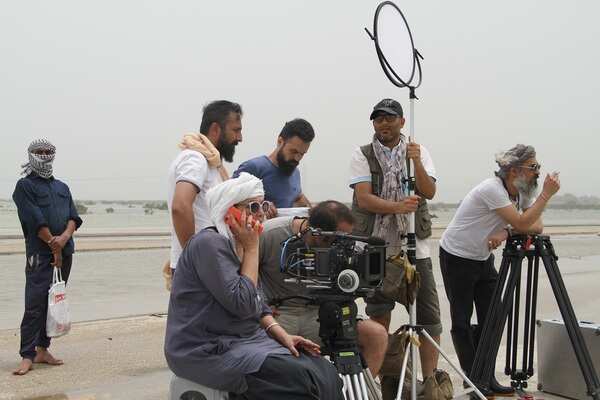
Working in the actual situation of peril and emergency is so difficult and terrifying. You should program everything perfectly when you are taking all the cast and the crew members to the flood-stricken regions and working in the water between the ruins. You need to make the mind and the approach of all the people involved identical since you do not have enough time to see, think and take decisions. You must do your job instantly. We achieved a common sense of the theme and the form in the first place. We were always ready to work – especially our DOP and I. While discovering the surprising landscapes, we would be able to start shooting intuitively. Honestly making a film, even in the ordinary situations, leads to making crucial decisions and entering trial and error tests. Due to the harmony and the transparency of the ideas in our team, everyone knew where he was to be when shooting. So, I hope that we have been successful in capturing the scenes.
What is the source material for your film? Did you come across some real life experience that prompted you to make a film like this? Or is this a complete work of fiction?
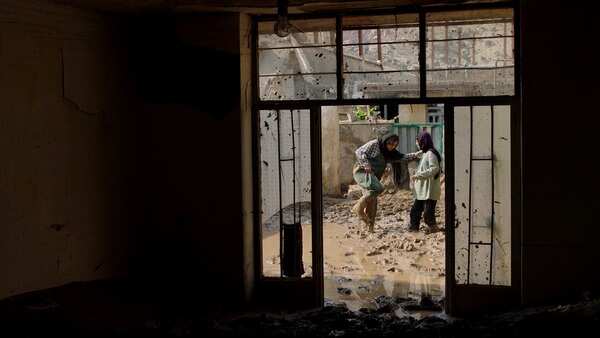
The main source was not the flood. There were some really small cafes in Tehran in which the girls were able to sing. They had their own applications and their methods to organize some small competitive programs. It attracted me to see how the women with their husbands, how girls with their fathers, travel to Tehran from the remote cities to sing there and compete with each other. It is most unfortunate that all these cafés were closed down after a while. I was working on this story: seeking fame, a small band travels to Tehran from a far, far city to hold a secret concert in a small café. Then after the breaking news of the fatal flood, I immediately thought of moving the story to this actual setting. It was the main thing I longed to depict: a young generation doing its best to make a better world and a brighter future. But taking any possible path, only faces the dead ends, the broken bridges and the blocked roads. During the flood, I managed to create what I had in my mind.
How challenging is it to be a female director in Iran now?
As a matter of fact, I’m a woman filmmaker, film producer and domestic distributor in Iran. I suppose that in Iranian cinema, being a woman filmmaker is not that challenging. Many Iranian women are active in the different sectors of Iranian cinema. The challenging thing is the censorship. It’s not a gender subject. It only deals with your ideas and your thoughts.
Where did you study filmmaking?
When I was 14, I was living in a province with an active branch of Iran’s Free Cinema (which turned to Iranian Young Cinema Society after the revolution). Like so many filmmakers of my age, I started my amateur work in Free Cinema. Then we were making 8 mm films and I was beginning to explore the nature of the moving pictures, still photography and all the visual works. When I was 18, I gradually stepped into the film industry.
What is the contribution of your learning abroad and the predecessors of female directors of Iran on your work?
I must say that many super intelligent, understanding, wise and thoughtful women have entered Iranian cinema up until now. Their achievements in the international scene is proof of what I say. Undoubtedly, we have some influences on each other. But learning is not a gender thing. We have great filmmakers such as Nasser Taghvai, Bahram Beizai, Amir Naderi and Abbas Kiarostami. We’ve had such masters when learning filmmaking. There were also Sohrab Shahid Saless, Fereydoun Goleh and so many others. We were taught by them. They started the fire to enlighten the way of filmmaking for us. Of course, in order to learn filmmaking, you must read about cinema and watch the films. Interestingly, we, the women filmmaker started our professional career simultaneously. In 1980, I started my career, not as a filmmaker, but as an assistant director and production manager. However, I should admit that I have learnt so much from Rakhshan Banietemad. I have learnt from her all through these years. Just like our other women filmmaker. I believe that we, Iranian women filmmakers, contribute to each other all the time. This contribution enlightens our way of filmmaking.
Is shooting in the pandemic extra difficult than shooting in general in Iran?
It was so strange to see that during the pandemic, more than 100 feature films were made in Iran. All filmmakers were trying to make their films respecting health and safety protocols. On the other hand, like any other places, the theatrical release of the films was faced with innumerable problems. Despite these problems, the filmmaking went on well in Iran. Especially the young generation found the opportunity as well as some small places to start their celluloid dreams. In the pandemic year, almost half of the films were made by the first-time filmmakers. It seems that at last they got the chance to think calmly and make their films eventually. So, we made our films. I also directed my new film. We, working in the independent cinema, do our best to make our works with small budgets and innovative ideas. Of course, there were some filmmakers, backed by the officials, who made their films benefitting from the big budgets and extraordinary equipment. But I’m so happy for the young generation that found an opportunity to grow more and more.
Have you been to Kolkata/India? Has Indian cinema influenced you creatively?
I was in Mumbai Film Festival with my film, ‘Women’s Prison’, and in International Film Festival of India – Goa with my film, ‘The Old Road’. I have also visited Kolkata. I believe that India is one of few countries where you can place your camera in every corner and you’ll have images and, ultimately, cinema. The unbelievable pallet of vivid colors and appealing manners, the beliefs and the faiths, is a totally different story. I have always loved to make a film in India,. It hasn't happened yet though. I know the Indian cinema very well – especially the realistic cinema which has been influential in world cinema – most notably in the growth of independent and groundbreaking films. It can inspire the filmmakers all around the world.
If you win the award at KIFF, what do you plan to do with the prize money?
Indian film festivals always look fantastic to me. I love to be in these festivals and make friends with the directors and the organizers of the events as usual. I would be so happy to win the award since I have grown in the independent sector of Iranian cinema, making my films with minimum budgets. I have done my best not to be corrupted either by the governmental budgets, or by the suspicious investments which have found their way in Iranian cinema recently. Being independent is so difficult. If I win the award, I’ll complete my next projects and try to give gifts to all the people, who in these dire situations, have been active in the production and the distribution of ‘Bandar Band’. If I win, I’ll focus on what I should do.
Are cinemas open in Iran now?
They reopened just three days back. But people do not dare to go to cinema. Unfortunately, online release of the films did not help us at all due to the piracy. I hope that these bad days end soon and all of us would be able to gather once again to watch the films.

About the Author
Priyanka DasguptaEnd of Article
FOLLOW US ON SOCIAL MEDIA





Hot Picks
TOP TRENDING
Trending Stories
In City
Entire Website
- 'Osama's 'dead son' is alive, leading al-Qaida in Afghanistan and has terrifying plans'
- Diljit Dosanjh’s Dil-Luminati India Tour: Check dates, venue, how to book concert tickets online
- Hamster Kombat Daily Cipher Codes and Combo Cards for September 13, 2024: Unlock up to 1 million coins
- Narayana Murthy faces backlash for parenting remarks on social media; users say, "after working 72 hours a week, there’s barely time left to have babies…”
- Shreyas Iyer comes out to bat wearing sunglasses, falls for a duck in Duleep Trophy
- iPhone 16 will be available for Rs 54,900 on Apple website; here's how you can grab the deal
- iPhone 16 to go on pre-order today: Pre-booking details, time, sale date and more
- Vande Metro launch date, schedule: PM Modi to flag off Bhuj-Ahmedabad Vande Metro train; check timings, stoppages of new Indian Railways train
- Why around 40,000 TCS employees have received tax demand notices for Rs 50,000 to over Rs 1 lakh
- Bill meant to usurp Waqf land, JPC told
- Satellite-based toll system to have factory-fitted unit, phased launch
- Troops disengaged in 4 areas, including Galwan valley: China
- 5 things to keep in mind before betting on Bajaj Housing Finance
- 'Made to work for 15 hours a day, were fired at if we slacked off'
- Door-to-door campaigns back in J&K, first since 1987 election
- 2nd T20I: Livingstone leads England to thrilling victory over Australia
- Can Sebi chief Madhabi Puri Buch survive this storm of allegations?
- Jhumka Gira Re ...: American woman's Instagram post on India goes viral
- Ford drives into India for 3rd time
- Ahead of PM Modi's Doda rally, 2 soldiers killed, as many injured in operation to smoke out terrorists

Popular Categories
Hot on the Web
Top Trends
Shannon Sharpes Net WorthVande MetroAadhaar Card UpdateTech LayoffsArvind Kejriwal BailShannon SharpeUPSC Mains Admit CardKristina JoksimovicTCS Employee Tax NoticesWay Chatgpt can be your Study PartnerAir Taxi IndiaAyushman Bharat SchemeKolkata Doctor Rape CaseDonald TrumpShreyas IyerDiljit DosanjhLive Cricket Score
Trending Topics
Alia BhattMalaika Arora Father DeathArbaaz KhanNatasa StankovicMr Bachchan OTT ReleaseNational Parks In IndiaSelena GomezGOAT CollectionVikas Sethi DeathMalayalam ProducersIndia's Best Dancer 4Simi GarewalDilli BabuIndian National ParksLaung BenefitsVikas SethiApple iPhone 16SpaceXAadhar Card Update By Sept 14Wordle Answer
Living and entertainment
Latest News
Regina Cassandra calls herself a 'serial dater,' had many relationships :'But I’m taking a break now'Kaun Banega Crorepati 16: Can you guess the answer for this Rs 3,20,000 question on Navy, which contestant Naman Jain incorrectly answered?Exclusive - Has Palak Sindhwani aka Sonu from Taarak Mehta Ka Ooltah Chashmah breached her contract; Neela Film Productions to issue a legal notice to the actress?Mexico's president asks Sinaloa cartel to act 'responsibly' as violence escalates in the northKitchen Tips: How to elevate home cooking to Michelin levelFord drives into India for 3rd timeGrowth potential 7.5% or more: RBI governorHindus take to Bangladesh streets to stop attacks and demand justiceE-commerce speeds up to catch up with Quick commerce'Will take digital public infrastructure stack to 50 nations'Tragic road accident on Mogili ghat road claims seven lives in Chittoor districtSebi gives clean chit to NSE, ex-executives in co-location caseRusty or Ready? Falcons' Cousins Falls Flat in $180M NFL DebutRaveena Tandon apologizes to fans for not photo snub in London: "It was not my intention to offend"Preschools turn nursing homes, retirement age raised: China's demographic crisis explodesBest Phones Under 35000 To Smoothly Carry Out Multiple Tasks On A BudgetHow to manage eczema in babiesWWE reveals goal for NXT's debut on the CW Network
Copyright © 2024 Bennett, Coleman & Co. Ltd. All rights reserved. For reprint rights: Times Syndication Service