
- News
- City News
- kolhapur News
- State dams twice as full as last year
Trending
This story is from August 31, 2016
State dams twice as full as last year
The water stock in Pune region was only 40.28% on August 30, 2015 as against the current stock of 80.06%.The region presently has 11,471 mcum water.
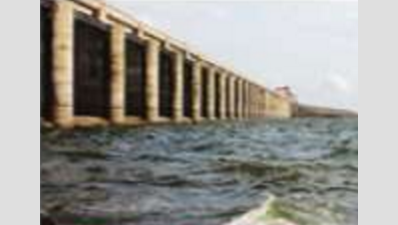
The water stock in Pune region was only 40.28% on August 30, 2015 as against the current stock of 80.06%.The region presently has 11,471 mcum water.
Last year, the water level was 32.32% of the reservoirs' total capacity of 26,322 million cubic metres (mcum) on August 30. However, there is a stark difference in the water levels in different dams across the state.While dams in Marathwada have 33.73% stock, those in Konkan are filled to 90.88% of capacity.

Though the monsoon began late this year, the two major heavy spells of rain in July and August boosted the water levels in the dams. The excess rain forced officials in Nashik and Jalgaon districts to release water into the Godavari. A similar discharge from dams in Pune brought water to the Bhima basin. The direct beneficiaries of the water discharge in the Godavari basin were districts from the Marathwada region. The Bhima basin is a major source of water supply for Solapur district, along with Indapur and Baramati tehsils in Pune and Karjat and Shrigonde in Ahmednagar district.
The south west monsoon generally enters Maharashtra from the Sahyadri ranges and brings heavy rainfall in the Konkan region as well as parts of western Maharashtra close to the Western Ghats. The biggest contribution of rainfall in terms of water addition to dams was in Pune division, chiefly because of the sub-cluster of the Sahyadri mountains. The water stock in Pune region was only 40.28% on August 30, 2015 as against the current stock of 80.06%. The region presently has 11,471 mcum water. Marathwada had only 2.06% of the total capacity of 9,156 mcum, which has now gone up to 33.73%.
MOS for water resources Vijay Shivtare said, "The figures look good on paper but there has been unequal rainfall even in the Pune and Amravati regions. Some areas in the Pune region received excess rainfall but others faced a shortage. We are assessing the detailed figures of rainfall and its impact on crops. A similar situation prevails in Marathwada where though the dam water levels look good, there is no infrastructure to supply water from the dams to many areas.""
A senior official from the Pune divisional commission er's office said, "Though the water stock in Pune division has jumped from 40.28% in August 2015 to 80.06% this year, there are 77 tankers still supplying drinking water to some villages. It clearly shows the uneven distribution of rainfall. The impact of such inadequate rainfall will be felt by mid-September when most crops would be ready for harvest."
The biggest contribution of rainfall in terms of water addition to dams was in Pune division, chiefly because of the Sahyadri mountain subcluster.
The water stock in Pune region was only 40.28% on August 30, 2015 as against the current stock of 80.06%. The region has 11,471mcum water stock. In Marathwada, there was only 2.06% of the total capacity (9,156 mcum_, which has now gone up to 33.73%.
Minister of state for water resources Vijay Shivtare said, "The figures look good on paper. But even in Pune and Amravati region, there has been inequal rainfall.There was excess rainfall in some areas of Pune region, while there is shortage in other places. We are assessing the detailed figures of rainfall and its impact on crops. Similar situation prevails in Marathwada, where dam water levels are looking good but there is no infrastructure to supply water from the dams in many areas."
A senior officer from the Pune divisional commissioner's office said, "Though the water stock in Pune division has jumped from 40.28% in August 2015 to 80.06% this year, there are 77 tankers supplying drinking water to some villages. It clearly shows the uneven distribution of rainfall. The impact of such inadequate rainfall will be felt by mid-September when most crops would be ready for harvest."

About the Author
Nikhil DeshmukhEnd of Article
FOLLOW US ON SOCIAL MEDIA








Photostories
Hot Picks
TOP TRENDING
Popular Categories
Hot on the Web
Top Trends
Travis KelceIsrael Hezbollah WarJ&K Election Exit Poll ResultHaryana Election Exit Poll ResultAUS vs SL Live ScoreWomen T20 World Cup ScenarioAmethi Murder CaseIsrael Iran WarJ&K Exit PollHulk HoganUGC NET ResultDiddyWomen's T20 World CupTop MBA Colleges of IndiaT20 WC ScheduleWomen T20 World Cup Points TableLive Cricket Score
Trending Topics
Bigg Boss 18 House PhotoNavratri Colours 2024Navratri Day 2 ColourTMKOC New SonuNaga ChaitanyaDevara CollectionGOAT OTT ReleaseRajinikanthDeepika PadukoneGovindaDevaraGovinda NewsDevara Movie ReviewHealthy RaitasSwatantrya Veer SavarkarColdplay India tour 2025Maa Durga 108 NamesNavratri JewellerySony Bravia 55 inch 4k Ultra HD TVWordle Answer
Living and entertainment
Latest News
India’s F&O addiction: Falling, hurting, bleeding but chasing that elusive pot of goldVirgo, Weekly Horoscope, October 06 to October 12, 2024: Financial setbacks may arise mid-week but will improve by the weekendSnapshot of brutalityDRDO tests of man-portable air defence shield successfulWorld Meningitis Day 2024: What is meningitis, the deadly brain infection? Know signs and symptomsBlaze damages goods worth Rs 3L at Bambolim flat“With Davante Adams on the Verge of Departure, Raiders' Robert Spillane Promises Big Plays Ahead”Maryland Governor Makes Bold Pitch for Raiders' $140M All-Pro: Could Davante Adams Join the Ravens?Aries, Weekly Horoscope, October 06 to October 12, 2024: Face health and emotional challenges at the start of the weekKareena Kapoor, Soha Ali Khan, Kunal Kemmu and others have a blast at Neha Dhupia's son Guriq's birthday bash - See INSIDE photosAmid China's muscle-flexing, Malabar drill to start on October 86,000 Dasara dolls bring underwater city of Dwarka to life in BasavanagudiWWE Bad Blood 2024 Betting Odds: Dominik Mysterio favored to escape shark cage, Punk and McIntyre favored to bleed, and moreTripura court serves notice to a police officer on cash looting chargeRecord 41 companies files for IPOs in SeptemberBone health in the elderly: Why seniors should get a bone density testBengal villagers attack police after child's body found in ditchWest Bengal govt misses 'deadline', junior docs begin fast
Copyright © 2024 Bennett, Coleman & Co. Ltd. All rights reserved. For reprint rights: Times Syndication Service