
- News
- City News
- guwahati News
- Thematic training in Assam to protect vultures
Trending
Thematic training in Assam to protect vultures
Vultures serve a vital role in ecosystems as scavengers, disposing of animal carcasses and preventing disease proliferation. The rapid decline, predominantly caused by the veterinary drug diclofenac and similar drugs, habitat destruction, and poisoning, created a substantial ecological imbalance.
Among the six vulture species found in Assam, three critically endangered species are the Oriental White Backed, Slender Billed, and King Vulture. The Himalayan Griffon and Cinereous vultures from Europe and the Himalayas migrate to Assam annually during winter.
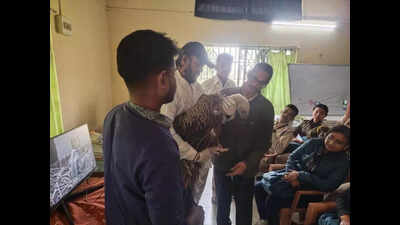
Assam Forest School, Jalukbari, organised the two-day thematic training on vulture conservation and rescue. Funded by the Assam Project on Forest and Biodiversity Conservation society, the event held on Monday and Tuesday aimed to bolster the capabilities of frontline staff of the Assam forest department in vulture monitoring, threat mitigation and rescue response.
"A quick response team, mass awareness programme and proactive actions such as plantation, honouring the hard-working staff were my initiatives that changed the picture assuring a safe abode for vultures," Bora said.
Jogen Chandra Kalita, professor of Zoology and former dean of the faculty of science at Gauhati University, attended the event as chief guest and discussed women empowerment in conservation leadership. Expert sessions featured Sachin Ranade, senior centre manager, and Aniket Pawar, biologist from Vulture Conservation Breeding Centre (VCBC) at Rani. Jayashree Naiding, senior wildlife warden, Assam, and Bora shared their vulture rescue experiences with trainees.
Ranade initiated the training with comprehensive information on biodiversity, vulture species diversity in India and Assam. Pawar emphasised post-release monitoring's significance in vulture conservation, instructed participants on identifying tagged vultures, and highlighted the forest department's conservation role. Naiding recounted poisoning incidents at Demow, Sivasagar, and detailed her rescue operation management with forest staff, veterinary staff and BNHS.
The second day included a field visit to the Vulture Conservation Breeding Centre (VCBC) at Rani.
The training concluded with a valedictory session attended by Jayanta Nath, working plan officer, LAC.

About the Author
Kangkan KalitaEnd of Article
FOLLOW US ON SOCIAL MEDIA









Photostories
Hot Picks
TOP TRENDING
Explore Every Corner
Across The Globe
Anna HorfordBronny JamesIbrahim ZadranElon MuskAuston MatthewsTaylor Swift Dinner ConversationTallest WWE SuperstarLebron JamesWho is Jeff Hardys WifeLuka DoncicJoel EmbiidTravis KelcePascal SiakamElon Musk Canadian CitizenshipCUET PG Exam ScheduleGold Card vs Green CardMike TroutAuston MatthewsThe Great KhaliCade CunninghamWhere is Rickey HendersonHowie RosemanTrump Gold CardWho is Jade Cargills HusbandBank HolidaysChampions Trophy Live Streaming in USAChampions Trophy Points TableChamopions Trophy Live Streaming in CanadaChampions Trophy ScheduleICC Champions Trophy Live Streaming
Hot on the Web
Ranveer AllahbadiaNikki TamboliCelebrity MasterchefGold Card US VisaRamadan 2025Maha shivratri WishesRamadan 2025Maha Shivratri Dos and Don'tsPankaj ParasharTanmay BhatBaba Vanga PredictionsIbuprofen GuideChhaava Box Office CollectionYuzvendra ChahalCloves BenefitsChia Seeds BenefitsDibyendu BhattacharyaSuperstar RajinikanthMemory Weaken HabitsWeight LossUnique AnimalsJade PlantsIconic Tiger ReservesInspiring Motivational LinesNew Animal SpeciesChhaava Movie ReviewUnderrated Tiger ReservesDeer Wildlife ParksGobhi Dinner IdeasJade Plants
Trending Topics
Luka DoncicJoe BurrowAuston MathewsTaylor SwiftAaron RodgerLuka Doncic DramaTyrese HaliburtonCody BellingerCam NewtonTravis KelceAaron JonesMatthew TkachukTulsi GabbardLebron JamesMax ScherzerMikko RantanenNyt StrandsNyt ConnectionsVille HussoKing Legacy CodesDa Hood CodesWordle HintsDonald TrumpBruce BoudreauChris WebberBill BelichickChampions Trophy 2025 Points TableNitish Kumar CabinetJujutsu Infinite CodesICC Champions Trophy 2025 Live Streaming
Popular Categories
HeadlinesSports NewsBusiness NewsIndia NewsWorld NewsBollywood NewsHealth+ TipsIndian TV ShowsTechnologyICC Champions TrophyIPLTravelEtimesHealth & FitnessHollywood NewsWeb SeriesWWEUS NewsNFLHow to watch IPL 2025How to watch IPL in CanadaHow to watch IPL in USACBSETechnology NewsInternational SportsAstrologyPublic HolidaysBank HolidaysIndia vs New ZealandEducation Boards
Latest News
Celebrity MasterChef: Tejasswi Prakash’s recreates the Poo moment on “Kaun Hai Jisne Mujhe Mudke Nahi Dekha?”Donald Trump administration slashes 90% of USAID foreign aid contracts, documents revealWhy Did Los Angeles Lakers Tribute Video Hit Anthony Davis So Hard? His Reaction Says It All48hr deadline set to trace missing SLBC workers in collapsed tunnelCabinet clears decks for tabling of Waqf billEU to be slapped with 25% tariff: US president Donald TrumpMilitary plane crash in Sudan kills 46Israel, Hamas resolve delay in Palestinians release, 4 hostage bodies to be returnedUN chief to visit Bangladesh in MarchTrump administration creates registry for immigrants who are in the US illegallyMusk takes centrestage at Trump's first cabinet meet as prez backs layoff spreeTrump says Ukraine could 'forget about' joining NATO as he prepares to host Zelenskyy for talksDonald Trump says Ukrainian leader Volodymyr Zelensky to sign minerals deal in USIllinois Governor Pritzker compares Trump administration to Nazi Germany, warns 'end of constitutional republic''Cognizant no longer at bottom of stack''India needs 1.2-1.5 tax buoyancy for 7% growth'Space sector to grow 5x in next decade, says Union minister Jitendra SinghUltraviolette plans 3 electric bikes & long-range scooter
Copyright © 2025 Bennett, Coleman & Co. Ltd. All rights reserved. For reprint rights: Times Syndication Service