
- News
- City News
- gurgaon News
- Survey for wildlife census over, report is likely soon
Trending
This story is from April 4, 2022
Survey for wildlife census over, report is likely soon
A field survey for the state wildlife census that was undertaken across Kalesar National Park and the Aravali hills by the Wildlife Institute of India (WII) and the state wildlife department has concluded and the final report is expected soon.
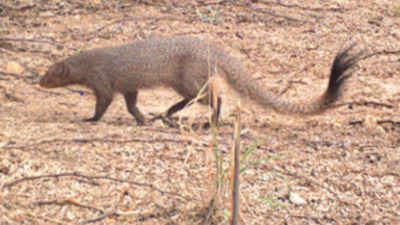
Mongoose
An estimate of major carnivores, ungulates and other herbivores densities was gathered for two major ecosystems — Aravalis and Shivaliks — during the exercise, the wildlife department said, adding that the survey started last year but was delayed due to the oandemic.

“Mainly Kalesar National Park and Aravali hills were covered. Currently, the data is being analysed and the WII is expected to submit the final report soon. For the survey, we had transferred Rs 40 lakh to the WII last year,” state principal chief conservator of forests (PCCF) Pankaj Goyal told TOI.
According to the state’s chief conservator of wildlife, ML Rajvanshi, the wildlife census included both herbivorous and carnivorous species. “Birds’ census, however, was not included in the survey. We are waiting for the final report from WII.”
The survey was carried out in all protected areas, national parks, sanctuaries as well as the areas outside of the protected areas in Aravallis and Shivaliks. “It focused on the areas where wildlife is dense so that we can prepare a management plan accordingly,” Rajvanshi added. The survey also aims to map the land-cover pattern in the Aravallis with reference to the status of key wildlife species in the region.
A camera-trap survey method, officials said, was used to conduct the census as it helps to obtain accurate figures. In 2017, the WII had last published a wildlife survey report in which it had categorically pointed out that the Aravali belt is a rich leopard habitat. It also stated that the Aravalis in southern Haryana have 166 jackals, in addition to 31 leopards, 26 jungle cats, 91 porcupines, 50 mongoose, 126 hyenas, three wolves, four foxes and 61 civets. Before 2017, a wildlife survey was conducted in the state in 2012.
End of Article
FOLLOW US ON SOCIAL MEDIA







Hot Picks
TOP TRENDING
Trending Stories
In City
Entire Website
- The Secret Behind NFL Marriages: How These Couples Make It Work
- UPI transaction limit to change from September 16! Here are the new limits for various UPI payments
- When Laura Loomer said she's single because she's too focused on Donald Trump
- South Delhi shooting: Sleuths see killing as a message to big businessmen
- Top 10 sports stars turned power couples: From Agassi-Graf to Conner-Comaneci
- 3 Zodiac Signs Most Likely to Become Multimillionaires
- Narayana Murthy faces backlash for parenting remarks on social media; users say, "after working 72 hours a week, there’s barely time left to have babies…”
- 'Would not fit in ... ': Princess Diana's brother warned Prince Harry about marrying Meghan Markle
- The 3 Strongest Zodiac Signs: Powerhouses of the Zodiac Wheel
- Dark Side Of Each Zodiac Sign
- 'Message for Modiji': Opposition takes jab at BJP over Nitin Gadkari's 'PM post' claim
- Kejriwal says he will resign in 48 hrs: Does this mean early polls in Delhi?
- Why it is so easy to quench ‘sadiyon ki pyas’ in dry Bihar
- 'He never listened ...': Anna Hazare reacts to Kejriwal's 'will quit' decision
- Taylor Swift's endorsement fails to move needle for Kamala Harris: Survey
- Kohli at his destructive best, shatters Chepauk wall with six
- Will Germany’s suspension of Schengen entry end the Europe dream?
- Melinda Gates reveals the 'best part' of not working with ex-husband Bill Gates
- 'Even Britishers didn't expect ruler more cruel in India': Kejriwal attacks BJP govt
- 'PR stunt ... gimmick': How BJP, Cong reacted to Kejriwal's shock announcement

Popular Categories
Hot on the Web
Top Trends
Trending Topics
World Largest HorseEID WishesOnam WishesPriyanka Chopra TattooKottukkaali OTT ReleaseEngineers Day WishesGoat CollectionHair LossSudha MurtyMalayalam ProducersIndia's Best Dancer 4Simi GarewalDilli BabuIndian National ParksLaung BenefitsVikas SethiApple iPhone 16Donald TrumpAadhar Card UpdateWordle Answer
Living and entertainment
Latest News
PM Modi's Sunday roadshow in Jamshedpur cancelled due to heavy rain4 types of tea to improve gut health and ease digestive issuesFour Zodiac Signs That Are Hard to Control'Message for Modi': Opposition takes jab at BJP over Nitin Gadkari's 'PM post' claimNetflix denies filmmaker Soham Shah’s plagiarism allegations over Squid Games, says claim holds 'no merit''Virat bhaiya's passion and dedication for the game is...': Sarfaraz KhanFather rapes and murders 8-year-old daughter in Madhya Pradesh, throws body in wellWeekly Career Horoscope, September 15 to September 21, 2024: Read your weekly astrological work predictions for all zodiac signsZodiac Signs That Crave a Luxurious Lifestyle"Miami Dolphins Owner Stephen Ross Eyes Multi-Billion Dollar Deal: The $7 Billion Power Play"Rajkummar Rao hails Kareena Kapoor Khan's The Buckingham Murders as a 'gripping thriller'MoS Finance likely to be convenor of GoM on GST compensation cessRole Rewind: Did you know Ranveer Singh and Deepika Padukone's love story has a strong Kareena Kapoor Khan connection?Coin Master free spins and coins for 15 September, 2024: Earn 7 million coins using today’s linksHow to set up partner sharing in Google PhotosIndia, Pakistan players involved in heated exchange during Asian Champions Trophy. WatchNoida authority fraud: 2 arrested in Rs 3.9 crore scam linked to fake bank accountsGovinda’s wife Sunita Ahuja talks about losing their premature daughter at three months: ‘That’s why I brought up Yash in a cocoon’
Copyright © 2024 Bennett, Coleman & Co. Ltd. All rights reserved. For reprint rights: Times Syndication Service