
- News
- City News
- gurgaon News
- At Huda City Centre station, murals breathe life into metro commute
Trending
This story is from November 27, 2019
At Huda City Centre station, murals breathe life into metro commute
Metro rides can get rather mundane with their clockwork operations, homogenous architecture and sanitised stations. When the metro stops at Huda City Centre, the city’s last and busiest metro station, a blast of colours jolts you out of your stupor.
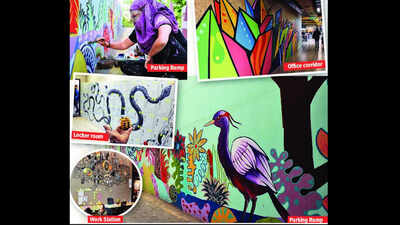
Metro rides can get rather mundane with their clockwork operations, homogenous architecture and sanitised stations.
Muted tropical colours inspired by a 70s New York-based pop artist. A game of snake and ladder painted on lockers.

Uniformity of theme was never the idea. In fact, most of the artwork was by trial and error. “There was no general theme, no big-picture idea we had to stick to. We experimented with ideas and styles. We have to realise – art is subjective. Half the people like what they see, the other half may not,” says Anutosh Kanoria, an architect and interior collaborator for TheCircle.Work.
Since April, TheCircle.Work, a co-working platform, Delhi Street Art and Shriram School students have been at work, patiently transforming dull anodyne spaces into art exhibits. “More than 65 companies operate in the co-working space. That kind of diversity had to be reflected in the graffiti. The art just couldn’t be confined to a single theme,” says Yogesh Saini from Delhi Street Art.
For a while now, Gurgaon has been opening up its public spaces like Sohna Road and mini secretariat – for graffiti. What this does, Kanoria says, is create a sense of community. The spaces people live in and frequent turn into spaces of self-expression.
“Graffiti and co-working spaces have that in common – a sense of community and bonding. For instance, for the metro station ramp, we worked with children from local schools. A lot of these kids come in to shop or eat at the complex. When they see their own work on the wall, it is an extension of the community feeling. They take pride in their work. This sense of belonging is important,” he adds.
End of Article
FOLLOW US ON SOCIAL MEDIA




Photostories

Hot Picks
TOP TRENDING
Popular Categories
Hot on the Web
Top Trends
Israel Hezbollah WarIndia Qualifying ScenarioBaba Siddique NewsPakistan Cricket TeamRussell WilsonsBahraich ViolenceRahul DravidBabar AzamGen AI Shift ImpactsLawrence BishnoiAmazon LayoffsPM Internship SchemeSSC GD Constable ExamJunior Doctor Hunger StrikeTamil Nadu Board Exam Time TableN ChandrasekaranLive Cricket Score
Trending Topics
Diwali WishesNara RohithBaba SiddiqueShraddha KapoorVettaiyan CollectionVettaiyan ReviewNatasa StankovicDevara CollectionBigg Boss 18Deepika PadukoneShraddha KapoorRatan Tata Passed AwayJigra Movie ReviewVettaiyan Movie ReviewSwatantrya Veer SavarkarDussehra 2024Star Health Hacker DemandedViral MemesUltimate Football Codes October 2024Wordle Answer
Living and entertainment
Latest News
UPSC Releases EPFO 2024 Interview Schedule: Dates from November 4 to December 6Infosys to no longer send job offer letters and attachments, the company will ...30 detained, internet shutdown after massive violence erupts in UP's BahraichKrushna Abhishek shares a heartwarming post for mama Govinda; says 'jab body mein adha blood supremely talented actor Govinda ka ho...'Papankusha Ekadashi 2024: Date, Parana Time, Puja Rituals and SignificanceNorth Korea preparing to demolish inter-Korean roads, claims South KoreaAI’S OppenheimerRajveer Singh’s inspiring transformation on completing a decade in the TV Industry, says 'My passion for becoming an actor fueled my determination'RG Kar issue: Junior doctors' hunger strike enters 10th day, another protesting medic hospitalisedPolice arrest 35 Pakistan Tehreek-e-Insaf activists ahead of protestFormer Pakistan PM Imran Khan's sisters shifted to Jhelum jail on judicial remand'I truly believe ... ': What police said after third assassination attempt on Donald TrumpWorld Bank says 26 poorest nations in worst financial shape since 2006Dhanush's UNSEEN video from the 'Vettaiyan' FDFS grabs major eyeballsBaba Siddique murder case: Slum dispute that sparked ED inquest to be part of probeFor 20 years, Thar getting more rain than normalLucknowites learned the meditative art of nurturing a bonsaiPisces, Daily Horoscope Today, October 14, 2024: Relationships may be strained
Copyright © 2024 Bennett, Coleman & Co. Ltd. All rights reserved. For reprint rights: Times Syndication Service