
Trending
This story is from October 17, 2018
Maritime terrorism a global menace: Admiral Sunil Lanba
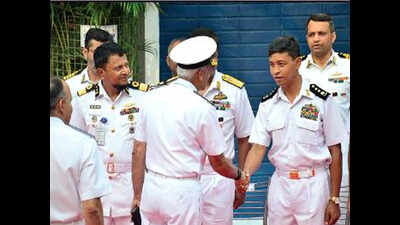
Bangladesh, Indonesia, Kenya, Maldives, Mauritius, Myanmar, Sri Lanka and Thailand are participating in the Goa Maritime Symposium being held at the Naval War College in Verem
The naval chief, who was addressing the Goa Maritime Symposium being held at the Naval War College in Verem, said that along with conventional maritime threats, unconventional and non-traditional threats were also keeping “maritime forces constantly engaged”.

“We are witnessing an increase in the use of oceans around us for harbouring and promoting terror related activities,” Lanba said. “Maritime terrorism is today not just a national or even regional security menace. It is a global security challenge.”
The Indian Navy has accorded a high degree of priority to maritime engagement with countries in the India Ocean Region (IOR). The Goa Maritime Symposium is one such attempt to bring navies of neighbouring countries on a common platform. Eight countries of the Indian Ocean Region (IOR) Bangladesh, Indonesia, Kenya, Maldives, Mauritius, Myanmar, Sri Lanka and Thailand are participating in the symposium. China, however, remains excluded.
The growing presence of the Chinese People’s Liberation Army Navy in the Indian Ocean has aroused concerns in India, and the Indian Navy remains on constant alert to track the forays of Chinese warships and submarines. China is trying to flex its muscles as it looks to increase its influence in the Indian Ocean region.
“We are passing through a challenging period in global politics. This is because of the increasing flux and friction deeply seeded in competing, and sometimes, conflicting interests that are likely to have long-term geopolitical and geo-strategic impact,” Lanba said, without mentioning any country. He acknowledged that China remained a key player in the IOR and that India was working with China to keep navigational routes safe.
“We are working with all like-minded nations and we are in dialogue with China also. In the larger global commons, we all work together to keep the sea lines of communication open,” Lanba said.
The naval chief also stressed on the importance of maritime security planners to “contribute towards increasing the security quotient of our national as well as regional maritime environments”.
End of Article
FOLLOW US ON SOCIAL MEDIA




Photostories

Hot Picks
TOP TRENDING
Popular Categories
Hot on the Web
Top Trends
IND vs NZ Live ScoreBengaluru Collages Bomb ThreatSteve SmithNEET PG SC HearingHarbhajan SinghShailaja PaikHaryana Election ResultUGC NET ResultIsrael Hezbollah WarNima Hospital Doctor MurderTaylor SwiftThe RockWomen's T20 World CupTop MBA Colleges of IndiaT20 WC ScheduleWomen T20 World Cup Points TableLive Cricket Score
Trending Topics
Samantha Ruth PrabhuNavratri Colours 2024Navratri Day 2 ColourTMKOC New SonuNaga ChaitanyaDevara CollectionGOAT OTT ReleaseRajinikanthDeepika PadukoneGovindaDevaraGovinda NewsDevara Movie ReviewHealthy RaitasSwatantrya Veer SavarkarColdplay India tour 2025Maa Durga 108 NamesNavratri JewellerySony Bravia 55 inch 4k Ultra HD TVWordle Answer
Living and entertainment
Latest News
Kolkata’s Ganga ghats transform into a hub of rituals with the arrival of DurgaNavratri Will Be Luckiest for These Signs5 corporate employees share their workplace horror storiesStart construction on 12th October this Navaratri and you will say WOW!Neelam Kothari speaks out against ageism says 'aunties' label is uncoolJr NTR-Hrithik Roshan dance-off in 'War 2' set to be shot during THIS timeYouTube Shorts extends duration to 3 minutesWill join NCP (SP) with supporters, says BJP leader Harshvardhan Patil'Was screaming, hitting him': 5-year-old Florida boy suffers cardiac arrest on Disney rollercoaster ride'We spoke about it and ...': What Trump said on wife Melania backing abortion rights in new memoirTDP welcomes SC's ruling on SIT to probe Tirupati laddu adulterationJannik Sinner not 'comfortable' as doping case clouds Shanghai campaignKolkata shoppers flood markets ahead of Durga Puja weekend rushCongress leader urges West Bengal governor to act against politicians for polarizing votersTwo Indian-Americans among 15 selected for prestigious 2024-2025 White House fellowshipWWE Throwback: Shawn Michaels retires with a heartfelt speech after losing the “Career vs Streak” matchSupreme Court dismisses pleas seeking review of sub-classifications in SC reservation judgmentCoin Master free spins and coins for 4 October, 2024: Earn million of coins using today’s link
Copyright © 2024 Bennett, Coleman & Co. Ltd. All rights reserved. For reprint rights: Times Syndication Service