
- News
- City News
- delhi News
- No more silence: Women speak up about 'natal' family violence
Trending
This story is from March 20, 2023
No more silence: Women speak up about 'natal' family violence
Raeesa was just 13 years old when her father wanted to marry her off. Her refusal infuriated him so much that he along with her brother shut her in her room and used her dupatta (headscarf) to tie her hands and then beat her up at their west Delhi home.
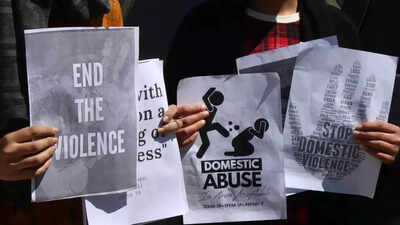
Image used for representative purpose only
Her's is one of 20 voices of women captured in a new study that brings into focus the worrisome issue of "natal family violence" by birth family members like father, mother and siblings.

The report 'Unkahi-The Unspoken' shares the suffering through detailed intervIews of women - between 18 to 27 years - who reached out to Shakti Shalini that works with women survivors of violence and operates a shelter in Delhi to provide a safe space for those in distress.
In the study, one finds the case of Shanno from a colony in southwest Delhi. She left home when she was 23. She was raped, and abused physically and emotionally by her mother's male cousin. Even as she tolds her mother about it the cousin never stopped the assaults and instead condoned it. Her uncle raped her for three years, in her own home and when she finally put her foot down she was beaten badly, her books were thrown in a drain, and her clothes burned.
While the world focussed on the rise in domestic violence at the hands of husbands, intimate partners and the marital family at the peak of the pandemic, it is shared in the report that on Shakti Shalini's helpline and at the women's shelter home in Delhi in that period an unexpectedly large number of single women had reached out after facing violence at the hands of their birth family or natal kin - parents, siblings, uncles, and so on.
Data show that between March 2020 to March 2021, while 29 women reached out to Shakti Shalini from Delhi NCR and some from even other states for help in matters related to marital family violence, there are 37 women who sought assistance to escape natal family violence. Data prior to that shows that between April 2019 to March 2020, 26 women complained of natal family violence and 19 were survivors of domestic violence. The trend continued in 2021 as women continued to open up their suffering in their natal homes.
As many as 15 out of 20 women who were part of the qualitative study faced physical and verbal violence that included being slapped. The study also draws attention to the fact that the perpetrators of violence were - in equal measure - both male and female family members. A majority of these women belong to the working class and lower middle class.
It is explained that among the women who were interviewed, violence connotes a wide range of abusive and coercive behaviours by their natal family. "Some were more physically abusive than others. Emotional abuse and psychological trauma is reported by all. Economic control emerges as yet another way to establish power and control over the daughter/sister," it is stated in the report.
That women with disability face worse comes through in Karishma's case study. She left home when she was 23. A resident of Ghaziabad, she was born with a short leg syndrome (one leg shorter than the other) and her family considered her to be a burden all along. "I finally left home after my father had hit me a lot because I intervened in an argument between my brother and sister. My father hit me against the wall, the bed, and the almirah. If my sister had not held his hands, he would have killed me that day," she is quoted in the study.
Shakti Shalini makes a strong case for carrying out research on natal family violence, sensitisation in schools and colleges and exclusive spaces in communities to talk about natal violence. Asserting that there is need for campaigns to build young women's awareness regarding their right to choose and laws on property, Shakti Shalini also highlights the urgent need for creating more sustainable shelter homes for (cis and genderqueer) women survivors of violence.
(All names have been changed for securing the identity of women)
End of Article
FOLLOW US ON SOCIAL MEDIA




Hot Picks
TOP TRENDING
Trending Stories
In City
Entire Website
- 'We were treated like slaves, made to work for 15 hours a day': Tricked into Ukraine war, 3 from Karnataka return home
- 'My father was on the flight': Jaishankar opens up about 1984 Air India hijack
- Airtel CEO Gopal Vittal sends letter to Reliance Jio, Vodafone-Idea, Tata Tele and BSNL CEOs; here's what he said
- Prince Harry to celebrate 40th birthday away from Meghan Markle
- Haitian immigrant pet-eating row: Ohio woman accused of eating cat is US citizen, video is not from Springfield
- Kejriwal out of jail; 'CBI arrest only to frustrate ED case bail': SC judge
- Donald Trump reveals what Laura Loomer is to his campaign: 'I don't control her'
- Hamster Kombat Daily Cipher Codes and Combo Cards for September 14, 2024: Unlock up to 1 million coins
- Laura Loomer's photo with Donald Trump viral. People ask where's Melania, where's wedding ring
- Garena Free Fire MAX redeem codes for September 13: Win in-game goodies and rewards
- 'Came to meet as your didi': Mamata on 'last attempt' to resolve doctors crisis
- Fugitive Zakir Naik misleads Muslims on Waqf bill. Minister hits back
- Did doctors make a mistake in making Mamata wait for two hours?
- 'Water reached tomb of Shahjahan': After heavy rain, leakage at Taj Mahal
- ACT Hockey: India hold nerves to beat Pakistan 2-1 in a thriller
- Diljit Dosanjh cryptically reacts to sarcastic video on his expensive concert tickets
- How Yechury went from Indira’s tormentor to Rahul’s mentor
- Noida woman loses Rs 27 lakh in SIM card 'hacking': Big mistake she made
- 'Gyanvapi not mosque, but Vishwanath himself': UP CM Yogi Adityanath
- FIR filed over fireworks outside Arvind Kejriwal's residence

Popular Categories
Hot on the Web
Top Trends
Trending Topics
Korean TeaSector 36 ReviewGreen Apple BenefitsPriyanka Chopra TattooKottukkaali OTT ReleaseNational Parks In IndiaGhaziabad Juice SellerGOAT CollectionSudha MurtyMalayalam ProducersIndia's Best Dancer 4Simi GarewalDilli BabuIndian National ParksLaung BenefitsVikas SethiApple iPhone 16Donald TrumpAadhar Card Update By Sept 14Wordle Answer
Living and entertainment
Latest News
Kaun Banega Crorepati 16: Can you guess the answer for this Rs 3,20,000 question on Navy, which contestant Naman Jain incorrectly answered?Hindus take to Bangladesh streets to stop attacks and demand justiceEdible oil import duty hiked by 20%'Calling all Swifties for Trump': Donald's new campaign merch imitates Eras Tour shirtsWWE Hall of Famer Watches 15 Hours Of Wrestling Each WeekDallas Cowboys Set to Defend AT&T Stadium in Week 2 Clash with New Orleans SaintsTovino on training for Kalaripayattu in ‘ARM’: I practiced every single day, even if I had a hectic day on set8 animals that reproduce without matingDelhi Police Files FIR for Firecracker Celebration Outside CM Kejriwal's ResidenceThrowback: When Alia Bhatt responded to insecurity questions about Ranbir Kapoor, shut down gossipIndia's T20I captain Suryakumar Yadav turns 34: A glimpse into his stellar T20 career'Forgive me, I don't belong ...' : Tamil Nadu hotelier's apology to FM Nirmala Sitharaman over GST remark triggers political rowRakul Preet Singh reveals Bollywood stylists charge from Rs 15000 to Rs 1 lakh for one event, one outfit: 'Living in Mumbai requires a lot of PR'September 14, 2024: Flying creatures and how their wings workThrashed for 'molesting' kid on train, rail staffer diesKejriwal walks out of jail, says morale is up by 100 timesDhruv Kapila's health setback shatters Indian pair's Vietnam Open semifinal hopesFormer Titans Cheerleader Danielle Sekelsky Begins WWE NXT Training
Copyright © 2024 Bennett, Coleman & Co. Ltd. All rights reserved. For reprint rights: Times Syndication Service