
- News
- City News
- chennai News
- Chennai: Upskilled nannies ready for urban babies
Trending
This story is from March 16, 2022
Chennai: Upskilled nannies ready for urban babies
When her daughter was born 12 years ago, K Dhayanidhi spent all her time taking care of her. And now, she hopes to use the expertise she has to be a professional carer for new mothers and babies.“I love children and know how to take care of babies.
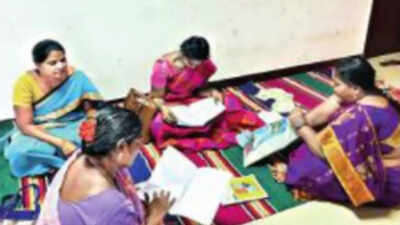
Bengaluru-based Urban Nanny and Chennai-based Sethu Foundation trained 15 women and gave them certifications
“I love children and know how to take care of babies. And, after doing a course, I am confident of being a nanny,” says Dhayanidhi, who is one of 15 women who have been trained by Bengaluru-based Urban Nanny and Chennai-based Sethu Foundation.
“We work with about 1,100 underprivileged women and upgrade their skills so that they can be financially independent,” says Sethu Lakshmi, managing director, Sethu Foundation, adding that they have trained women in telemarketing, data entry and to manufacture areca nut plates. “Due to the pandemic many couples couldn’t get their parents to come and live with them, so there has been a huge demand for trained people who can take care of new mothers and infants.”
So the Foundation teamed up with Urban Nanny, co-founded by Ganga Raj, Suma Ajith and Anjali Raj. “We are trying to create a skilled and trained workforce of women who have a limited educational background or come from societies where they are not able to earn a livelihood,” says Ganga. “We teach them mother and baby care – how to take care of C-section sutures or perineum care, how to do postnatal therapeutic massage, how to swaddle and burp baby, as well as give the baby a massage and bath. We also teach them hygiene and infection control and how to identify developmental milestones.”
The training is for 14 days and massage therapy is another 14-day course. “We have come up with the curriculum as Suma is an audiologist, and speech pathologist who specialises child developmental milestones; Anjali is a lactation consultant, and childbirth educator and I am a pre and postnatal exercise specialist as well as wellness coach and doula,” says Ganga
While they have held training programmes in Thiruvananthapuram, Kochi and Bengaluru, this is the first batch of women they have trained in Chennai.
“They are aged 20 to 44, and are willing to do 12 hour shifts. We are tying up with hospitals so that gynaecologists can refer them to prospective clients,” says Sethu Lakshmi, adding that people often opt for three to six month packages, depending on the kind of support system they have.
“We also plan to conduct training programmes in elderly care, as well as housekeeping as there is a demand for it,” says Janaki Kannan, director, Sethu Foundation.
Dhayanidhi is hoping she finds a placement soon. “I would prefer a day shift so that I can earn a living and also take care of my family,” she says.
Stay updated with the latest news on Times of India. Don't miss daily games like Crossword, Sudoku, and Mini Crossword.
End of Article
FOLLOW US ON SOCIAL MEDIA










Photostories

Hot Picks
TOP TRENDING
Explore Every Corner
Across The Globe
Unitedhealth Group CEOHow to Watch IND vs AUS MatchGRAPCreative HobbiesBrain Exercises to improve memory
CBSE Date SheetPushpa 2 Live UpdatesMaharashtra CM Oath CeremonyBorder Gavaskar TrophyAPSC CCE Final Result
Popular Categories
Hot on the Web
Top Trends
Trending Topics
Mamta KulkerniPushpa 2 ReviewVikrant MasseyAmitabh BachchanWeight GainBaba Vanga PredictionsAmitabh Bachchan HomePushpa 2 Movie ReviewPushpa 2 LeakedOptical illusionSamantha HouseBaba Vanga Predictions 2025Hair RegrowSkincare Tips for WinterWeight Loss TipsHair FallBill GatesSpotify Wrapped 2024Elon Musk
Living and entertainment
Latest News
Devendra Fadnavis begins third term as Maharashtra CM by approving assistance for bone marrow transplant patientCyber financial frauds caused Rs 1,100crore losses in Tamil Nadu: Minister Palanivel Thiaga RajanStar Caste, Movie FlopsNaga Chaitanya shows Sobhita Dhulipala the Arundhati Nakshatra during marriage for strong bond - See photoPorridge included in new junk food ad ban; why it is unhealthy for youCricket meets Bollywood: Sachin Tendulkar, Shah Rukh Khan mingle at Maharashtra CM oath ceremony. WatchRatan Tata’s trusted manager Shantanu Naidu's LinkedIn post has an invitation: Come ...Key leaders behind Google’s NotebookLM, which CEO Sundar Pichai called “an incredibly popular product”, are leavingExclusive- Hunar Hale on her track as Devika Basu wrapping up in Deewani: It was my most beloved character, ending was quite a high pointTravel time of Bengaluru-Chennai Vande Bharat, Shatabdi Express trains set to be reducedNot Shreya Ghoshal or Sunidhi Chauhan, Tulsi Kumar is India's richest female singer with net worth of Rs 210 crore - DEETS insideWhy Taurus Falls for the Slow Burn RomanceTwo Sides of Gemini: Embracing Their Inner DualityIndia, China reflect on 2020 Ladakh standoff lessons, prepare for next round of talksICC Champions Trophy standoff: PCB puts the ball back in BCCI courtViral: South Korean opposition leader climbs fence to enter the Parliament'Dangerous & objectionable': Owaisi's jab at CM Yogi's 'DNA remark' linking Sambhal to BangladeshHow Taylor Swift’s Spotify Dominance Reflects Her Influence On Travis Kelce and The NFL
Copyright © 2024 Bennett, Coleman & Co. Ltd. All rights reserved. For reprint rights: Times Syndication Service