
- News
- City News
- chennai News
- In the law of the land, water loses
Trending
This story is from May 5, 2023
In the law of the land, water loses
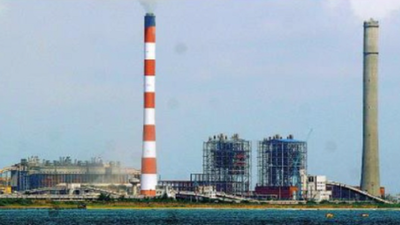
More than 1300 acres of wetlands acquired; Ennore Creek has been impacted by a thermal power plant

This bill failed to evoke a public debate it should have sparked. But now, a couple of weeks later, feeble voices of opposition have emerged from environmentalists and farmers who caution that in the long run, it will result in the degradation of water bodies. With political parties including the PMK, NTK as well as left parties joining in the voice of opposition to the act appears to be growing louder.
The stated intention of the bill is to protect water channels, which over years change course and run through private land.
But this bill offers scope for the acquisition of land for special projects even if there are water bodies located there. Environmentalists raise concern over the possibility of the management of such water bodies being transferred to companies which acquire the land. “This is privatisation of water bodies,” says advocate M Vetriselvan, an environmentalist from Poovulagin Nanbargal NGO, which is at the forefront against the act.
“We have seen what happened to water bodies in Cuddalore after the Neyveli thermal power plant came. Ennore Creek in north Chennai has been destroyed. Pulicat Lake is now dead. Water bodies will face a similar fate if land surrounding them is ceded to industries. ”
Tabling the bill in the assembly, state revenue minister K K S S R Ramachandran, says it intends to streamline the process of consolidation of government lands for large projects and to protect such water bodies. “There are statutes which vest government land with local bodies. This multiplicity of executive instructions and references to land in multiple laws lead to delay and uncertainty in consolidation of lands,” he says. The bill states that project proponents requiring more than 100 hectares of land can submit applications to the government seeking consolidation of the required land. The government can notify them as special projects and forward them to district collectors. Expert committees will be constituted to publish the plan and conduct public hearings. Collectors then send a report with the views received to the government, for the project to be ‘approved’ or ‘approved with conditions’. The bone of contention in the act is the provision to acquire land for the special project even if water bodies flow through it.
“They say the bill is to protect water bodies. But they don’t talk about ways to safeguard hydrological pathways, waterways and streams in the acquired land. If these hydrological pathways are encroached the water bodies will die. Every water body should have an inlet and outlet and if that’s not protected, all water bodies will die,’’ says Professor S Janakarajan, president of the South Asia consortium for interdisciplinary water resources studies.
Retired bureaucrat Shantha Sheela Nair says it was worrying that the bill was silent on several issues including the Town and Country Planning Act, various agricultural acts and the role of the Tamil Nadu p ollution control board(TNPCB) in the land consolidation process. “Why is TNPCB not part of it when pollution is a major issue for any industrial project near a water body?’’ she says.
Retired Madras high court judge Justice R Chandru says the bill is a direct response to litigations about environmental law violations. “Courts are coming down on the government for encroachment of water bodies so the government has come up with a solution to favour multinational projects,” he says. Farmers too have opposed the bill. “The government has tabled it without consulting farmers. It should be withdrawn,’’ says Swamimalai Vimalanathan, secretary of the Tamil Nadu Cauvery farmers protection association, Thanjavur.
Kurian Joseph, director of the Centre for climate change and disaster management at Anna University, though says the intent appears fine. “The bill lists out the screening of the project at the government level and detailed evaluation including public hearings by multidisciplinary expert committees as part of the process. The expert committee should do the assessment fairly. That’s the major concern. ”An official from the water resources department, custodians of TN water bodies says it was not made party to the bill. “Only our superintendent engineer is part of the expert committee. Left to us, we will ensure water bodies are safeguarded,” says the official. Revenue department officials did not respond.
End of Article
FOLLOW US ON SOCIAL MEDIA










Photostories

Hot Picks
TOP TRENDING
Popular Categories
Hot on the Web
Top Trends
Rishabh PantTravis KelcesHulk HoganBengaluru Collages Bomb ThreatNEET PG SC HearingMohammad KaifShailaja PaikHaryana Election ResultUGC NET ResultNima Hospital Doctor MurderTaylor SwiftThe RockWomen's T20 World CupTop MBA Colleges of IndiaT20 WC ScheduleWomen T20 World Cup Points TableLive Cricket Score
Trending Topics
Samantha Ruth PrabhuNavratri Colours 2024Navratri Day 2 ColourTMKOC New SonuNaga ChaitanyaDevara CollectionGOAT OTT ReleaseRajinikanthDeepika PadukoneGovindaDevaraGovinda NewsDevara Movie ReviewHealthy RaitasSwatantrya Veer SavarkarColdplay India tour 2025Maa Durga 108 NamesNavratri JewellerySony Bravia 55 inch 4k Ultra HD TVWordle Answer
Living and entertainment
Latest News
Trump promotes fake JPMorgan endorsement, then denies involvement: 'I don't know'ISL: Borja’s left foot to Goa’s rescuePer capita income to nearly double in 5 years: Finance minister SitharamanManju Pavagada gets engaged in a close affair; pictures go viral on social mediaCommunity Connect: Hungry for connectionInsider Claims Nick Sirianni Plays 'Madden' with Eagles, While AJ Brown Is Celebrated as Jalen Hurts' SaviorNFL has denied the 49ers appeal of changing their red home jerseys to white amid heatwave hitting the Santa Clara areaMysuru all set for a glittering DasaraTechnological advancements have revolutionized cancer treatment, say doctorsBigg Boss 18: Salman Khan begins shooting for the new season; First look from the sets revealedDrought has dried major Amazon river tributary to its lowest level in over 122 yearsSalman Khan's old dubsmash clip with Sonakshi Sinha cracks up the internet; fans say 'Bollywood used to be so much fun'It’s More Than Just About Tirupati Laddoos"First murder of 2024": The Instagram post that helped Delhi Police crack Unani doctor's murderRBI: Banks should bring similar business under one entityCitadel: Diana star Matilda De Angelis calls Priyanka Chopra a ‘badass’ and ‘incredibly good’: ‘I wanted to be at her level’Exclusive - Omung Kumar on Bigg Boss 18 house: My inspiration came from staying in cave hotels abroad, especially in Turkey, but this set reflects our India, with its carvings, sculpturesMallika Sherawat recalls being harassed by hero of 'superhit multi-starrer' in viral video: 'He used to knock on my door at 12 am'
Copyright © 2024 Bennett, Coleman & Co. Ltd. All rights reserved. For reprint rights: Times Syndication Service