
- News
- City News
- chandigarh News
- World Environment Day: Is this the right time to adopt One Earth-One Planet as social movement?
Trending
This story is from June 5, 2022
World Environment Day: Is this the right time to adopt One Earth-One Planet as social movement?
World Environment Day on 5 June is the biggest international day for the environment. Led by the United Nations Environment Programme (UNEP) and held annually since 1973.
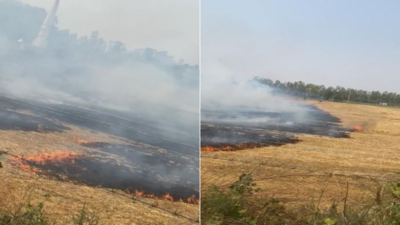
World Environment Day on 5 June is the biggest international day for the environment. Led by the United Nations Environment Programme (UNEP) and held annually since 1973. We came to Stockholm 50 years after the UN Conference on the Human Environment knowing that something must change. Knowing that if we do not change, the triple planetary crisis of climate change, nature and biodiversity loss, and pollution and waste will only accelerate.

Only One Earth” was the slogan for the 1972 Stockholm Conference; 50 years on, this truth still holds – this planet is our only home. Only One Earth advocates for transformative environmental change on a global scale. The campaign shines a spotlight on climate action, nature action and pollution action while encouraging everyone, everywhere to live sustainably.
We have 7.8 billion people on earth and During the next century another 7 billion people could be added before the size of the human family stabilises at somewhere between 8 and 13 billion people. Thus we and our children must plan to squeeze perhaps two new human worlds into only one Earth. We must plan to support them with the same ecosystems from which we today draw our food, fish, energy, wood products, minerals and other materials.
But these systems are already under tremendous pressure as We are losing 7.3 million hectares of forest every year, Around 5.2 trillion plastic particles are floating in the oceans around the world, Nearly 7 million people die because of poor air quality every year, About 21.5 million people have been forced to relocate because of ill-effects of climate change in the past 12 years.so, Human overpopulation makes humans an invasive species. We take over habitat of other animals and of plants. We cause the extinctions of animals and plants. We have so much waste that we are polluting the earth’s waterways, oceans, land and atmosphere.
When we use man-made assets, such as equipment and buildings, we write off the use as depreciation. But we forget to evaluate our environment as productive capital, even though we use it as such. When we clear forest, overharvest fisheries, overwork cropland until the soil erodes, and use our skies as free rubbish bins and our rivers as sewers, we can actually show an increase in our national incomes as measured in Gross National Product. But such strategies are short-sighted and such gains short-lived. We must place true value on the environment and go beyond Gross Domestic Product (GDP) as a measure of human progress and well-being. GDP is not a way to measure richness in the present situation in the world. Instead, we must shift to a circular and regenerative economy.
Reducing food waste is critical to maximizing the value of agricultural land and ensuring that natural resources are used in a sustainable way. This is possible only when food waste can be controlled at retail and consumer level.
The outcome of the unsustainable living is right Infront of us in terms of climate change. The crisis for our environment and climate affects people all around the world. The developed countries are the ones who pollute and have polluted the most. But the poorest are hit the hardest. We must ensure that no country is left behind. And we must ensure that no person is left behind. The interdependence of the global common i.e atmosphere and oceans can be understood from the fact that the melting of glacier in the north pole has direct impact on the small coastal island countries due to rising sea levels. The climate transition can only be done if it’s made in a social and inclusive way. This is not just an option. This is our moral obligation.
For India the idea of one earth represent a paradigm whereby the sustainability of the resources and its proper usage for tackling poverty and inequality is essential. But the erratic nature of monsoon due to climate change has impacted the water and soil moisture availability in the arid and semi-arid areas.
These areas are also coincides with the high dependency on agriculture and forestry resources. But the stressful extraction of these resources has impacted the carrying capacity of the mother earth where the replenishment is not happening and a huge tracts of land is becoming desert prone. Rajasthan’s NGO Gram Chetna Kendra is Adapting a Social Way to promote sustainable living in harmony with nature. Keeping in view the recurring damages that droughts have caused in Rajasthan, the Gram Chetna Kendra has taken up the responsibility of providing solutions to the water problems. To address water scarcity in some of the rural areas of Rajasthan, many tanks and pools have been built for rainwater harvesting, thus ensuring the availability of drinking water throughout the year. The organization sensitizes rural people and are made aware of the problems at hand and their potential solutions too.
To promote sanitation and a cleaner environment, they have also constructed public toilets at different locations. So Rejuvenation of village lakes, tanks, rainwater harvesting, tree plantation on available land, ensuring responsible and sustainable food consumption are some of the moral obligation and inclusive way to protect the environment. The primary purpose of promoting sustainable consumption and waste management is to provide resources for the vulnerable and ostracised sections of the society specially low income state of India.AS every living creature on scare resources areas depends on nature for sustenance, environmental protection has become more important than ever before. It is not simply about food, clothes or shelter anymore – it is much beyond that. We are depleting natural resources faster than nature can replenish them.
COVID has also provided a classical example of Only one earth. This is a reflection how the humanity at large is dependent on a fine balance between the human being and the environment. Even a minor disruption may cause havoc. At the same time Digitalization has the potential to help transform society and business models and it is a critical tool to help build a healthier, safer, cleaner and more equitable future. There is a need to mitigate negative digitalization impact impacts include greenhouse gas emissions, metals and e-waste, misinformation, and the gap between those who have access to digital technology and those who do not.
To tackle such situations proper understanding of the dependency of human race both in tangible and intangible form has to be analysed and put to scientific scrutiny. The locally available smart solution has to be initiated to promote climate change adaptation and mitigation at the same time Building resilient Indian communities through nature-based solutions, communities come forward to save global and regional biodiversity, Restoration of degradation land and coastline, controlling air pollution, mitigates plastic pollution and raising awareness of hazardous aspect of digital technologies.
On community front the awareness and engagement of the community to manage the resources is essential. The traditional know-how and wisdom has to be properly utilise to understand the local solutions. The collaboration of such solution will paves the way for the integration of the world with the target of ONLY one earth.
(Writers are Indian Forest Service officers)
End of Article
FOLLOW US ON SOCIAL MEDIA





Hot Picks
TOP TRENDING
Trending Stories
In City
Entire Website
- 'We were treated like slaves, made to work for 15 hours a day': Tricked into Ukraine war, 3 from Karnataka return home
- 'My father was on the flight': Jaishankar opens up about 1984 Air India hijack
- Airtel CEO Gopal Vittal sends letter to Reliance Jio, Vodafone-Idea, Tata Tele and BSNL CEOs; here's what he said
- Prince Harry to celebrate 40th birthday away from Meghan Markle
- Haitian immigrant pet-eating row: Ohio woman accused of eating cat is US citizen, video is not from Springfield
- Kejriwal out of jail; 'CBI arrest only to frustrate ED case bail': SC judge
- Donald Trump reveals what Laura Loomer is to his campaign: 'I don't control her'
- Hamster Kombat Daily Cipher Codes and Combo Cards for September 14, 2024: Unlock up to 1 million coins
- Laura Loomer's photo with Donald Trump viral. People ask where's Melania, where's wedding ring
- Garena Free Fire MAX redeem codes for September 13: Win in-game goodies and rewards
- 'Were ready for no recording but ... ': Docs leave Mamata's home as another meet fails
- 'Nafrat ki dukaan pe ...': PM Modi attacks Congress over 'brutality' in US
- Will Germany’s suspension of Schengen entry end the Europe dream?
- Blast in central Kolkata leaves 1 person injured, area cordoned off
- 'Look at Virat Kohli': Ex-Pak captain wants Babar to...
- Trump defends 'loony' Laura Loomer amid MAGA meltdown
- Why you should not be fooled by ‘20-year SIP crorepati’ dream
- Bengaluru woman sparks controversy with comments about Swiggy delivery executive
- Prashant Kishor vows to end Bihar liquor ban within 60 mins of taking office
- 'Rohit didn't practice as hard as Sachin': Rhodes

Popular Categories
Hot on the Web
Top Trends
Trending Topics
World Largest HorseEID WishesGreen Apple BenefitsPriyanka Chopra TattooKottukkaali OTT ReleaseNarendra ModiGhaziabad Juice SellerHair LossSudha MurtyMalayalam ProducersIndia's Best Dancer 4Simi GarewalDilli BabuIndian National ParksLaung BenefitsVikas SethiApple iPhone 16Donald TrumpAadhar Card UpdateWordle Answer
Living and entertainment
Latest News
Kaun Banega Crorepati 16: Can you guess the answer for this Rs 3,20,000 question on Navy, which contestant Naman Jain incorrectly answered?Ananya Panday urges all industries to form Hema Committee': 'Clearly, no one else is doing it but women'Nine arrested on charges of assaulting a Dalit woman at Kallukunta village in Kurnool district'Calling all Swifties for Trump': Donald's new campaign merch imitates Eras Tour shirtsWWE Hall of Famer Watches 15 Hours Of Wrestling Each WeekDallas Cowboys Set to Defend AT&T Stadium in Week 2 Clash with New Orleans SaintsTovino on training for Kalaripayattu in ‘ARM’: I practiced every single day, even if I had a hectic day on set8 animals that reproduce without matingDelhi Police Files FIR for Firecracker Celebration Outside CM Kejriwal's ResidenceThrowback: When Alia Bhatt responded to insecurity questions about Ranbir Kapoor, shut down gossipIndia's T20I captain Suryakumar Yadav turns 34: A glimpse into his stellar T20 careerThe 3 Strongest Zodiac Signs: Powerhouses of the Zodiac WheelRakul Preet Singh reveals Bollywood stylists charge from Rs 15000 to Rs 1 lakh for one event, one outfit: 'Living in Mumbai requires a lot of PR'Dhruv Kapila's health setback shatters Indian pair's Vietnam Open semifinal hopesFormer Titans Cheerleader Danielle Sekelsky Begins WWE NXT Training"Birthday aapka hug aur paari I am getting...": Tahira Kashyap pens adorable b'day wish for hubby Ayushmann KhurranaRecord-Breaking Viewership for NFL’s 2024 Season KickoffAshish Vidyarthi delves into vocal artistry behind his role as Doctor Doom
Copyright © 2024 Bennett, Coleman & Co. Ltd. All rights reserved. For reprint rights: Times Syndication Service