
- News
- City News
- bengaluru News
- THEATRE OF DREAMS
Trending
This story is from October 27, 2019
THEATRE OF DREAMS
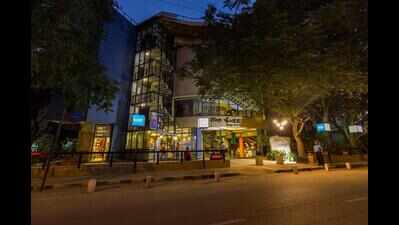

I had different problems and took time to recover. But theatre was with me through it all. While I was in the wheelchair, completely flat on my back, my theatre friends used to come home and read plays to me. And once I started walking, we decided that we would do a tribute to Shankar on his first death anniversary. Instead of performing a Shradh or any such ceremony, we decided to hold a three-day-festival with plays that he’d wanted to do but could not do: (Girish Karnad’s )Taledanda, Royal Hunt of the Sun (a play by Peter Schaffer) and Mother Courage (Bertolt Brecht). After that, we decided to continue our theatre group, Sanket, doing new plays. Sanket in that sense is actually the mother of Ranga Shankara. It is the incubator, the mother, the theatre group that kept the dream going. And in spite of being in a very bad situation, I kept on doing plays, it is what kept me going. But every time I met my theatre friends, they’d tell me, ‘Why don’t we build a theatre?’
We wanted to build a small theatre – a black box– that was affordable. Initially, my idea was to build it on a site that the government of Karnataka had awarded Shankar. But a friend of ours advised against it. He said, ‘Don’t build a theatre in a residential area. You will become a nuisance to the neighbours.’ Instead, he asked us to apply to the BDA for a civic amenities site. We applied. Ten years later, I was sitting in actor Ambareesh’s house (in JP Nagar) – I had gone there for some other work – and his friend or secretary comes and gives me the newspaper and says, ‘There is a civic amenities site right here for a drama theatre.’ That is when we formed the Sanket Trust and applied for that land for theatre.
I became the person who took on the job of paper chasing and doing the grunt work. Everyone else (in Sanket) had families to run, money to earn. I had only one daughter, and a void. Also, I was sorting a whole lot of other financial issues and was not going out to work and so this – chasing the papers – was a very joyful distraction. Then, we had to wait for four years for the government to allot the site. It was certainly not easy.
Trying to make Ranga Shankara possible gave my life a very important focus. I was a theatre person who looked at it as an opportunity of a lifetime. I mean, how many people get to do this? My friend Gayathri Krishna always says, ‘If you had not built Ranga Shankara, nobody would have missed it’. No one would have known that ‘this’ is possible. But now, having done it, they have to do more good, more good, more good!
The architecture competition that never happened
Getting to the stage of architecture also took us some time because we were all broke, all kadkas. We were all typical theatre folks: lower-middle class or middle-class people. But when it came to the building’s architecture, we wanted to hold an all-India competition of architects. We asked (architect) Sharukh Mistry to guide us on how we had to go about this competition. He told us, “I will guide you but you will have to pay those young architects some money to do the job.” We didn’t have that money! Eventually, we asked Mistry himself to be the architect. He was put in a quandary. He said, “I can’t. I will have to think about it,” before eventually agreeing to do it. What helped me was that MS Sathyu was there till the end of this phase. He took Mistry to Delhi to the IFACS theatre, to Mumbai to the St Andrews auditorium, and showed him what doesn’t work in these theatres. It helped that we were there throughout, because the building has fewer mistakes than most.
Selling stickers to make money
By the time we decided to start construction, everybody had lost interest. They had lost hope, they thought this project was never going to happen. It seemed like a pipe dream because it needed so much money. We had a design but we had one-tenth the money in our pockets. We were cooking up ways to raise money. I remember Nimi (Ravindran) selling car stickers that said ‘I support Ranga Shankara’ for Rs 10. We even set up a stall in IT.com in the (Bangalore) palace. The IT secretary gave it to us for free. We put up a model of Ranga Shankara over there, printed brochures and gave them out to people for Rs 10 each. Anyone who cared to listen– we spoke to. We managed to make Rs 4000. But there was still no money.
Knocking on the CM’s door
I kept on knocking on doors. I had applied to the government of Karnataka’s Department of Culture but there was no reply. I didn’t know what else to do, so on New Year’s morning, I decided to go and meet the CM (SM Krishna). I didn’t know him, I just called the CM’s office and said, ‘I am Arundhati, I want an appointment’. His office said, “Everyone is at home because it is New Year’s day, but he is at work, come now’. When I met the CM, I gave him my folder and told him that it had been lying with the government for the last four years. He looked at it and asked his secretary to do something about it. A week later, they gave us Rs 20 lakh. Then, they gave us an additional Rs 10 lakh. Once I received the money, I thought I’d be able to raise some more money. The building needed three-and- a half crore so I went around for a whole year asking for money, but it was recession time nobody had money, and those who had, couldn’t understand. They’d ask, “What is this theatre that she wants to build?’ So when the government called me asking for accounts for the Rs 30 lakh, I told them, “Please take the money back, I have not been able to raise any money.”
That is when the CM picked up the phone, spoke to the Jindals and said, “Please give cement to this project”. So now I had free cement and Rs 30 lakh. That's when we knew we had to take this bold decision to start constructing. Everyone said ‘start constructing and the money will come’. And that is how we started construction. We got a JCB for free and the day the JCB went into the earth, that is the day I said to myself, “Now this has to get done. Now, there is no going back, whether it takes 10 years or 20, I am going to have to complete it.”
The dreams that I had for Ranga Shankara
It was all theatre-related dreams. That people will use it, that the community will perform, that the audience will throng to this place, that it will become a nerve centre for the city, and for theatre in India. That we will all start doing better theatre, maybe, because we have a space of our own. And have I had people come and tell me if Ranga Shankara has filled a void they didn’t know existed? Yes. It has very quietly become a part of their lives. There have been so many times where I’ve asked people, ‘Modale sala barthaidira?’, and they go, ‘Madam, nimgennu gothu, naavu thingalu ondsathi barthivi’. Some of them say, ‘We come here whenever we feel depressed’. For people who live close by, it makes a difference.
Owe it to Bengaluru’s performing community and audience: Gayathri Krishna
When Ranga Shankara opened, what was exciting was that it was a fantastic new concept. It was only one of the few spaces in the city and the country with the mandate of staging one play a day. Today, looking back through all the years, as Ranga Shankara is set to turn 15, I think there are two main reasons, apart from a host of other ancillary ones, why things fell in place for Ranga Shankara. Reason one: The performing community especially in Bengaluru. Ranga Shankara has become a destination for the country’s performing community, so much so that is has become difficult to allocate dates! We are now looking at ideas to improve our programming, about how we can provide ‘something for everyone’– whether it is kids, older people, the youth, the Kannada speaking, Hindi or any other regional language. We have been able to meet the agenda this far and the hope is that we continue doing it going forth.
The second reason is our audiences who have kept the place going. Irrespective of their backgrounds, we have a good cross-section of people who come to watch the plays. What’s interesting to note is you can guess what kind of play is showing in Ranga Shankara on a given day based on the audience that has come to watch it.
Now, going back to early memories, I have one from our very first show, Maya Sitha Prasanga, in Ranga Shankara. Arundathi and I didn’t watch the show because we were so worried about it. We were worried if people would turn up, but what did you know, it was a houseful show and we didn’t have a Houseful board! We had to make one right there. Then someone told us that a Houseful board needed to have a garland around it, so we got a garland as well. Going forward, I think one thing we hope to accomplish is to make the facility sustainable for troupes who visit us from outside. They need to be able to come here to stage their plays and make enough earning over the costs entailed to put up the play. We also need to bring down more international productions.
(Gayathri Krishna is one of the earliest members of the Ranga Shankara leadership team)
Keeping the lights on: Muddanna ‘Rattihalli’ Shirahatti
I am a lighting designer and have been with Ranga Shankara for 16 years, that’s because I got the offer to work in Ranga Shankara an entire year before the place opened. Arundhati madam asked me to join because we have worked together in plays before. When I agreed to work here, I thought I would work for two or three years and leave, well, here I am, still working. I love coming to work here every day. In fact, I miss the place on Mondays when we are closed.
As a lighting designer who has worked in 100s of plays, when it came to deciding the lighting for the Ranga Shankara stage, we took great care to ensure that we have an efficient lighting arrangement in place. I work with a team of three members and supervise lighting for most of the plays. So, I think it is quite safe to say that I have watched almost all the plays that have been staged here. One of my favourite performers of all time is Naseeruddin Shah. I enjoy watching him every time he performs here. There are quite a few things about Ranga Shankara that I really like. For starters, I like our adherence to time. We have had quite a few instances where people, powerful people, have come late for a play and we have refused them entry. I think we were also one of the first places to impose the ‘mobile switched off’ rule. My dream for Ranga Shankara is that it continues to run even after madam. I don’t know who will run it then, but till the time I am here, I will take care of the place.
(Muddanna Shirahatti has been Ranga Shankara’s lighting designer for 16 years)
End of Article
FOLLOW US ON SOCIAL MEDIA










Photostories

Hot Picks
TOP TRENDING
Popular Categories
Hot on the Web
Top Trends
IND vs NZ Live ScoreBengaluru Collages Bomb ThreatSteve SmithNEET PG SC HearingMohammad KaifShailaja PaikHaryana Election ResultUGC NET ResultRishabh PantNima Hospital Doctor MurderTaylor SwiftThe RockWomen's T20 World CupTop MBA Colleges of IndiaT20 WC ScheduleWomen T20 World Cup Points TableLive Cricket Score
Trending Topics
Samantha Ruth PrabhuNavratri Colours 2024Navratri Day 2 ColourTMKOC New SonuNaga ChaitanyaDevara CollectionGOAT OTT ReleaseRajinikanthDeepika PadukoneGovindaDevaraGovinda NewsDevara Movie ReviewHealthy RaitasSwatantrya Veer SavarkarColdplay India tour 2025Maa Durga 108 NamesNavratri JewellerySony Bravia 55 inch 4k Ultra HD TVWordle Answer
Living and entertainment
Latest News
Navratri Will Be Luckiest for These SignsAny EU countries can grant asylum to Afghan women based on nationality and gender, Europe's top court rulesReport card of Rahul Gandhi's 100 days as leader of opposition courtesy CongressThe day Israel was caught off guard: How Hamas overran a key Israeli military base on October 7ISL: Borja’s left foot to Goa’s rescueNeelam Kothari speaks out against ageism says 'aunties' label is uncoolPer capita income to nearly double in 5 years: Finance minister SitharamanManju Pavagada gets engaged in a close affair; pictures go viral on social mediaCommunity Connect: Hungry for connectionInsider Claims Nick Sirianni Plays 'Madden' with Eagles, While AJ Brown Is Celebrated as Jalen Hurts' SaviorKremlin accuses Ukraine of 'playing with fire' after reported attack near Kursk nuclear plantGuns, firecrackers on display during Afghanistan star Rashid Khan's marriage. WatchZodiac Signs Most Likely to SucceedMysuru all set for a glittering Dasara'Disappointing, condemnable but not ... ': India on fugitive Zakir Naik's Pakistan visitTechnological advancements have revolutionized cancer treatment, say doctorsPakistan seals off capital, suspends internet ahead of rally by Imran Khan's supportersAmazon to increase the individual contributor to manager ratio by 15% through layoffs: How many reportees can a manager can effectively oversee?
Copyright © 2024 Bennett, Coleman & Co. Ltd. All rights reserved. For reprint rights: Times Syndication Service