
- News
- City News
- bengaluru News
- ‘Specialisation, patient choices make family docs rare’
Trending
This story is from March 29, 2022
‘Specialisation, patient choices make family docs rare’
Be it common cold, headache, allergy or even serious ailments, Indian households have always turned to the family doctor for help.However, experts say the number of family physicians is reducing of late, with patients heading to specialists.

However, experts say the number of family physicians is reducing of late, with patients heading to specialists. Members of the medical fraternity expressed the view during a recent talk at Bangalore International Centre — ‘Rescuing Health: A Call to Citizens and Doctors’.
An audience member, Dr Hema Pai, who retired as a family doctor, shared the concern.

Dr Pai said patients tend to self-diagnose their ailments through Google and decide for themselves that they need to visit a specialist. “There is no personal touch or warmth to it. With a family doctor, one can say anything under the sun,” she added.
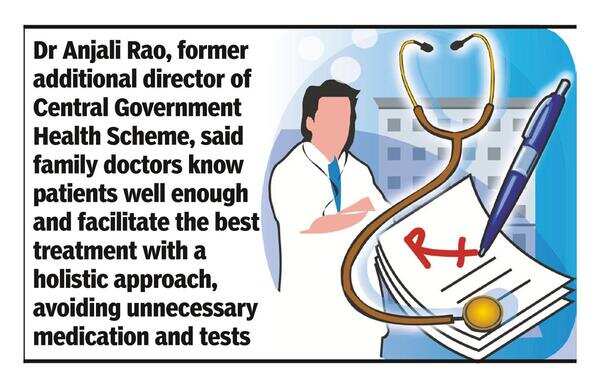
Dr Anjali Rao, former additional director of Central Government Health Scheme, told TOI family doctors know patients well enough and facilitate the best treatment, with a holistic approach, avoiding unnecessary medication and repetitive tests or scans. “To be a family doctor is also an art. There is a certain rapport and a personal touch with the doctor. These days, there are specialisation courses after MBBS like diplomate in family medicine for one to become a family doctor,” Dr Rao said, explaining how family doctors are not specialists but follow a comprehensive approach when it comes to their patients’ health. “Go to your family doctor, not directly to a specialist. Your doctor knows when to refer you to a specialist,” she advised.
Dr Rao also had suggestions to make rural postings of doctors a rewarding experience, not just for medicos but also the areas they are posted in. “Instead of sending just doctors, we must also send a team of civil engineers, electrical engineers, mechanical engineers and lawyers and economists. The DCs will handle administration and finance. This will facilitate well-rounded development of the rural area through required infrastructural growth that a doctor needs to discharge his/her duty,” she suggested.
Dr Kavery Nambisan, author and surgeon, called corporatisation of healthcare a dicey business, where profit and healing are two branches. “The government has a huge responsibility in ensuring social welfare in healthcare,” she said, adding that humanities must become a part of medical education to help doctors develop the ability to reflect and not just stick to the mechanical task of repairing bodies.
The audience also expressed concerns over violence against doctors. Dr Mario Vaz, professor of physiology, IMS Ramaiah, said citizens must take a stand for a good healthcare system, but violence is not the way.
End of Article
FOLLOW US ON SOCIAL MEDIA










Photostories

Hot Picks
TOP TRENDING
Popular Categories
Hot on the Web
Top Trends
Canadian DiplomatPAK vs NZ Live ScoreNigeria Football Team LibyaUGC NET ResultIsrael Hezbollah WarGautam GambhirBaba Siddique NewsRussell WilsonsBahraich ViolenceMicah ParsonsTamil Nadu RainAmazon LayoffsPM Internship SchemeNEET PG Counselling ScheduleTamil Nadu Board Exam Time TableN ChandrasekaranLive Cricket Score
Trending Topics
Diwali WishesAtul ParchureBaba SiddiqueShraddha KapoorVettaiyan CollectionVettaiyan ReviewNatasa StankovicDevara CollectionBigg Boss 18Deepika PadukoneShraddha KapoorRatan Tata Passed AwayJigra Movie ReviewVettaiyan Movie ReviewSwatantrya Veer SavarkarDussehra 2024Star Health Hacker DemandedViral MemesUltimate Football Codes October 2024Wordle Answer
Living and entertainment
Latest News
Zodiac Signs Who Are Easily HurtMeningitis in children: Protecting young minds through awareness and preventionFormer Maharashtra CM Uddhav Thackeray admitted to HN Reliance HospitalHappy Dev Diwali 2023: Best Wishes, Images, Status, Quotes, Messages, Facebook and WhatsApp Greetings to Share on Dev DeepawaliZodiac Signs Who Love Too HardMithun Chakraborty REVEALS he never asked anybody to give work to his kids in BollywoodWhat Are Square Aspects in Astrology?Reliance Jio reaches this milestone in less than two years of 5G launch'Trump doesn’t care about anyone but himself’: Supporters left stranded in 93°F heat after rallyBattling accomplished Ashwin, Jadeja crucial for New Zealand: Rachin RavindraIndia eliminated from Women's T20 World Cup after NZ beat Pakistan to enter semisWinners of The Times Hospitality Icons- Ludhiana 2024, 1st EditionWWE’s Samantha Irvin Sparks Outrage with National Anthem Performance at Raiders vs. Steelers Game, Raising Eyebrows Over the Blurring Lines Between Sports and EntertainmentPannun case: Indian inquiry team to reach US on Oct 15 to probe 'foiled plot'SpaceX Marks A Spot That Isro Has Its Sights OnAt ‘Fama’, all faiths seek blessings of Infant Jesus15-page letter circulating online accuses IBM China head of misconduct; here's what company said while confirming the letter'Gross misuse of power': Supreme Court on SP government's land lease to Azam Khan's trust
Copyright © 2024 Bennett, Coleman & Co. Ltd. All rights reserved. For reprint rights: Times Syndication Service