
- News
- City News
- bengaluru News
- Dance and sacred space
Trending
This story is from September 7, 2019
Dance and sacred space
City-based Bharatanatyam dancer Rukmini Vijayakumar talks about the relationship between dance and the performance space.
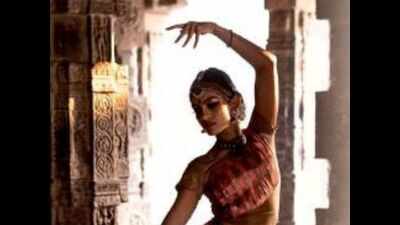
Rukmini Vijayakumar will be talking about Sacred Spaces, Energy Grids and Dance at Heritage, Basavanagudi, this evening, 4 pm
How do you use the basic elements of space to create possibilities in dance?
Every space on stage elicits a certain response in the audience. If I come and stand centre stage, it is very different from standing upstage right or towards the wings or in the corner or all the way in front of the stage.

It depends on the piece. There is work where space matters a lot and there is work where the movements within my body matter more than the space that it occupies. That being said a large portion of traditional Bharatanatyam work is concerned with the body and not as much with the space it occupies. An interesting thing that we do in Bharatanatyam is that we also construct space. We can construct an imaginary space that the audience can visualise depending on how we interact with space. Space not only becomes a partner, but the constructed space also becomes something that we react and respond to.
How does time/timing create possibilities for the dancer in space?
Timing is everything in theatre, more so in a theatrical dance form. Both, the timing of how we express something and also how we express makes a big difference to the dance experience. For example, in Carnatic music, you can't go off talam. If you miss the timing and go offbeat after the avartanam is over, the entire punch of the jati is gone. In theatre, how an emotion builds and ends is really important because everything works with rhythm. The timing of emotions, physicality, and how everything builds creates impact.
End of Article
FOLLOW US ON SOCIAL MEDIA





Hot Picks
TOP TRENDING
Trending Stories
In City
Entire Website
- 'Osama's 'dead son' is alive, leading al-Qaida in Afghanistan and has terrifying plans'
- Diljit Dosanjh’s Dil-Luminati India Tour: Check dates, venue, how to book concert tickets online
- Hamster Kombat Daily Cipher Codes and Combo Cards for September 13, 2024: Unlock up to 1 million coins
- Narayana Murthy faces backlash for parenting remarks on social media; users say, "after working 72 hours a week, there’s barely time left to have babies…”
- Shreyas Iyer comes out to bat wearing sunglasses, falls for a duck in Duleep Trophy
- iPhone 16 will be available for Rs 54,900 on Apple website; here's how you can grab the deal
- iPhone 16 to go on pre-order today: Pre-booking details, time, sale date and more
- Vande Metro launch date, schedule: PM Modi to flag off Bhuj-Ahmedabad Vande Metro train; check timings, stoppages of new Indian Railways train
- Why around 40,000 TCS employees have received tax demand notices for Rs 50,000 to over Rs 1 lakh
- Bill meant to usurp Waqf land, JPC told
- Satellite-based toll system to have factory-fitted unit, phased launch
- Encounter breaks out between security forces and terrorists in J&K's Baramulla
- Will Germany’s suspension of Schengen entry end the Europe dream?
- Delhi gets its CM back: How Kejriwal's return will impact Haryana polls
- Closed-door camp before first Test vs Bangladesh
- J&K: Encounter in Kishtwar district kills 2 Army soldiers
- How Swift is uniting the sisterhood to stop Trump's second coming
- Infosys founder Narayana Murthy: My wife's logic was ...
- Troops disengaged in 4 areas, including Galwan valley: China
- 'Made to work for 15 hours a day, were fired at if we slacked off'

Popular Categories
Hot on the Web
Top Trends
Shannon Sharpes Net WorthVande MetroAadhaar Card UpdateTech LayoffsArvind Kejriwal BailShannon SharpeUPSC Mains Admit CardKristina JoksimovicTCS Employee Tax NoticesWay Chatgpt can be your Study PartnerAir Taxi IndiaAyushman Bharat SchemeKolkata Doctor Rape CaseDonald TrumpShreyas IyerDiljit DosanjhLive Cricket Score
Trending Topics
Alia BhattMalaika Arora Father DeathArbaaz KhanNatasa StankovicMr Bachchan OTT ReleaseNational Parks In IndiaSelena GomezGOAT CollectionVikas Sethi DeathMalayalam ProducersIndia's Best Dancer 4Simi GarewalDilli BabuIndian National ParksLaung BenefitsVikas SethiApple iPhone 16SpaceXAadhar Card Update By Sept 14Wordle Answer
Living and entertainment
Latest News
Regina Cassandra calls herself a 'serial dater,' had many relationships :'But I’m taking a break now'Kaun Banega Crorepati 16: Can you guess the answer for this Rs 3,20,000 question on Navy, which contestant Naman Jain incorrectly answered?Exclusive - Has Palak Sindhwani aka Sonu from Taarak Mehta Ka Ooltah Chashmah breached her contract; Neela Film Productions to issue a legal notice to the actress?Mexico's president asks Sinaloa cartel to act 'responsibly' as violence escalates in the northKitchen Tips: How to elevate home cooking to Michelin levelFord drives into India for 3rd timePIL: Publicise laws, penalties to curb crimes against womenGrowth potential 7.5% or more: RBI governorHindus take to Bangladesh streets to stop attacks and demand justiceE-commerce speeds up to catch up with Quick commerce'Will take digital public infrastructure stack to 50 nations'Justin Timberlake faces DWI charges: Court-ordered apology, fine and community serviceTragic road accident on Mogili ghat road claims seven lives in Chittoor districtSebi gives clean chit to NSE, ex-executives in co-location caseRusty or Ready? Falcons' Cousins Falls Flat in $180M NFL DebutRaveena Tandon apologizes to fans for not photo snub in London: "It was not my intention to offend"Preschools turn nursing homes, retirement age raised: China's demographic crisis explodesBest Phones Under 35000 To Smoothly Carry Out Multiple Tasks On A Budget
Copyright © 2024 Bennett, Coleman & Co. Ltd. All rights reserved. For reprint rights: Times Syndication Service