
- News
- Business News
- India Business News
- India Business News
- Trade war: 'Not planning to extend tariff pause after July 9', says Donald Trump; India's trade team extends US stay
Trending
Trade war: 'Not planning to extend tariff pause after July 9', says Donald Trump; India's trade team extends US stay
President Trump indicated he won't extend the tariff pause beyond July 9, even as India's delegation extended its stay in Washington to negotiate a trade deal. India seeks exemption from additional tariffs, while the US presses for market access in agriculture and other sectors.
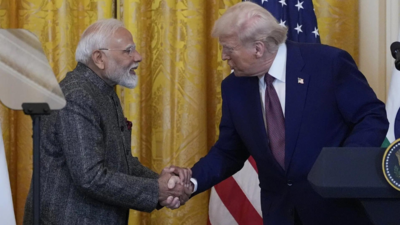
US President Donald Trump shakes hands with Prime Minister Narendra Modi during a news conference in the East Room of the White House, in Washington. (AP file photo)
Why deal matters
What are USA's demands
What India wants
Stay informed with the latest business news, updates on bank holidays and public holidays.
AI Masterclass for Students. Upskill Young Ones Today!– Join Now

About the Author
TOI Business DeskEnd of Article
Follow Us On Social Media










Hot Picks
Top Trending
Tired of too many ads?go ad free now
Trending Stories
In Business
Entire Website
- What is Donald Trump’s net worth? Billionaire US President has a big portfolio of cryptocurrencies, stocks & more - top details
- RBI floating rates savings bonds: Interest rate at 8.5% for July-December 2025; here’s what you should know
- Zero tariffs for US: Donald Trump announces trade deal with Vietnam; latter subjected to 20% duty
- Whopping $82.3 billion cost? Donald Trump’s tariffs may hit US employers in a big way, says JPMorganChase Institute analysis
- Where are silver prices headed? Rich Dad Poor Dad author sees ‘explosion’ in July; here’s the outlook
- Tesla EV sales plunge! 13% drop in three months; anti-Elon Musk sentiment harms
- Kuwait's e-permit exit rule: Expat workers need employer's nod to fly out; how to obtain it?
- From ‘dead’ to ‘hottest in world’: Donald Trump calls ‘Big, Beautiful Bill’ the path to US making a ‘fortune’; says America growing out of ‘Biden mess’
- Sovereign Bold Bonds earn over 200% returns: RBI announces redemption price for some SGBs - check details
- US stock market today: Dow falls over 100 points while Nasdaq up 0.3%; investors cautious ahead of US job data
- ‘Elon may have to close up shop and head back home to South Africa if…’: Donald Trump’s warning to Tesla chief amid ‘Big Beautiful Bill’ feud
- 'A muffled boom and ... ': Boeing 737 plummets nearly 26,000 feet; fearing death, passenger writes will
- Leave India…: Foxconn to hundreds of Chinese engineers and technicians working at iPhone factories in India
- Man left without paying at Sharjah Airport: What followed was unexpected
- NYT Connections hints and answers for today (July 2, 2025)
- “Their body language suggest something…”: Taylor Swift and Travis Kelce's subtle body language during NYC dinner hints at their true connection
- No AI without immigration: All 11 of Zuckerberg’s new superintelligence hires are immigrants who completed undergraduates abroad
- UAE Golden Visa Expands: These five new professionals are eligible - do you qualify?
- ChatGPT warning: OpenAI CEO asks users not to trust AI ‘much’
- “Until we got married”: Kansas City Chiefs star Patrick Mahomes opens up about how Brittany supported him since high school
Financial calculators






Tired of too many ads?go ad free now
Explore Every Corner
Across The Globe
IND vs ENGLebron JamesPatrick MahomesWayne Gretzky DaughterBlake LivelyTaylor SwiftDonald Trump Net WorthParamountsNBA Trade RumorsGiannis AntetokounmpoAnil MenonQuad SummitPM Modi TourJD VanceMedha PatkarNew Trump portraitUtah ISKCON templeRed PandaJapan DisasterKolkata gangrape caseDalai Lama SuccessorMrbeast net worthSheikh HasinaCUET UG 2025 ResultAnti Trump ProtestRonnie ColemanCindy Rodriguez SinghTrump TariffsSimone BilesTravis Kelce Ex Girlfriend
Hot on the Web
PushupsVishnu ManchuBetta FishColon Cancer SymptomsPeanuts BenefitsRamayanaKarishma KapoorVikrant MasseyHarmeet SinghKareena Kapoor KhanSadhguru Longevity TipsPooja GhaiJapan AirlinesHeart HealthShefali JariwalaRaja ChaudharyHair GrowthThe Great Indian Kapil Show 3Gut Health DrinksCharu AsopaHeart DiseaseUK VisaKannappa Box Office CollectionSitaare Zameen Par Box Office CollectionAries Monthly HoroscopeTaurus Monthly HoroscopeGemini Monthly HoroscopeCancer Monthly HoroscopeLeo Monthly HoroscopeVirgo Monthly HoroscopeCommon Digestive IssueDemon SlayerTesla Employee ResignsBlue Lock Chapter 310Einstein VisaUnique Chocolate FlavoursJeff Bezos SiblingsFerrari AmalfiShubhanshu ShuklaStrongest Female Anime CharactersDalai LamaAnand Mahindra
Trending Topics
Mohammed ShamiIND vs PAK Asia CupChess Players North vs SouthYashavi JaiswalIndia vs EnglandUP Board Compartment Exam ScheduleICC Test RankingJasprit BumrahPeta TaitJoe BurrowGautam GambhirMohammed ShamiTom BradyGary BettmanNHL Trade RumorsHockey Canada Sexual Assault CaseLos Angeles LakersVince McmahonTaylor Swift StalkerGold ETFsPanvel New Born Baby NewsMadhya Pradesh MurderChhattisgarh Doctors NewsMonojit MishraBengaluru AccidentCM SiddaramaiahNavi Mumbai Baby NewsTelangana Factory BlastMohammed ShamiKolkata RapeJeff BezosPassport SevaNYT Connections TodayWordle Today HintsMeta Offering $300 MillionsJapan airlines flightApple iPhone 17No Ai Without ImmigrationSamsung Galaxy s25 UltraSam AltmanLauren Sanchez RingMongoose Vs Black Mamba
Popular Categories
HeadlinesSports NewsBusiness NewsIndia NewsWorld NewsBollywood NewsHealth+ TipsIndian TV ShowsTechnologyTravelEtimesHealth & FitnessNFLIntel The Learning CurveIndia vs EnglandAstrologyWeather TodayPlatinum Rate TodaySilver Rate TodayGold Rate TodayDelhi AQI TodayJune Bank HolidaysPublic Holidays in JuneStock Market HolidaysNSE HolidaysBSE HolidaysTechnology NewsInternational SportsPublic HolidaysBank Holidays
Latest News
358 international students get SEVIS resorted in a significant settlement with DHSI am more confident about experimenting with roles now: Mitra GadhviRBI's warning: Indian equities risk being overvalued, earnings may not justify pricesKajol says her daughter Nysa was ‘hounded’ by paparazzi at 14, calls it ‘absolutely incorrect’: 'You need security to go out'RBI floating rates savings bonds: Interest rate at 8.5% for July-December 2025; here’s what you should knowLaughter Chefs 2: Bharti Singh receives a heartfelt birthday surprise on set; the actress says 'The team gave me a day I will carry in my heart forever'IND vs ENG - Two Tests, two tons! Captain Shubman Gill delivers in stylePuneet Issar reveals he received threatening calls after Amitabh Bachchan’s 'Coolie' accident: ‘People said I was paid to kill him’All active Roblox Blue Lock: Rivals codes (July 2025)Train ticket bookings just changed: Here’s what’s newBeauty! Yuzvendra Chahal shows off his spin heroics in County Championship - WatchJohn Cena’s action comedy ‘Heads of State’ premieres on Amazon Prime Video - Here’s how fans are reactingWNBA star Caitlin Clark’s newly launched Kobe V Protro were listed at higher prices on eBayTelangana rolls out TGDeX, India's first state-led digital public infrastructure for AI‘Dinner table conversations boost mental health’‘Madness’: Dale Steyn compares Jasprit Bumrah to Cristiano Ronaldo, slams India’s decision to rest pacerNHL Players officially cleared to compete in the 2026 Winter Olympics in Milan-CortinaGOP leaders rally for last-ditch push: Holdouts meet Donald Trump amid deep divisions; vote expected soon
Copyright © 2025 Bennett, Coleman & Co. Ltd. All rights reserved. For reprint rights: Times Syndication Service