
Top 7 muscle car names that defined an era
Top 7 muscle car names that defined an era
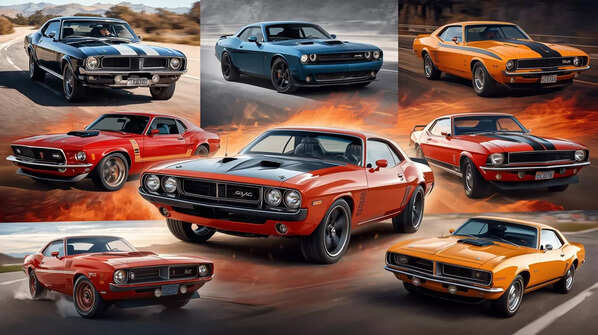
It was not only engineers and designers who shaped America’s muscle car era. Marketing departments played their part, attaching bold, theatrical names to already dramatic machines, carefully crafting images that would capture attention in magazines, billboards, and showroom floors. In the 1960s and early 1970s, performance cars were given titles that suggested speed, danger, and defiance, often reflecting the spirit of youth rebellion and freedom. Some were subtle. Most were not. Together, they defined an era when branding was as loud, confident, and unforgettable as the exhaust note roaring down every stretch of open highway.
(PC: AI-generated)
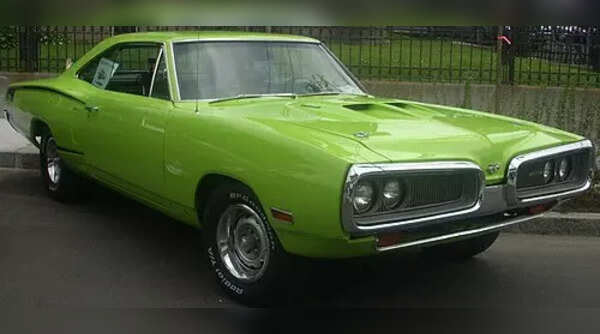
Dodge Super Bee
The Super Bee was positioned as an accessible entry into Dodge’s muscle range. Sharing its platform with the Plymouth Road Runner, it offered substantial performance at a lower price point. Even base models could be specified with large displacement V8 engines. The name combined playfulness with performance intent, reflecting the tone of the time.(PC: Wikipedia)
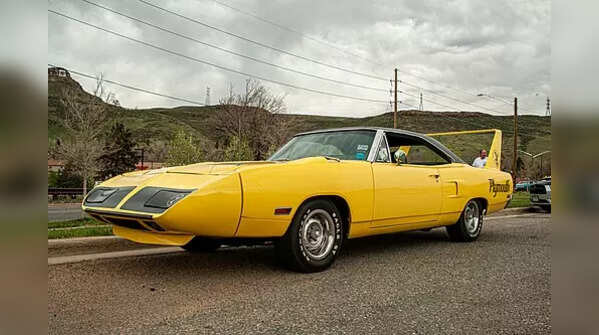
Plymouth Road Runner Superbird
Developed for NASCAR competition, the Superbird featured an extended nosecone and a tall rear wing designed for high-speed stability. While the additional aerodynamic components added weight, the visual impact was undeniable. Named after the cartoon character, it remains one of the most distinctive shapes of the muscle car era.(PC: Wikipedia)
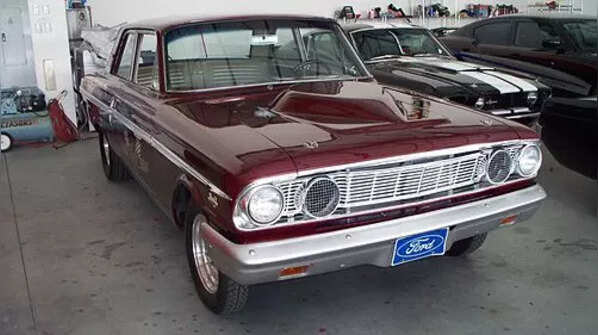
Ford Fairlane Thunderbolt
Commonly shortened to Thunderbolt, this limited-production drag racing special was built to meet homologation requirements. Only 100 were produced. Powered by a 7.0-litre V8 derived from Ford’s racing programme, official figures listed 425 bhp, though actual output was believed to be significantly higher. The name matched the car’s single-minded purpose.
(PC: Wikipedia)
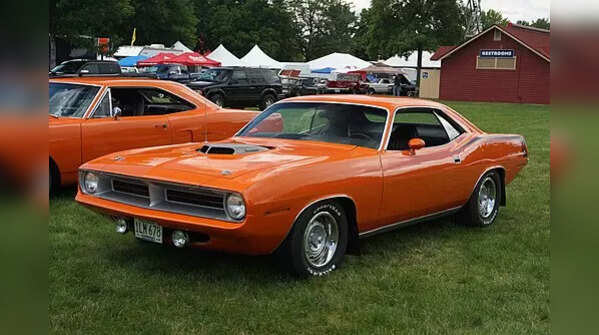
Plymouth Barracuda
The Barracuda debuted in 1964, taking its name from the fast, predatory fish. While early models were modest, later versions evolved into serious performance machines. Equipped with high-output V8 engines, including a 7.0-litre option producing up to 425 bhp, the Barracuda earned a reputation that matched its sharp name.
(PC: Wikipedia)
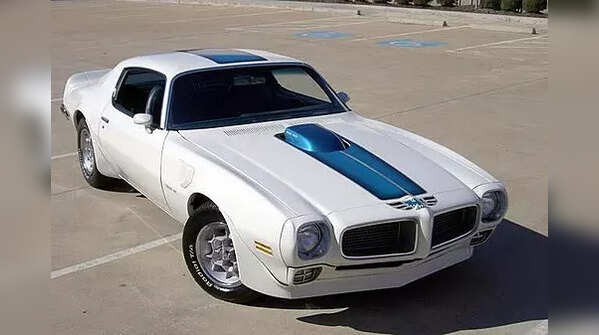
Pontiac Firebird
Introduced in 1967 and built on the same platform as the Chevrolet Camaro, the Firebird quickly developed its own identity. The name suggested speed and spectacle. Its cultural peak arguably came in 1977 with the Trans Am featured in Smokey and the Bandit, complete with the large bonnet decal that became emblematic of the era.
(PC: Wikipedia)
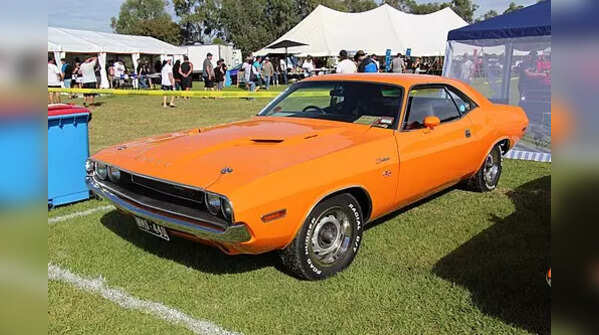
Dodge Challenger
Launched in 1970, the Challenger arrived as Dodge’s answer to the growing pony car segment. The name conveyed confrontation and intent. Modern versions such as the Hellcat and Demon have maintained that tone, reinforcing Dodge’s preference for unapologetically forceful branding. Charger or Challenger remains a matter of taste, but the latter carries a certain clarity.
(PC: Wikipedia)
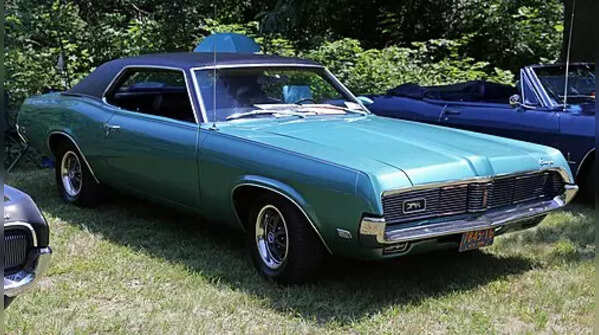
Mercury Cougar
Ford’s upmarket division, Mercury, introduced the Cougar in 1967. The name blended refinement with aggression, drawing on the image of a big cat while fitting neatly into the space-age mood of the period. Though Mercury was often seen as a more restrained extension of Ford, the Cougar carried a sharper edge, helping it stand apart in a crowded market.
(PC: Wikipedia)
Featured In Auto

