
- News
- World News
- US News
- Trump vs courts: Legal battles mount over controversial US government orders
Trending
Trump vs courts: Legal battles mount over controversial US government orders
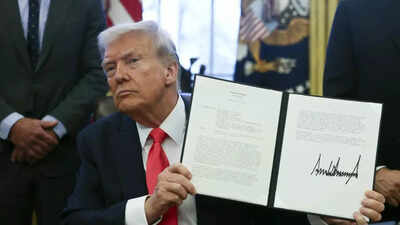
President Trump's recent executive orders have prompted numerous lawsuits across the US. These challenges target actions including a crackdown on illegal immigration and a ban on transgender military service. Some plaintiffs have secured emergency relief from judges, while the White House has also won cases. Judges are now considering deeper judicial reviews.
PTI photo
Multiple lawsuits have been filed against the president's executive orders, targeting his crackdown on illegal immigration, efforts to ban transgender individuals from serving in the US military, and other administration policies.
The president, in his defence, recently referenced French Emperor Napoleon Bonaparte, saying, 'He who saves his country does not violate any law.'
According to a CNN report, the administration is facing at least 80 lawsuits challenging various actions taken during Trump's first few weeks back in office.
In Washington, DC, Judge Loren Ali Khan issued a preliminary injunction indefinitely halting the administration's freeze on federal grants and loans. The ruling expands a previous block issued last month by the judge, who was appointed by former President Joe Biden.
A federal judge in Seattle issued a preliminary injunction on Tuesday, blocking Trump’s executive order that suspended refugee admissions and funding.
The plaintiffs challenging the administration have had some success in securing emergency relief from judges in the early stages of litigation. However, the White House has also won court battles, including cases related to its efforts to reduce the federal workforce and shut down the US foreign aid agency.
How judiciary functions in the US
The function of the US courts is similar to that of India which is the system of checks and balances.
Federal laws, for example, are passed by Congress and signed by the President. The judicial branch, in turn, has the authority to decide the constitutionality of federal laws and resolve other cases involving federal laws. However, judges depend upon the executive branch to enforce court decisions.
The US Supreme Court is the highest court in the United States. 13 appellate courts sit below the US Supreme Court, and they are called US courts of appeals.
District Courts are the primary federal courts with original jurisdiction. There are 94 federal judicial districts. There is at least one district court in each state and the District of Columbia., according to an official US government website.

About the Author
TOI World DeskEnd of Article
FOLLOW US ON SOCIAL MEDIA
Visual Stories








Photostories

Hot Picks
TOP TRENDING
Explore Every Corner
Across The Globe
IND vs NZWayne GretzkyTaylor SwiftCam NewtonBlake LivelyGisele BndchenBrad MarchandAnthony EdwardSidney CrosbyJordyn WoodsBrady TkachukAaron JudgeSteph CurryNBA Buyout RumorsNBA HalftimeAuston MatthewTaylor Swift AlbumWWE Elimination Chamber ResultRhea RipleyKevin OwensRoman ReignsLiv MorganThe RockErin AndrewsMicrosoft Outlook OutageBank HolidaysBank Holidays in MarchChampions Trophy ScheduleChampions Trophy Points TableICC Champions Trophy Live Streaming
Hot on the Web
Heart Blockage SymptomsChia Seeds BenefitsKrushna AbhishekTaarak Mehta Ka Ooltah ChashmahIbuprofen GuidePeppermint Oil For HairMagnesium Oil BenefitsKomodo Dragon vs King CobraWater Weight Loss TipsTanmay BhatGovindaElon MuskRanveer AllahbadiaOptical IllusionWall Sits BenefitsDoomsday FishRajinikanthMere Husband Ki Biwi CollectionChhaava Box Office CollectionChhaava Movie ReviewSadhguru Diet HabitsAshwagandha for Hair GrowthMorning Brain ExercisesUS National ParksUnique AnimalsBig Cat Safari DestinationFatty Liver Reducing FoodsBig Cats IndiaBaby Girl NamesDates Benefits
Trending Topics
India vs New ZealandCarlo ColaiacovoLamelo BallNodirbek YakubboevBrett FavreJimmy ButlerGiannis AntetokounmpoTravis KelceJoe BurrowTaylor SwiftLogan PaulTom BradyErin AndrewRob GronkowskiTravis HunterSouth Africa Cricket TeamChampions Trophy SemifinalMHT CET LLBUS National Anthem BooedVivian RichardNyt ConnectionsKing Legacy CodesDa Hood CodesWordle HintsInzamam Ul HaqDonald TrumpIndia vs New Zealand ScorecardChampions Trophy Points TableChampions Trophy ScheduleICC Champions Trophy 2025 Live Streaming
Popular Categories
HeadlinesSports NewsBusiness NewsIndia NewsWorld NewsBollywood NewsHealth+ TipsIndian TV ShowsTechnologyICC Champions TrophyIPLTravelEtimesHealth & FitnessHollywood NewsWeb SeriesWWEUS NewsNFLHow to watch IPL 2025How to watch IPL in CanadaHow to watch IPL in USACBSETechnology NewsInternational SportsAstrologyPublic HolidaysBank HolidaysIndia vs New ZealandWeather Today
Latest News
Ashutosh Gowariker shows off his dance moves as he performs Mitwa from Lagaan at son Konark Gowariker's wedding sangeet: Watch videoWayne Gretzky's controversy takes a new turn as a new video emerges amid ongoing Team Canada support backlashBhagyashree opens up on gender equality at home; says she didn’t believe in leaving her kids Abhimanyu and Avantika with nannies: 'I was far too young to manage both worlds'Alia Bhatt spends time with fans at Mumbai meet-and-greet; check pics“The Only Way to Pay Off Student Loans Is by Dating Him”: SNL Roasts Bill Belichick's Relationship with 24-Year-Old Jordon HudsonEC statement on duplicate EPIC numbers confirms voter list anomalies in Bengal: TMCBride abducted on MP highway, rescued by copsThe Most Awarded Actors in Oscar HistoryTrump isn’t the first US president to lose patience with Zelenskyy — Biden did too, 2022 report revealsVoter card number duplication doesn't imply fraud, says ECDak Prescott and fiancee Sarah Jane Ramos share a heartwarming family moment with their daughter amid NFL announcements'False' toll fee deduction? NHAI cracks the whipRam Charan and Janhvi Kapoor to resume filming 'RC 16' at Parliament and Jama Masjid: ReportLocals force govt to stop Porvorim temple demolition for highway workConservation delivers: Emus to gaurs, Goa's Bondla zoo preps for scores of newbornsHow chronic conditions make us more vulnerable to infectionsEuropean allies rally around Ukraine, to raise defence spendingTesla stock has a 'problem', and it may be related to Elon Musk and DOGE
Copyright © 2025 Bennett, Coleman & Co. Ltd. All rights reserved. For reprint rights: Times Syndication Service